
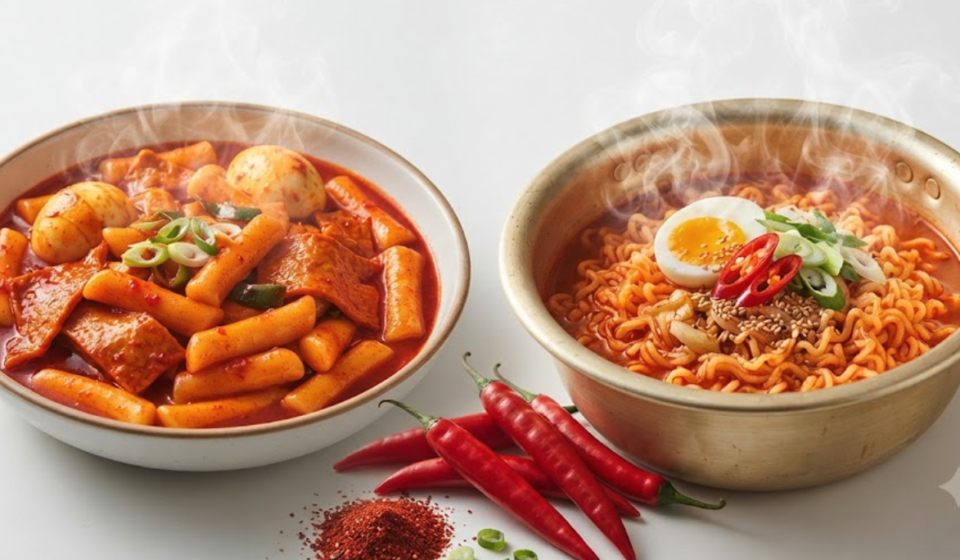

Korean food is famous for its bold flavors, rich soups, fermented ingredients, and—of course—spicy dishes.
Foreigners often ask, “Why is Korean food so spicy?” or “How can Koreans eat so much heat?”
The truth is, Korea’s spicy food culture is more than just flavor.
It’s connected to history, climate, psychology, stress relief, social culture, and even national identity.
This article explores why Koreans love spicy food, how capsaicin became part of Korean cuisine, and why spicy dishes continue to evolve into extreme challenges and viral trends.
🔥 1. The History of Spicy Food in Korea
Many people assume Korean food has always been spicy, but chili peppers arrived in Korea only around the 16th century.
Before that, Korean cuisine relied on:
- Garlic
- Ginger
- Pepper powder
- Fermented sauces
When chili peppers were introduced, Koreans quickly adopted them because:
- They preserved food well
- They added strong flavor
- They matched Korea’s fermentation culture
- They enhanced the taste of soups and stews
This led to the creation of:
- Gochugaru (고추가루)
- Gochujang (고추장)
- Spicy kimchi
- Spicy stews
These ingredients became essential in Korean cooking.
🌡️ 2. Korea’s Climate Influenced Spicy Food Culture
Korea has four distinct seasons, including:
- Hot, humid summers
- Cold, dry winters
Spicy food helps Koreans cope with both extremes.
✔ In summer
Spicy food increases sweating, which cools the body naturally.
✔ In winter
Spicy soups warm the body quickly.
This climate connection made spicy dishes a natural part of Korean daily life.
😤 3. Spicy Food as Stress Relief: The Korean “Stress Culture”
Koreans often say:
- “스트레스 받을 때 매운 거 먹고 싶다.”
- “매운 음식 먹으면 속이 뻥 뚫린다.”
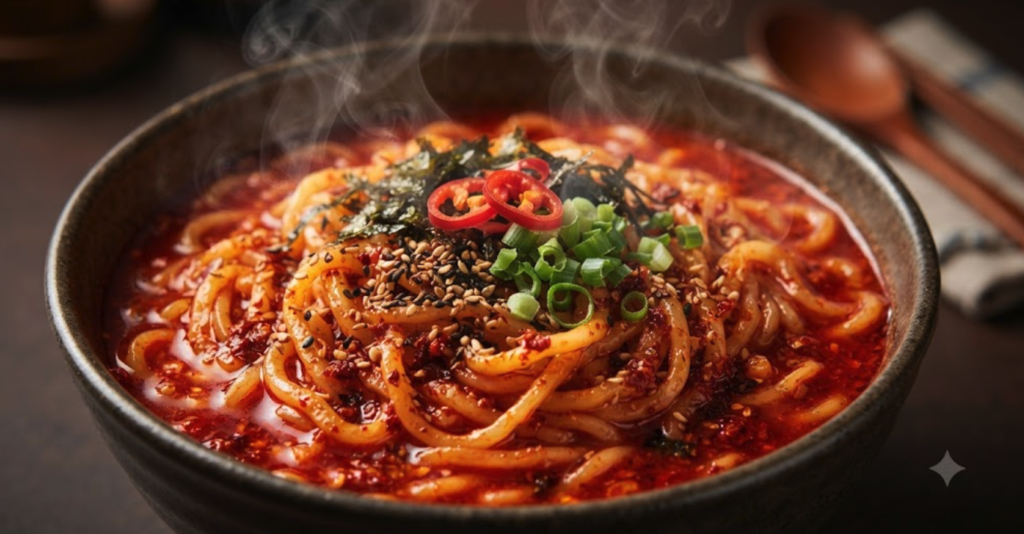
Spicy food is deeply connected to stress relief.
Why?
Capsaicin triggers:
- Endorphin release
- Adrenaline boost
- Temporary pain → pleasure cycle
This creates a “spicy high,” similar to the feeling after exercise.
In a fast-paced society like Korea, spicy food became a comfort food for emotional release.
🧪 4. Capsaicin Culture: Koreans Love the Burn
Capsaicin is the compound that makes chili peppers spicy.
Koreans have developed a high tolerance for it because:
- They eat spicy food from childhood
- Many dishes include gochujang or gochugaru
- Spicy ramen is extremely common
- Social eating often includes spicy dishes
Capsaicin also has health benefits:
- Boosts metabolism
- Improves circulation
- Helps digestion
- Reduces appetite
This made spicy food not just tasty, but functional.
🍲 5. Popular Korean Spicy Dishes Loved by Koreans
1) Tteokbokki (떡볶이)
Sweet, spicy, addictive street food.
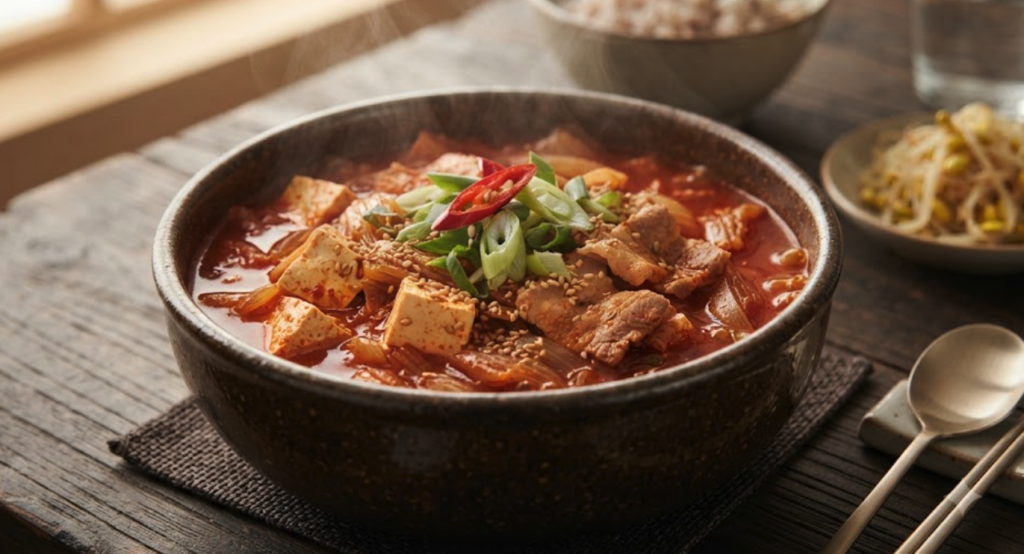
2) Kimchi Jjigae (김치찌개)
Spicy fermented stew—Korea’s comfort food.
3) Buldak (불닭)
“Fire chicken,” famous for extreme heat.
4) Spicy Ramen (매운 라면)
Samyang, Shin Ramyun—global spicy icons.
5) Maeuntang (매운탕)
Spicy fish soup, perfect for cold weather.
6) Jjambbong (짬뽕)
Korean-Chinese spicy seafood noodle soup.
7) Dakgalbi (닭갈비)
Spicy stir-fried chicken with vegetables.
These dishes are part of everyday Korean life.
🥵 6. Korean Spicy Challenges: A Modern Trend
Korea has a unique culture of spicy food challenges, such as:
- Fire noodles challenge
- Extremely spicy tteokbokki
- Ghost pepper chicken
- “Level 1–10” spicy restaurants
Why do Koreans enjoy this?
✔ Social fun
Friends challenge each other.
✔ Viral content
YouTube, TikTok, Instagram trends.
✔ Personal achievement
People feel proud when they “survive” the heat.
✔ Emotional release
Spicy food gives a sense of accomplishment.
This challenge culture is now global thanks to K‑food.
👨👩👧 7. Koreans Start Eating Spicy Food Early
Korean children grow up eating:
- Kimchi
- Mild gochujang dishes
- Spicy soups (light versions)
This early exposure builds tolerance over time.
By adulthood, most Koreans can handle high levels of heat.
🧠 8. Spicy Food and Korean Identity
Spicy food is part of Korean identity because:
- It represents strength
- It symbolizes resilience
- It reflects emotional intensity
- It connects people socially
- It’s part of daily meals
Foreigners often say:
- “Koreans eat spicy food like it’s nothing.”
- “How can they enjoy something so hot?”
For Koreans, spicy food is not just flavor—it’s culture.
🌶️ 9. Why Foreigners Are Fascinated by Korean Spicy Food
✔ Unique flavor + heat
Korean spicy food is not just hot—it’s flavorful.
✔ Variety
Stews, noodles, street food, BBQ, snacks.
✔ Social culture
Spicy food is part of gatherings and nightlife.
✔ Global trends
Fire noodles and tteokbokki became worldwide sensations.
✔ Emotional connection
Foreigners feel the “spicy high” too.
🌅 Final Thoughts
Korean spicy food culture is a blend of:
- History
- Climate
- Psychology
- Social bonding
- National identity
Koreans don’t just eat spicy food—they love it.
It’s comforting, energizing, emotional, and deeply cultural.
For anyone exploring Korean cuisine, spicy dishes are the perfect way to understand the heart of Korean food culture.
🔗 Recommended Links
https://koreaseoulinfo.com/