
When foreigners visit Korea, one of the first things they notice is how well Koreans line up.
Whether it’s the subway, a café, a bus stop, a popular restaurant, or even a street food stall—Koreans form neat, quiet, and organized lines almost automatically.
This behavior surprises many visitors because it’s not common in many countries.
But in Korea, queue culture is a deeply rooted part of everyday life, shaped by history, social norms, education, and collective values.
This article explores why Koreans line up so well, how this culture developed, and what it reveals about Korean society.
🌟 1. Queue Culture Is a Reflection of Korean Social Values
Korean society places strong emphasis on:
- 질서 (order)
- 배려 (consideration)
- 공동체 (community)
- 예의 (manners)
Queueing is seen as a basic form of respect.
✔ Respect for others
Standing in line means acknowledging that everyone’s time is valuable.
✔ Respect for public space
Koreans believe public spaces should be used fairly and peacefully.
✔ Respect for rules
Following rules is part of Korean daily life—from school to work.
Queue culture is not enforced by law; it’s a social expectation.
🏫 2. Korean Queue Culture Starts in Childhood
Korean children learn queueing from a very young age.
In kindergarten
- Line up before entering the classroom
- Line up before going outside
- Line up before lunch
- Line up before activities
In elementary school
- Line up during assemblies
- Line up for school meals
- Line up for buses
- Line up for events
This early training makes queueing feel natural and automatic.
Foreigners often say:
“Koreans line up without thinking. It’s like muscle memory.”
And it’s true—queue culture is part of Korean childhood education.
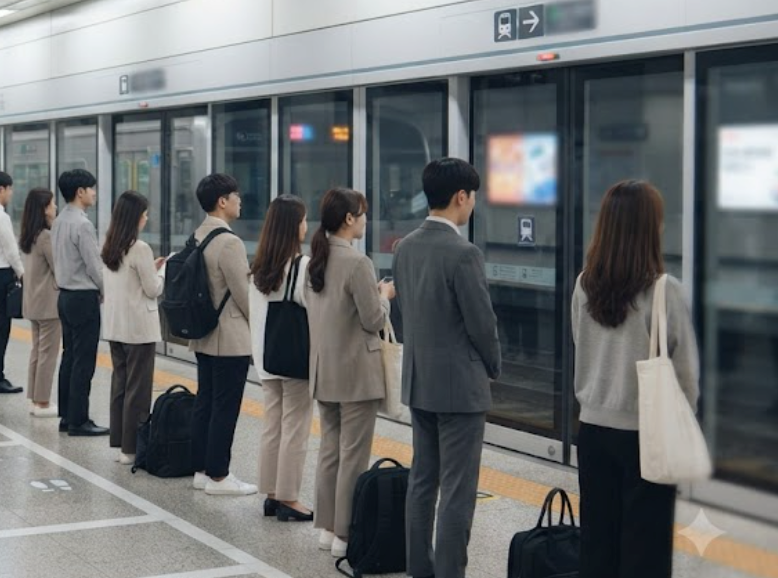
🚇 3. Public Transportation Reinforces Queue Culture
Korea’s public transportation system is extremely organized.
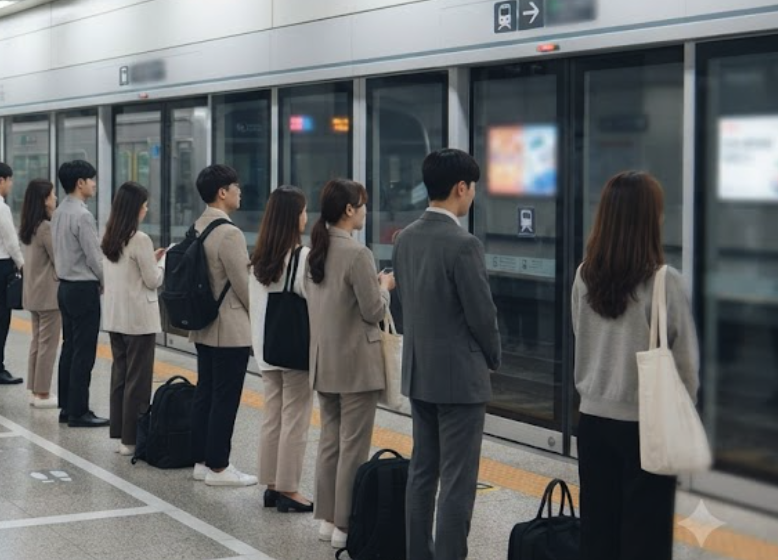
Subway
- Marked waiting lines
- People stand behind the arrows
- No pushing
- People wait for passengers to exit first
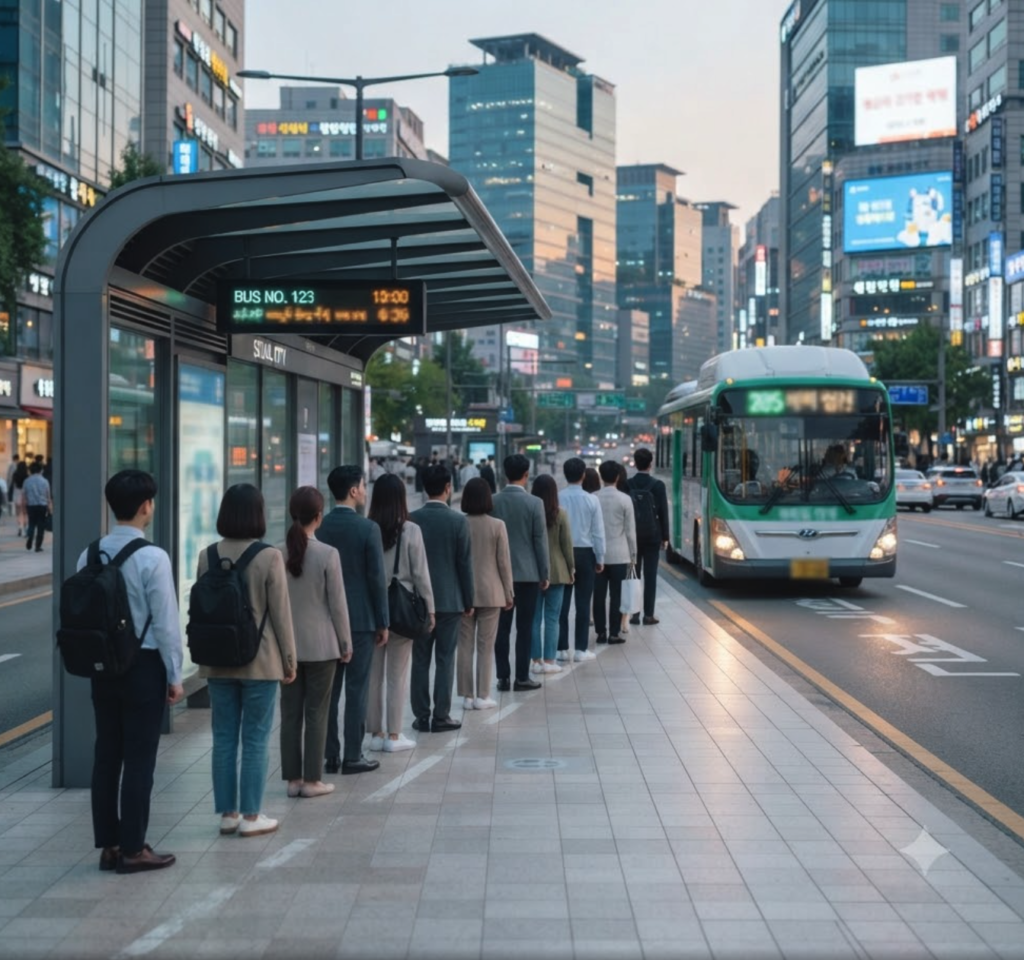
Buses
- People form a single line
- No cutting
- No crowding
Taxis
- People wait their turn even when taxis are scarce
This system works because Koreans collectively follow the rules.
Foreigners often say:
“I’ve never seen such organized subway lines anywhere else.”
🍜 4. Queueing for Food: A Korean Ritual
Koreans love good food, and they’re willing to wait for it.
Popular restaurants
People line up outside for:
- Famous tteokbokki shops
- Trendy cafés
- BBQ restaurants
- Viral dessert places
Street food
Even at busy markets, people queue politely.
Why Koreans wait so well
- Trust in fairness
- Respect for the restaurant
- Social acceptance of waiting
- The belief that “If people are waiting, it must be good”
Queueing for food is almost a cultural ritual.
🧠 5. The Psychology Behind Korean Queue Culture
Korean queue culture is shaped by several psychological factors.
✔ Collective mindset
Koreans think in terms of “we,” not just “I.”
✔ Social harmony
Avoiding conflict is important in Korean society.
✔ Fear of inconvenience
Cutting in line is seen as causing trouble for others.
✔ Social pressure
People don’t want to be seen as rude or selfish.
✔ Efficiency
Queueing makes everything faster and smoother.
Queueing is not just about waiting—it’s about maintaining harmony.
🧩 6. Historical Roots: Confucian Influence
Confucianism has shaped Korean culture for centuries.
Key Confucian values include:
- Respect
- Order
- Hierarchy
- Harmony
- Discipline
Queueing reflects these values:
- Respecting others’ turn
- Maintaining order
- Avoiding chaos
- Acting with discipline
This cultural foundation still influences modern Korean behavior.
🏙️ 7. Urban Life Makes Queue Culture Necessary
Korea is densely populated, especially cities like Seoul, Busan, and Incheon.
High population density means:
- Crowded public spaces
- Busy transportation
- Popular restaurants
- Long lines everywhere
Without queue culture, daily life would be chaotic.
Koreans developed strong queue habits to maintain efficiency in crowded environments.
📱 8. Technology Supports Queue Culture
Korea’s digital systems make queueing even more organized.
Examples:
- Mobile waiting apps for restaurants
- Digital queue numbers at clinics
- Online reservation systems
- Real-time bus arrival apps
- Automated ticketing machines
These tools reduce physical crowding and make waiting more comfortable.
😄 9. Queue Culture Creates a Pleasant Social Environment
Queueing well leads to:
- Less conflict
- Less noise
- Less stress
- More fairness
- More comfort
Foreigners often say Korea feels peaceful and organized because people respect public space.
Queue culture is one of the reasons Korea feels safe and comfortable.
🌏 10. Why Foreigners Are Surprised by Korean Queue Culture
✔ No pushing
Even in crowded places.
✔ No cutting
People rarely break the rules.
✔ Quiet lines
People wait calmly.
✔ Fast movement
Lines move quickly and efficiently.
✔ Universal behavior
Young people, elders, students—everyone queues.
Foreigners often say:
“Korea has the best queue culture in the world.”
🌅 Final Thoughts
Korean queue culture is more than just standing in line.
It reflects:
- Korean social values
- Respect for others
- Collective harmony
- Childhood education
- Urban efficiency
- Confucian influence
Queueing is a small behavior, but it reveals a lot about Korean society.
It shows how Koreans maintain order, respect, and harmony in everyday life.
For foreigners, experiencing Korea’s queue culture is often one of the most surprising—and impressive—parts of visiting the country.
🔗 Recommended Links
https://koreaseoulinfo.com/