
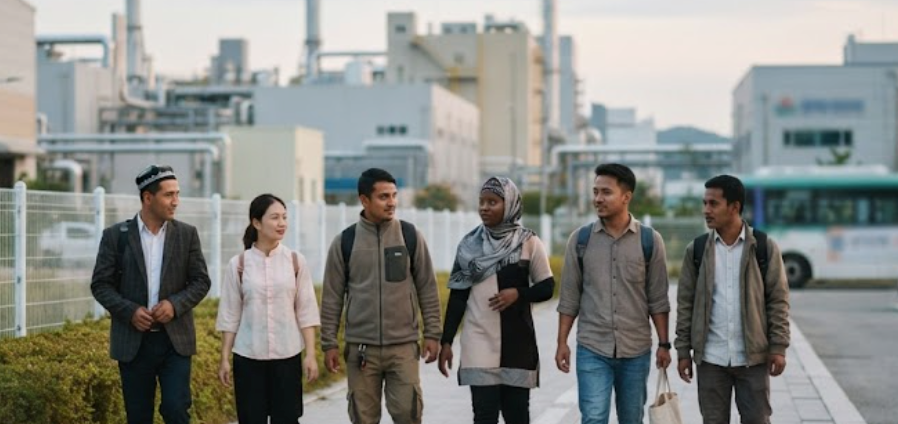

(An outsider’s observation of Korea’s multicultural workforce)
When foreigners first arrive in Korea, they often imagine Seoul as the center of everything—jobs, culture, and daily life.
But once they begin living here, they quickly discover something surprising:
The heart of Korea’s foreign workforce is not Seoul.
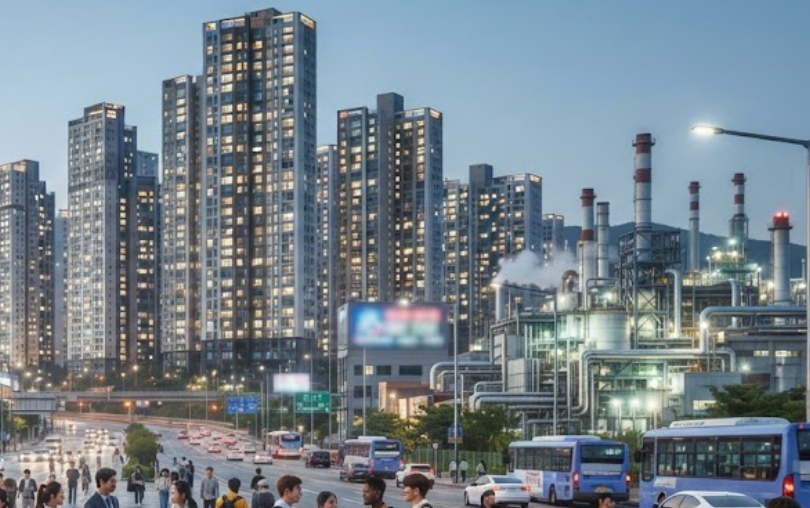
It’s the industrial cities surrounding it.
From Ansan to Pyeongtaek, from Asan to Changwon, Korea’s foreign labor population is concentrated in places most tourists never visit.
These regions are shaped by factories, shipyards, industrial complexes, and manufacturing plants—places that quietly sustain Korea’s economy.
As a foreign observer living in Korea, understanding where foreign workers live reveals a deeper truth about how Korea functions, how its industries operate, and how multicultural communities form in unexpected corners of the country.
🏭 1. Why Foreign Workers Are Essential to Korea’s Economy
Korea is facing:
- Low birth rates
- Rapid aging
- Labor shortages in manufacturing
- A shrinking young workforce
Many Koreans avoid physically demanding or repetitive jobs, often called 3D 업종 (Dirty, Dangerous, Difficult).
To fill this gap, Korea relies heavily on foreign workers—especially from Southeast Asia, South Asia, and Central Asia.
These workers come through the Employment Permit System (E-9), which allows companies to hire foreign labor for manufacturing, agriculture, construction, and fisheries.
This system shapes where foreign workers live:
where the factories are, the workers follow.
📍 2. The Regions with the Highest Foreign Worker Populations
From an outsider’s perspective, Korea’s foreign worker map looks very different from its tourist map.
Here are the regions where foreign workers are most concentrated—and why.
🟦 1) Ansan (안산) – Korea’s Largest Foreign Worker Community
If there is one place that symbolizes Korea’s multicultural workforce, it’s Ansan, especially Wongok-dong (원곡동).
Why Ansan?
- Massive industrial complexes
- Thousands of factories
- Affordable housing
- Long history of foreign labor migration
What it feels like
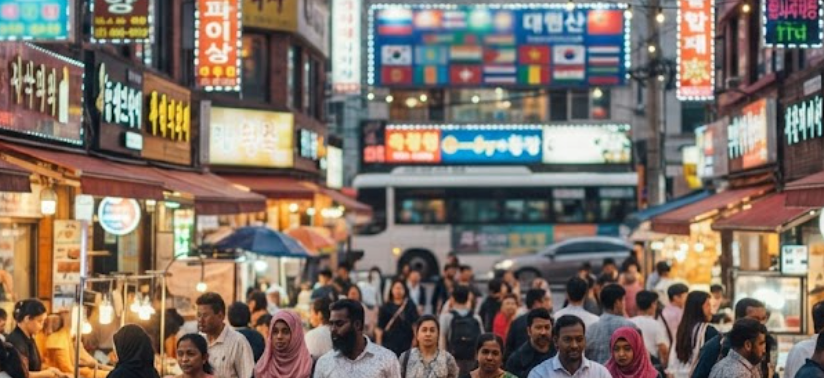
Walking through Wongok-dong feels like stepping into a global village.
You see:
- Nepali restaurants
- Vietnamese grocery stores
- Uzbek bakeries
- Filipino markets
- Chinese halal shops
Signs appear in multiple languages.
Foreign workers gather in parks, markets, and community centers.
It’s one of the few places in Korea where foreigners outnumber Koreans on certain streets.
For an outsider, Ansan is the clearest example of how Korea’s economy and multiculturalism intersect.
🟦 2) Pyeongtaek (평택) – Factories, Military Base, and Global Workforce
Pyeongtaek is home to:
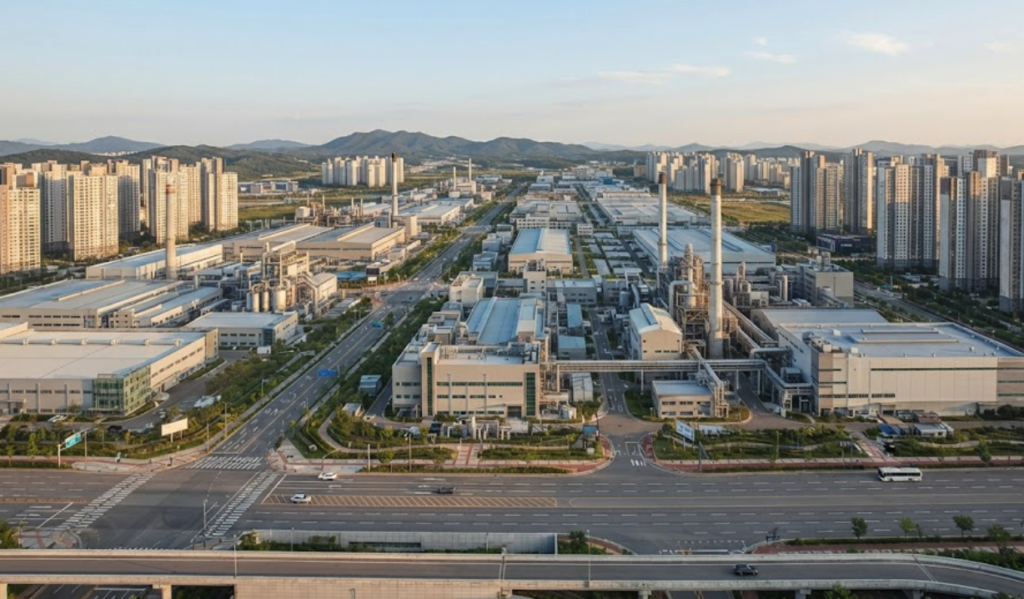
- Korea’s largest industrial zones
- Samsung semiconductor plants
- Automobile parts factories
- The US military base (Camp Humphreys)
Foreign workers here are mostly:
- Thai
- Vietnamese
- Sri Lankan
- Filipino
- Uzbek
Why so many foreign workers?
Because Pyeongtaek’s factories operate 24/7 and require thousands of workers.
Foreigners often describe Pyeongtaek as:
“A city where industry never sleeps.”
🟦 3) Siheung & Hwaseong (시흥·화성) – Manufacturing Powerhouses
These cities are filled with:
- Automotive parts factories
- Electronics manufacturing
- Metal processing plants
- Logistics centers
Foreign workers live in dormitories, small apartments, or shared housing near industrial zones.
From an outsider’s perspective, these cities feel like Korea’s “engine rooms.”
🟦 4) Asan & Cheonan (아산·천안) – Automotive Industry Hubs
These cities host:
- Hyundai factories
- Automotive suppliers
- Steel and machinery plants
Foreign workers here often stay long-term because companies provide stable contracts.
Cheonan Station is famous for seeing large groups of foreign workers commuting on weekends.
🟦 5) Changwon & Gimhae (창원·김해) – Machinery & Heavy Industry
Changwon is Korea’s manufacturing capital for:
- Machinery
- Tools
- Industrial equipment
Foreign workers here often work in skilled or semi-skilled positions.
The multicultural presence is noticeable in:
- Markets
- Restaurants
- Worker dormitories
🟦 6) Ulsan (울산) – Shipbuilding & Petrochemical Industry
Ulsan is home to:
- Hyundai Heavy Industries
- Oil refineries
- Chemical plants
Foreign workers here are often involved in:
- Welding
- Shipbuilding
- Heavy machinery
- Construction
It’s one of the most physically demanding foreign labor regions.
🟥 7) Seoul – A Different Type of Foreign Worker
Seoul has many foreigners, but fewer industrial workers.
Foreigners in Seoul are mostly:
- Students
- Office workers
- English teachers
- Service industry workers
- Business owners
The foreign worker neighborhoods include:
- Itaewon
- Guro
- Daerim
- Yeongdeungpo
But compared to industrial cities, Seoul’s foreign labor population is smaller and more diverse.
🌍 3. What Foreign Worker Communities Look Like (An Outsider’s View)
Living in Korea, you quickly notice patterns in foreign worker neighborhoods:
✔ Multilingual signs
Korean + Vietnamese + Thai + Uzbek + Chinese
✔ International supermarkets
Selling spices, rice, snacks, and ingredients from home countries.
✔ Remittance shops
Sending money back home is a weekly routine.
✔ Dormitory-style housing
Often provided by factories.
✔ Weekend gatherings
Foreign workers gather in parks, markets, and squares.
✔ Religious centers
Mosques, churches, and temples serving multicultural communities.
These areas feel different from typical Korean neighborhoods—more vibrant, more diverse, and more global.
🤝 4. How Koreans and Foreign Workers Interact
From an outsider’s perspective, the relationship is complex but evolving.
✔ Economic dependence
Korea needs foreign workers to sustain manufacturing.
✔ Cultural distance
Language barriers and lifestyle differences exist.
✔ Growing acceptance
Younger Koreans are more open to multiculturalism.
✔ Occasional tension
Noise, housing density, or cultural misunderstandings can occur.
✔ Government support
More programs for:
- Korean language education
- Cultural integration
- Legal protection
- Community centers
Korea is slowly becoming more multicultural, and industrial cities are leading the change.
🔮 5. The Future of Foreign Workers in Korea
Korea’s foreign workforce will continue to grow because:
- Korea’s population is shrinking
- Manufacturing still needs labor
- More companies rely on foreign talent
- Multicultural families are increasing
Industrial cities will become even more diverse, and Korea’s identity will gradually shift toward a more global society.
As an outsider living in Korea, watching this transformation feels like witnessing a new chapter of Korean history.
Foreign workers are not just part of Korea’s labor force—they are part of Korea’s story.
They shape the cities most Koreans rarely talk about, and they build the industries that power the nation.
Understanding where foreign workers live reveals:
- Korea’s economic structure
- Its demographic challenges
- Its multicultural future
- Its evolving social landscape
For anyone observing Korea from the outside, these regions offer a deeper, more honest look at the country beyond Seoul’s bright lights.
🔗 Recommended Links
https://kdoctorinterview.com/
https://koreaseoulinfo.com/


Leave a Reply
You must be logged in to post a comment.
[…] Where Foreign Workers Live in Korea: The Regions Shaped by Global Labor Author […]