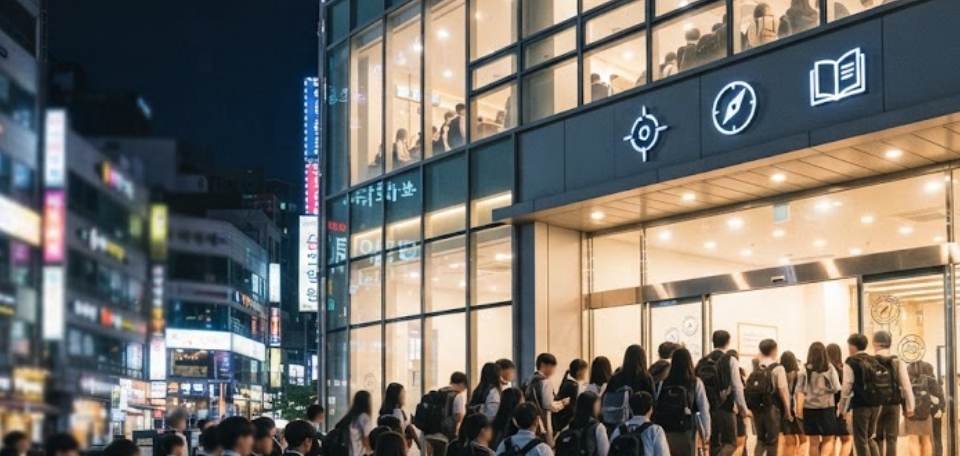

When foreigners first move to Korea, one of the most surprising discoveries is that Korean children don’t actually “go home” after school.
At least, not in the way many people expect.
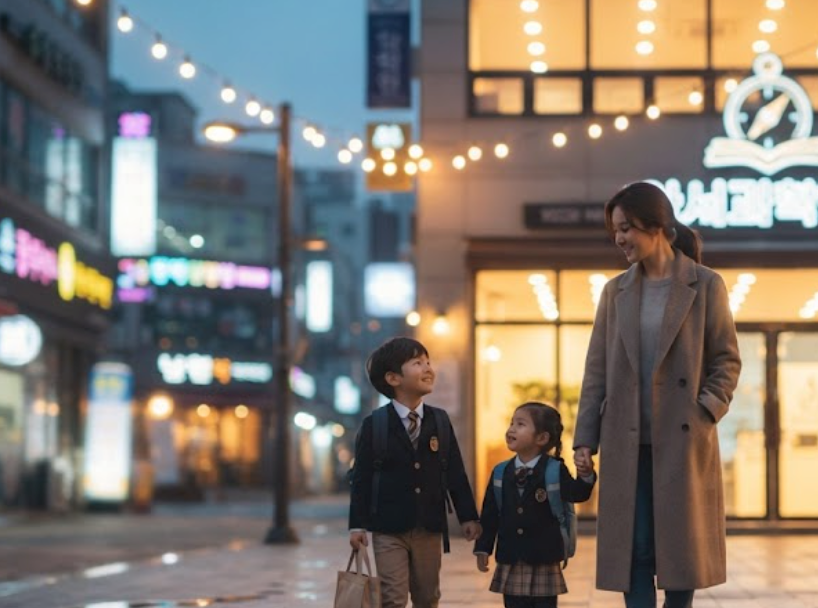
Instead, millions of children leave school at 3 or 4 PM…
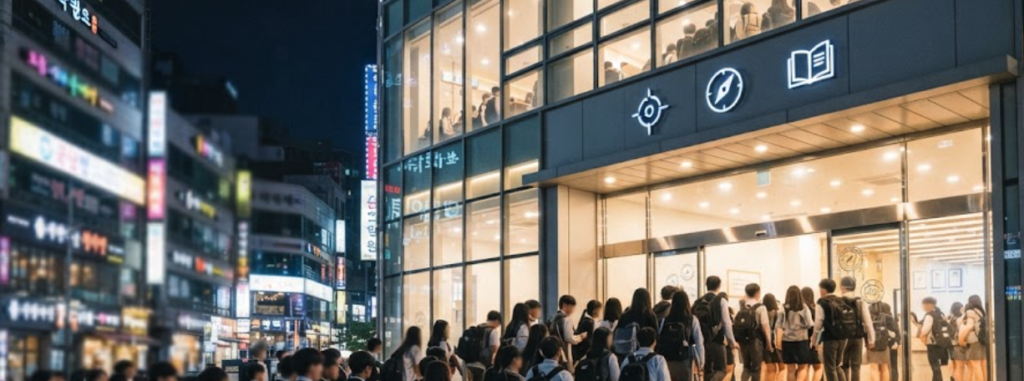
and then head straight into another round of classes—private academies known as hagwons.
To outsiders, this looks intense, overwhelming, and even unbelievable.
But to Koreans, it’s simply part of daily life.
Understanding hagwon culture is essential for anyone trying to understand Korean parenting, childhood, and education.
It reveals Korea’s values, pressures, hopes, fears, and the social engine that drives one of the most competitive education systems in the world.
🌙 1. The After-School Life of Korean Kids: A Shock to Foreigners
In many countries, kids finish school and spend the rest of the day:
- playing outside
- relaxing
- watching TV
- doing light homework
- spending time with family
But in Korea, the day continues.
A typical Korean child’s schedule might look like this:
✔ 3:00 PM — School ends
✔ 3:30 PM — English hagwon
✔ 5:00 PM — Math hagwon
✔ 6:30 PM — Piano or Taekwondo
✔ 7:30 PM — Homework at home
✔ 9:00 PM — Online tutoring or self-study
✔ 10:00 PM — Sleep (sometimes later)
Foreigners often ask:
“Why do Korean kids study so much?”
The answer is complex—and deeply cultural.
🧠 2. Why Hagwons Exist: The Roots of Korea’s Private Education Culture
Hagwons didn’t appear randomly.
They grew out of Korea’s history and social structure.
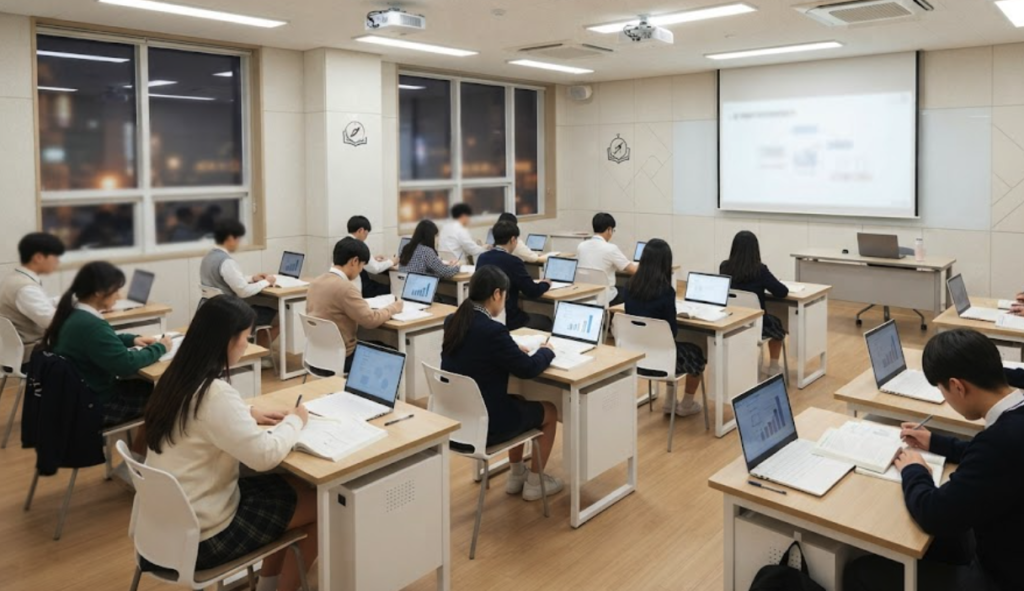
✔ 1) The university entrance exam (수능)
Korea’s college entrance exam is extremely competitive.
A single score can determine:
- university
- job opportunities
- social status
- future income
Parents see hagwons as essential preparation.
✔ 2) Rapid economic growth
During Korea’s development, education became the path to success.
Parents invested heavily in their children’s studies.
✔ 3) Public school limitations
Public schools focus on group learning.
Hagwons fill the gap with:
- individualized instruction
- exam prep
- advanced curriculum
✔ 4) Social pressure
If “everyone else” goes to hagwons, parents feel they must send their kids too.
✔ 5) Cultural values
Korea values:
- hard work
- discipline
- achievement
- perseverance
Hagwons reflect these values.
🏫 3. Types of Hagwons: It’s Not Just Studying
Foreigners often think hagwons are only for math and English.
But Korea has hagwons for almost everything.
✔ Academic Hagwons
- Math
- English
- Korean
- Science
- Social studies
- Essay writing
- Test prep
✔ Talent & Skill Hagwons
- Piano
- Violin
- Art
- Dance
- Coding
- Robotics
✔ Physical Activity Hagwons
- Taekwondo
- Swimming
- Soccer
- Ballet
✔ Special Hagwons
- Memory training
- Debate
- Creativity
- Speed reading
- AI learning
Korean kids often attend 3–5 hagwons at once.
🧑🏫 4. Hagwon Teachers: The “Rockstars” of Korean Education
Hagwon teachers are different from school teachers.
✔ Highly specialized
They teach:
- exam strategies
- shortcuts
- patterns
- problem-solving tricks
✔ Performance-based
Their reputation depends on:
- student scores
- parent reviews
- class popularity
✔ High income potential
Top hagwon instructors can earn:
- ₩200 million
- ₩500 million
- even ₩1 billion per year
Foreigners often say:
“Hagwon teachers are treated like celebrities.”
💸 5. The Cost: Why Korean Parents Spend So Much
Korean parents spend more on private education than almost any country in the world.
Average monthly cost per child
- Kindergarten: ₩200,000 ~ ₩400,000
- Elementary: ₩300,000 ~ ₩600,000
- Middle school: ₩500,000 ~ ₩800,000
- High school: ₩700,000 ~ ₩1,200,000+
Some families spend ₩2 million+ per month.
Why?
✔ Fear of falling behind
If other kids study, yours must too.
✔ Hope for a better future
Education = opportunity.
✔ Social expectations
Parents compare hagwon schedules.
✔ Cultural pride
Parents want to support their children’s success.
🕒 6. Why Korean Kids Study Until Late at Night
Foreigners are shocked to see kids walking home at 9 or 10 PM.
Reasons include:
✔ Hagwon schedules
Classes often run until 10 PM.
✔ Parents’ work hours
Parents work late, so kids stay at hagwons.
✔ Homework
Hagwons give extra assignments.
✔ Competition
Students preparing for exams study late.
✔ Cultural acceptance
Late studying is normal in Korea.
🧒 7. How Hagwon Culture Shapes Korean Childhood
Hagwons influence:
- daily routines
- friendships
- stress levels
- sleep schedules
- family time
- future goals
✔ Positive effects
- Strong academic skills
- Discipline
- Time management
- Confidence in exams
✔ Negative effects
- Stress
- Lack of free time
- Sleep deprivation
- Pressure
- Burnout
Foreigners often say:
“Korean kids are incredibly hardworking—but they look tired.”
👨👩👧 8. How Korean Parents View Hagwons
To outsiders, hagwons seem extreme.
But Korean parents see them differently.
✔ “Necessary, not optional.”
✔ “Everyone else goes.”
✔ “I want to give my child the best chance.”
✔ “Schools don’t teach everything.”
✔ “Hagwons help with confidence.”
Parents often feel guilty if they don’t send their kids.
🌍 9. How Foreign Parents in Korea React
Foreign parents living in Korea often feel:
- shocked
- confused
- pressured
- impressed
- overwhelmed
Some adopt the hagwon lifestyle.
Others avoid it.
Many try to find a balance.
Foreigners often say:
“I understand why Koreans do it—but I’m not sure I could.”
🔮 10. The Future of Hagwon Culture
Korea is slowly changing.
✔ More focus on creativity
✔ Less memorization
✔ More digital learning
✔ Government attempts to reduce private education
✔ Parents seeking balance
But hagwons remain powerful.
They are deeply rooted in Korean society.
🌅 Final Thoughts
To outsiders, Korea’s hagwon culture can look intense, overwhelming, and even shocking.
But it reflects Korea’s values:
- ambition
- discipline
- hope
- responsibility
- family dedication
Hagwons are not just schools.
They are part of Korean childhood, Korean parenting, and Korean society.
Understanding hagwons means understanding Korea itself.