
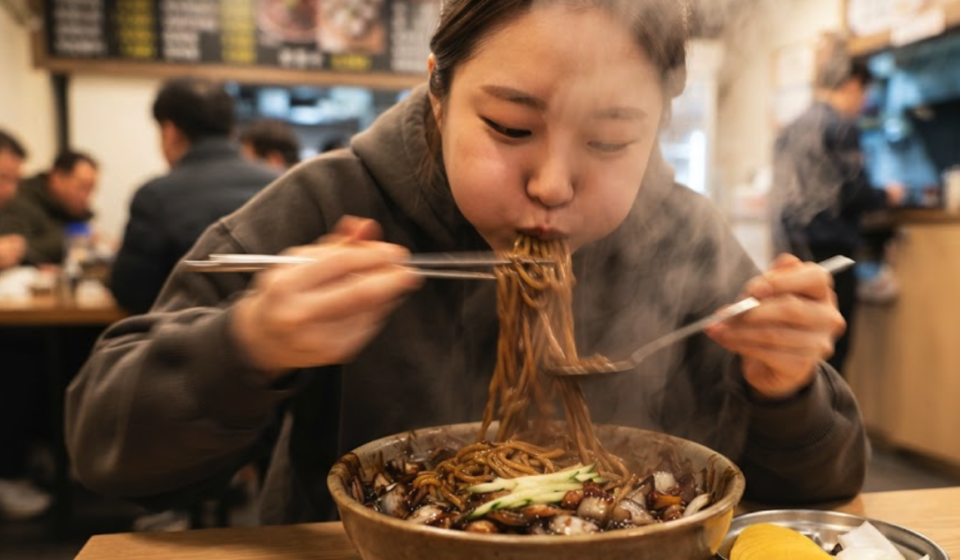

When foreigners first come to Korea, one of the earliest cultural shocks happens not in a subway station, not in a convenience store, but at the dining table.
Koreans eat fast.
Very fast.
Meals that take 30–40 minutes in many countries often finish in 10–15 minutes in Korea.
Foreigners often say:
“I wasn’t even halfway done, but everyone else already finished.”
This isn’t rudeness.
It isn’t impatience.
It’s culture.
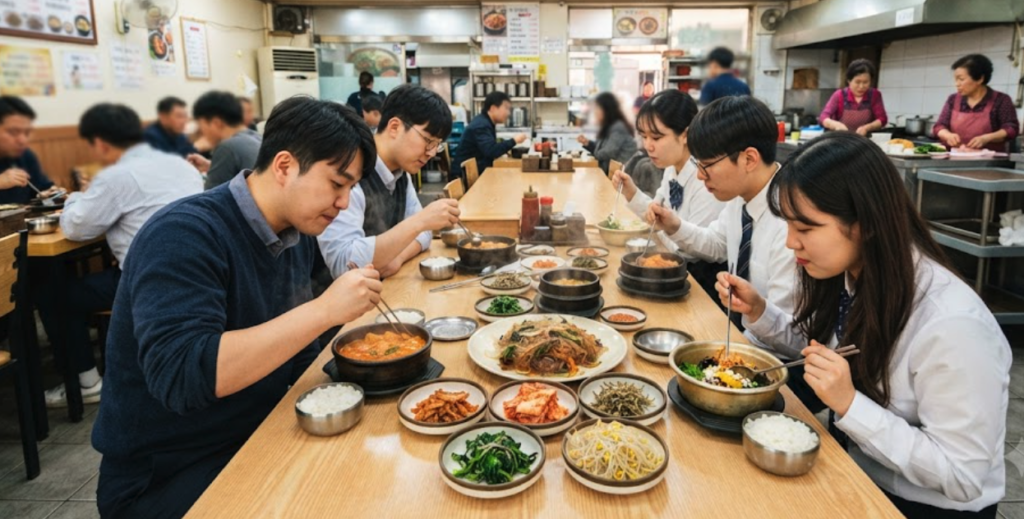
Korea’s fast eating habits are shaped by history, lifestyle, work culture, social norms, and even the structure of Korean food itself.
To understand Korean dining, you must understand why Koreans eat quickly—and why it feels completely natural to them.
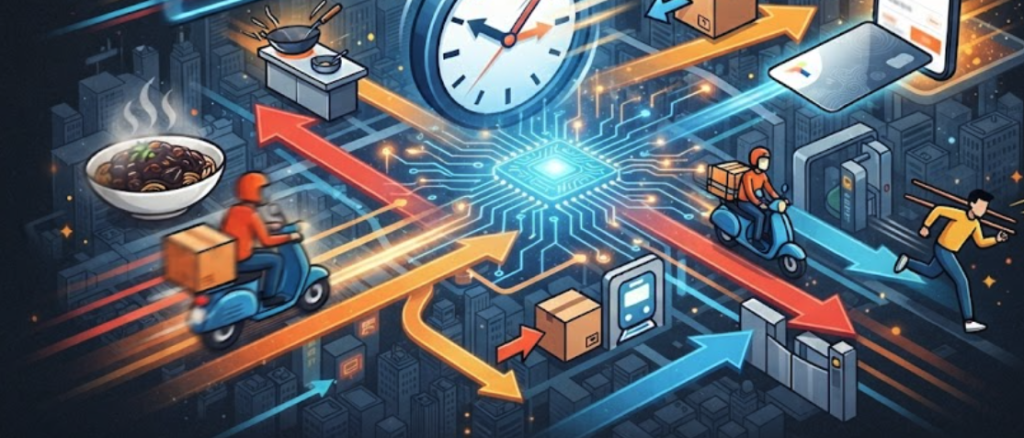
⚡ 1. The “Ppalli-Ppalli” Culture: Speed as a National Identity
Korea is famous for its 빨리빨리 (ppalli-ppalli) culture—meaning “hurry, hurry.”
This mindset influences:
- work
- transportation
- customer service
- technology
- daily routines
- and yes… eating
Korea developed rapidly after the Korean War, and speed became a survival strategy.
Efficiency was essential.
People learned to do everything quickly, including meals.
Foreigners often say:
“Koreans don’t just live fast—they eat fast too.”
🕒 2. Historical Roots: Eating Fast Was Practical
Korean eating speed didn’t start recently.
It has deep historical roots.
✔ 1) Farming culture
Korea was historically an agricultural society.
Farmers ate quickly to return to work.
✔ 2) Communal eating
Meals were shared from one table, not served individually.
People ate together, at the same pace.
✔ 3) Hot food culture
Korean food is often served boiling hot.
People eat quickly before it cools.
✔ 4) War and poverty
During difficult times, eating fast meant:
- finishing before food cooled
- finishing before others
- finishing before work resumed
Eating fast became a habit passed down through generations.
🍲 3. Korean Food Structure Encourages Fast Eating
Korean meals are designed for speed.
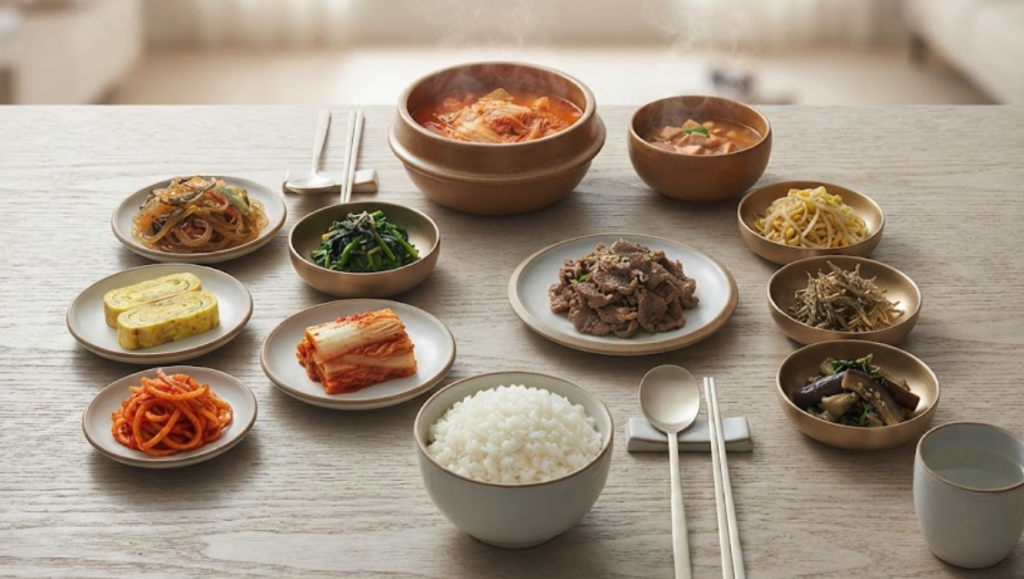
✔ 1) Everything is served at once
Unlike Western courses (appetizer → main → dessert),
Korean meals arrive all at the same time.
You don’t wait between dishes.
You just start eating.
✔ 2) One-bite foods
Many Korean dishes are:
- bite-sized
- easy to scoop
- easy to mix
- easy to share
Examples:
- bibimbap
- kimchi
- side dishes
- rice bowls
- soups
✔ 3) No knives
Koreans use chopsticks and spoons.
Food is already cut into small pieces.
✔ 4) Soup-based meals
Soup + rice = fast eating combination.
✔ 5) Shared dishes
Eating from shared plates naturally speeds up the pace.
Foreigners often say:
“Korean meals feel designed for efficiency.”
🧑🍳 4. Work Culture: Lunch Breaks Are Short
Korean work culture is fast-paced.
✔ Lunch breaks are usually 1 hour
But actual eating time is often:
- 10 minutes
- 15 minutes
- 20 minutes
The rest is:
- coffee
- chatting
- resting
- walking
✔ Eating slowly feels uncomfortable
If everyone finishes quickly, eating slowly feels awkward.
✔ Restaurants are fast
Korean restaurants serve food within:
- 3 minutes
- 5 minutes
- 10 minutes
Foreigners often say:
“I barely sat down and the food was already there.”
This speed encourages fast eating.
🧑🤝🧑 5. Social Norms: Eating Slowly Can Feel Impolite
In Korea, eating slowly can unintentionally create social tension.
✔ 1) Group eating culture
Koreans often eat together.
If one person eats slowly:
- others wait
- the group can’t leave
- it feels awkward
✔ 2) Finishing together
Koreans prefer finishing meals at the same time.
✔ 3) Eating quickly shows appreciation
It signals:
- the food is good
- you’re enjoying it
- you’re focused on the meal
✔ 4) Eating slowly can seem picky
Not intentionally—but culturally.
Foreigners often say:
“I felt like I was slowing everyone down.”
🥢 6. Korean Restaurant Culture: Fast In, Fast Out
Korean restaurants operate like efficient machines.
✔ Quick seating
✔ Quick ordering
✔ Quick serving
✔ Quick eating
✔ Quick payment
✔ Quick exit
This is especially true during:
- lunch rush
- dinner rush
- busy districts
- office areas
Korean restaurants are built for turnover.
Eating fast is part of the system.
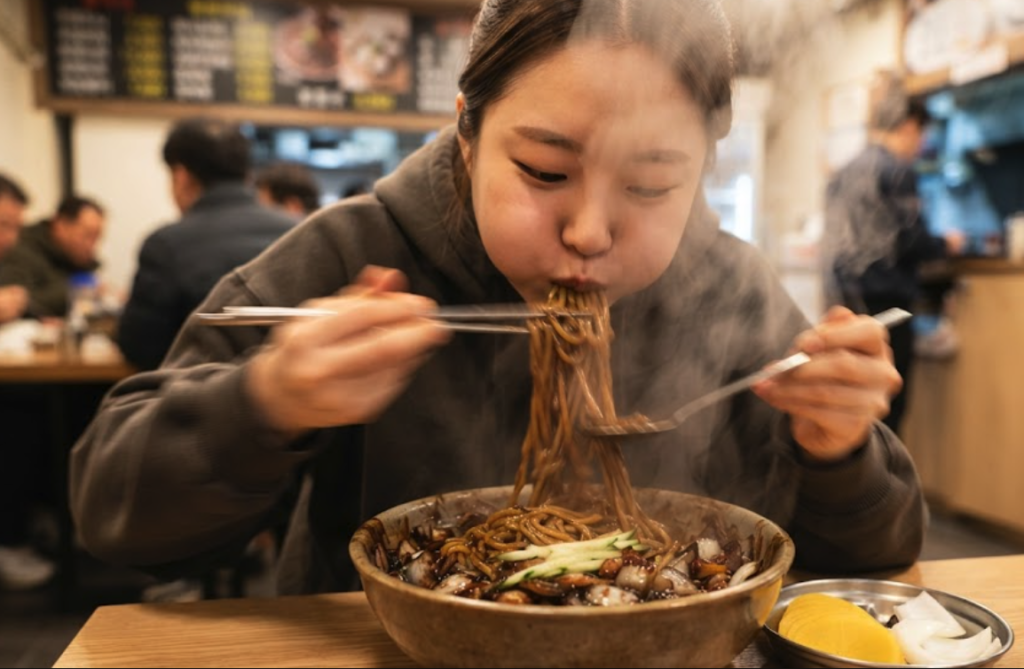
🍜 7. Korean Noodles: Designed for Speed
Korean noodle dishes are eaten fast because:
- they get soggy
- they clump together
- they cool quickly
- they lose flavor if left too long
Examples:
- kalguksu
- ramyeon
- jjajangmyeon
- jjamppong
- naengmyeon
Foreigners often say:
“I didn’t know noodles had a time limit.”
🧒 8. Korean Kids Learn to Eat Fast From Childhood
Korean children grow up eating:
- school lunches
- daycare meals
- kindergarten meals
These meals are:
- timed
- structured
- group-based
- fast-paced
Kids learn:
- finish quickly
- don’t waste food
- eat with classmates
- follow the group pace
By adulthood, fast eating feels natural.
🧘 9. Koreans Don’t See Eating Fast as Stressful
To outsiders, fast eating looks stressful.
But Koreans don’t feel that way.
✔ It’s comfortable
✔ It’s efficient
✔ It’s familiar
✔ It’s cultural
✔ It’s practical
Foreigners often say:
“Koreans eat fast but don’t look rushed.”
Because for Koreans, fast eating is simply normal.
🌍 10. How Foreigners React to Korea’s Fast Eating Culture
Foreigners living in Korea often feel:
- surprised
- confused
- pressured
- impressed
- overwhelmed
Some adapt.
Some don’t.
Many find a balance.
Common reactions include:
✔ “I feel rushed.”
✔ “I can’t keep up.”
✔ “Why is everyone done already?”
✔ “The food is so good I want to enjoy it slowly.”
✔ “I actually started eating faster without realizing it.”
Korea’s eating speed is contagious.
🌅 Final Thoughts
Koreans eat fast because:
- history shaped it
- culture supports it
- food structure encourages it
- work life demands it
- social norms reinforce it
Fast eating is not about rushing.
It’s about efficiency, harmony, and shared rhythm.
To understand Korean food culture, you must understand the pace.
And once you do, you’ll see that Korea’s fast eating is not just a habit—it’s a reflection of the country’s identity.


Leave a Reply
You must be logged in to post a comment.
[…] Why Koreans Eat So Fast: The Hidden Culture Behind Korea’s Eating Speed 🍚 Author […]