
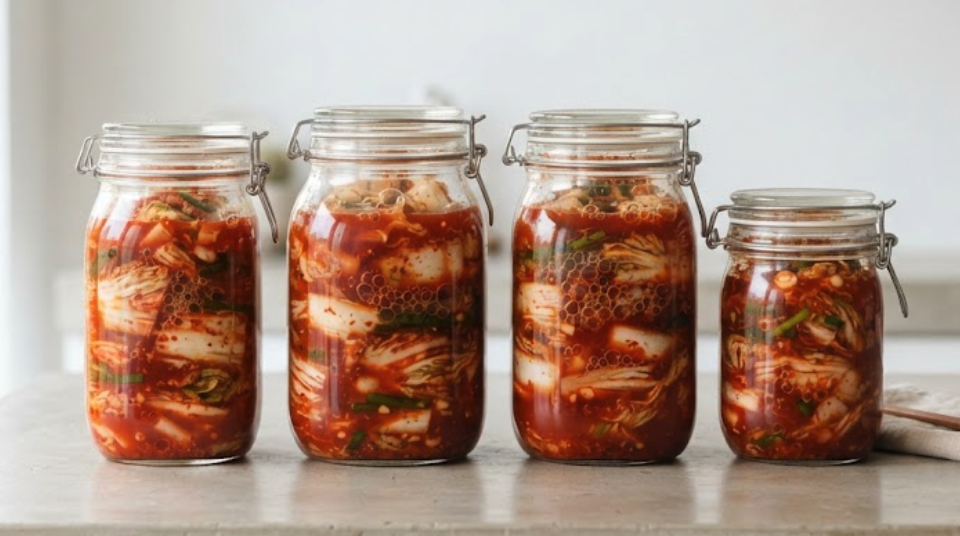
The “Real Food” America Fell in Love With: Why Kimchi Became the Most Celebrated Fermented Food in the U.S.

How U.S. “Real Food” debates revived global interest in Korea’s signature fermented dish
In recent years, the phrase “Real Food” has resurfaced across the United States.
Nutrition experts, government agencies, and public health advocates have increasingly emphasized the importance of eating foods made from natural ingredients, with minimal processing, and with clear, recognizable components.
This shift comes as America faces rising concerns about ultra‑processed foods, obesity, metabolic disorders, and declining gut health. As the debate intensifies, one food has unexpectedly risen to the center of attention:
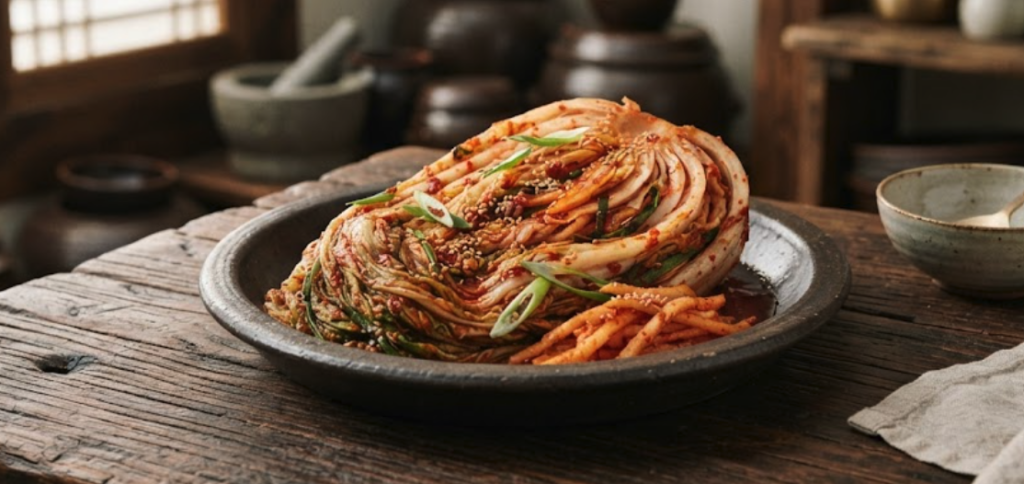
Kimchi — Korea’s iconic fermented dish.
Short‑form videos, including the one you’re linking at the end of this article, have helped Americans rediscover kimchi not just as a spicy side dish, but as a scientifically powerful, culturally rich, and nutritionally dense “real food.”
This article explores why U.S. “Real Food” discussions led to renewed interest in kimchi, how fermentation makes kimchi one of the healthiest foods in the world, and why Americans increasingly view kimchi as the gold standard of natural, whole, unprocessed eating.
🟥 1. Why the U.S. Started Talking About “Real Food” Again
The “Real Food” movement in the United States is not new, but it has gained momentum due to several overlapping issues:
Ultra‑processed food concerns
American diets contain some of the highest levels of ultra‑processed foods globally. These foods often include:
- artificial preservatives
- synthetic flavor enhancers
- refined sugars
- stabilizers
- emulsifiers
Studies have linked these ingredients to inflammation, gut imbalance, and chronic disease.
Rising health problems
The U.S. faces:
- increasing obesity rates
- childhood metabolic disorders
- digestive issues linked to poor diet quality
This has pushed policymakers and nutrition experts to emphasize natural, minimally processed foods.
Government and scientific recommendations
Across multiple administrations, including during the Trump era, U.S. nutrition guidelines repeatedly highlighted:
- whole foods
- plant‑based diets
- fermented foods
- reduced processed sugar
This broader movement created the perfect environment for kimchi to shine.
🟧 2. The Fermented Food Boom in America
Over the past decade, fermented foods have exploded in popularity in the U.S.
Consumers are increasingly seeking foods that support gut health, immune function, and natural digestion.
Popular fermented foods include:
- sauerkraut
- kombucha
- kefir
- yogurt
- miso
- kimchi
Among these, kimchi stands out because it combines fermentation, vegetables, spices, and probiotics in a single dish.
Kimchi is not just fermented cabbage — it is a complex, living food that evolves over time.
🟨 3. Why Kimchi Fits the U.S. Definition of “Real Food” Perfectly
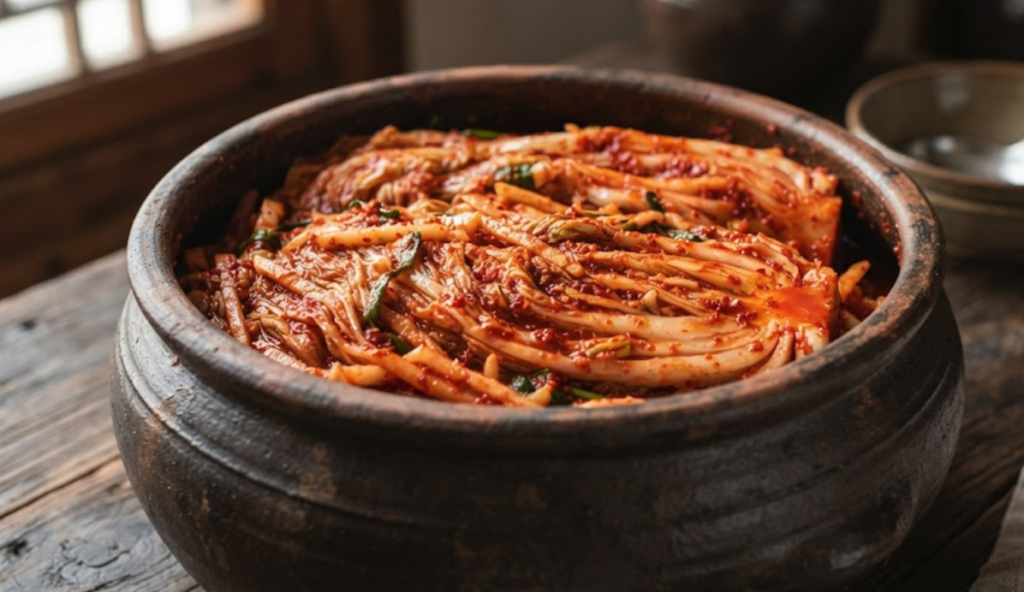
Kimchi checks every box in the American “Real Food” checklist.
✔ Natural ingredients
Kimchi is made from:
- napa cabbage
- radish
- garlic
- ginger
- chili pepper
- sea salt
- fish sauce or salted seafood
No artificial additives. No preservatives. No synthetic flavoring.
✔ Minimal processing
Kimchi is not manufactured — it is prepared and then naturally transformed through fermentation.
✔ Fermentation instead of chemicals
Instead of relying on preservatives, kimchi uses lactic acid bacteria to stay fresh and develop flavor.
✔ High nutrient density
Kimchi contains:
- vitamins A, B, C
- antioxidants
- probiotics
- fiber
- minerals
✔ A clean ingredient list
Americans often say:
“I can actually understand every ingredient in kimchi.”
This transparency is rare in modern packaged foods.
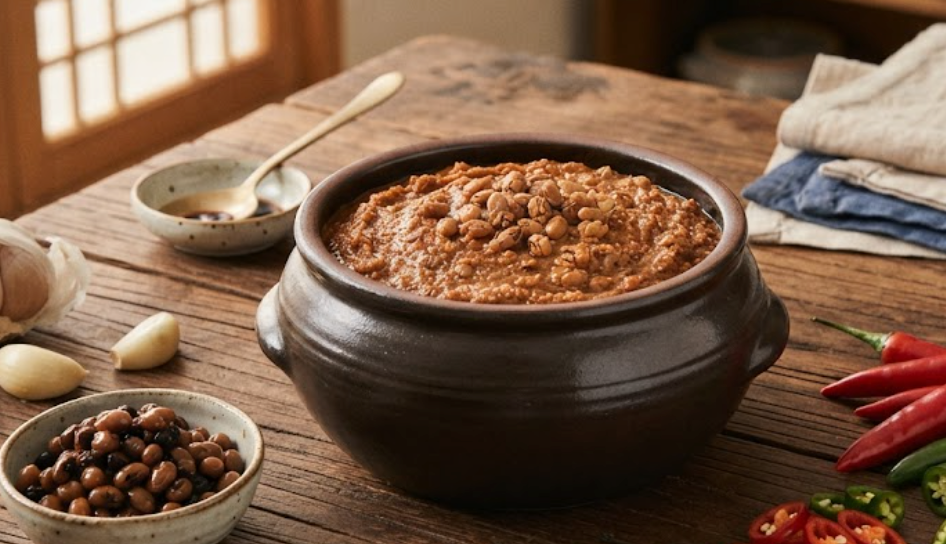
🟦 4. The Science of Kimchi Fermentation (Based on the Video You’ll Link)
The short video you plan to embed highlights the core scientific magic behind kimchi: fermentation.
Here’s what happens during fermentation:
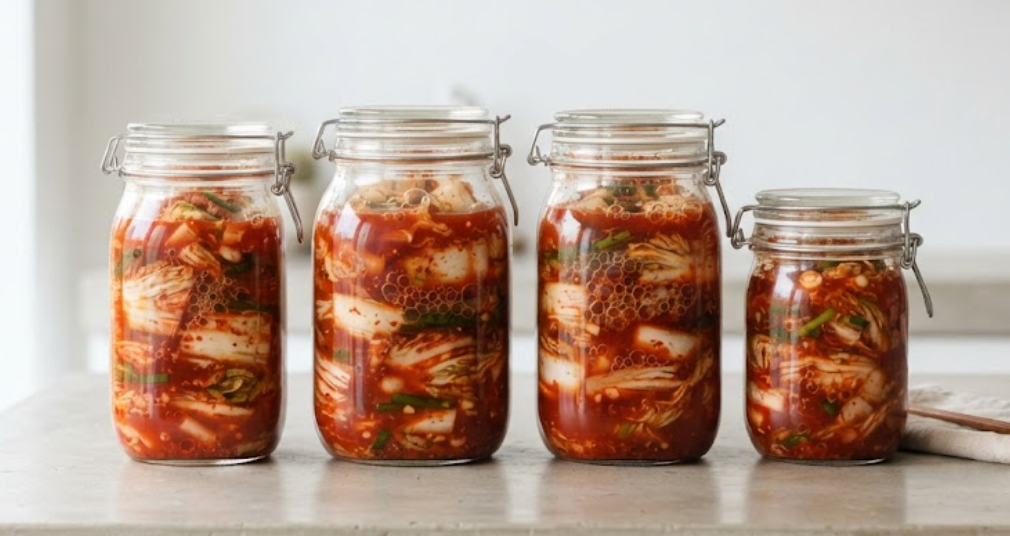
✔ Beneficial bacteria multiply
Lactobacillus and other probiotics naturally grow inside kimchi as it ferments.
These bacteria:
- improve digestion
- support immune function
- reduce inflammation
- balance gut microbiota
✔ Antioxidants increase over time
As kimchi ages, antioxidant levels rise, making it even healthier.
✔ Flavor deepens naturally
Kimchi’s sour, spicy, umami-rich flavor comes from fermentation — not artificial additives.
✔ Natural preservation
Kimchi can last months without chemical preservatives because fermentation protects it.
This is why Americans increasingly view kimchi as a “living food” — something that changes, grows, and improves over time.
🟩 5. U.S. Media and Nutrition Experts Highlight Kimchi
Kimchi has been featured in:
- CNN’s “World’s Healthiest Foods”
- Healthline’s fermented food recommendations
- Harvard Health’s gut health articles
- Whole Foods Market’s “Top Trending Foods”
Kimchi is often described as:
- “one of the world’s healthiest fermented foods”
- “a probiotic powerhouse”
- “a perfect example of real food done right”
The U.S. government’s emphasis on natural, whole foods indirectly boosted kimchi’s popularity, as Americans searched for foods that fit the “Real Food” criteria.
Kimchi became an easy answer.
🟫 6. Why Americans Feel Kimchi Is the Ultimate “Real Food”
Foreigners often describe kimchi as:
✔ “Food where you can see every ingredient.”
Nothing hidden. Nothing artificial.
✔ “A food that makes itself.”
Fermentation does the work.
✔ “A clean-label food.”
Short ingredient list, all natural.
✔ “A food with cultural depth.”
Kimchi carries centuries of Korean tradition.
✔ “A food that tastes natural, not engineered.”
Its flavor comes from biology, not chemistry.
Kimchi feels honest — and that resonates deeply with American consumers tired of industrial food.
🟪 7. Kimchi’s Rise as a Global Superfood
Kimchi’s global popularity is driven by:
- K‑drama and K‑pop influence
- Korean restaurants expanding worldwide
- increased interest in gut health
- rising demand for fermented foods
- vegan and gluten‑free adaptations of kimchi
Kimchi is now sold in:
- Whole Foods
- Costco
- Trader Joe’s
- Walmart
- Local farmers’ markets
It has become a mainstream food in the U.S., not just an ethnic dish.
🟧 8. Conclusion: Kimchi Is More Than Food — It’s the Definition of “Real Food”
Kimchi embodies everything the U.S. “Real Food” movement stands for:
- natural ingredients
- minimal processing
- fermentation
- probiotics
- cultural authenticity
- nutritional density
In a world filled with ultra‑processed foods, kimchi represents a return to simplicity — a food made from real vegetables, real spices, and real fermentation.
The “real food” America fell in love with wasn’t a trendy diet product or a lab‑engineered health snack.
It was kimchi, a humble Korean dish with thousands of years of history.
🔗 Video Reference