
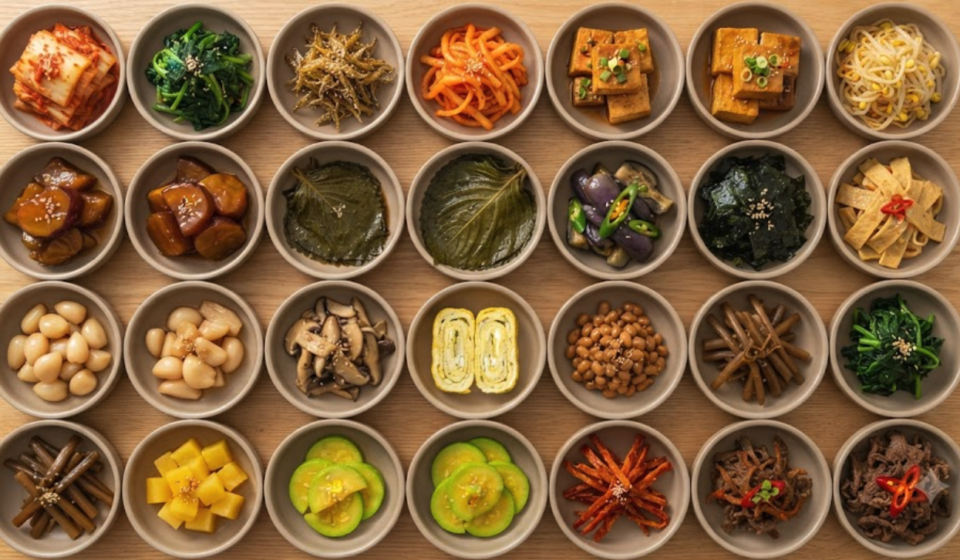

When foreigners first sit down at a Korean restaurant, the reaction is almost universal:
“Wait… all these dishes are free?”
“Why are there so many?”
“Do Koreans eat like this every day?”
Small plates of vegetables, seasoned roots, marinated meats, fermented foods, and tiny bites of flavors fill the table before the main dish even arrives.
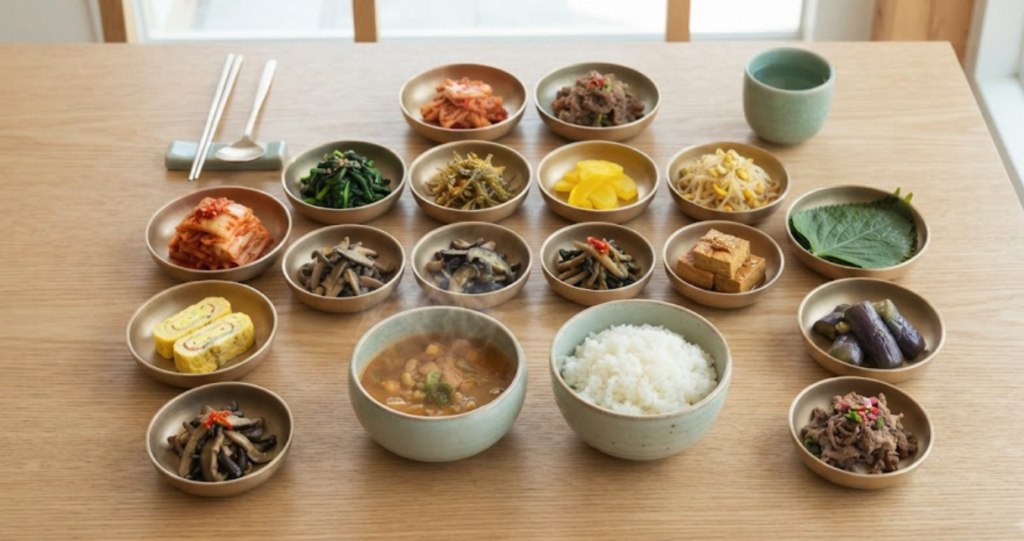
This is banchan (반찬)—the heart of Korean food culture.
To outsiders, banchan feels like a bonus.
To Koreans, banchan is the meal.
Understanding banchan means understanding Korean food, Korean families, Korean history, and even Korean values.
This article explores why Koreans have so many side dishes, how the culture developed, and what makes banchan one of the most fascinating parts of Korean cuisine.
🌾 1. Banchan Comes From Korea’s Agricultural Roots
Korea was historically an agricultural society.
Families lived in rural villages, grew their own food, and preserved ingredients for winter.
This lifestyle shaped banchan in several ways:
✔ 1) Seasonal ingredients
Koreans used whatever was available:
- spring herbs
- summer vegetables
- autumn roots
- winter fermented foods
✔ 2) Preservation culture
Before refrigerators, Koreans preserved food through:
- salting
- fermenting
- drying
- pickling
This created long-lasting side dishes.
✔ 3) Communal eating
Families shared everything from one table.
Small dishes made sharing easier.
Foreigners often say:
“Korean meals feel like a collection of flavors.”
That’s because banchan evolved from practicality and community.
🧂 2. Fermentation: The Foundation of Korean Side Dishes
Korea’s fermentation culture is world-famous.
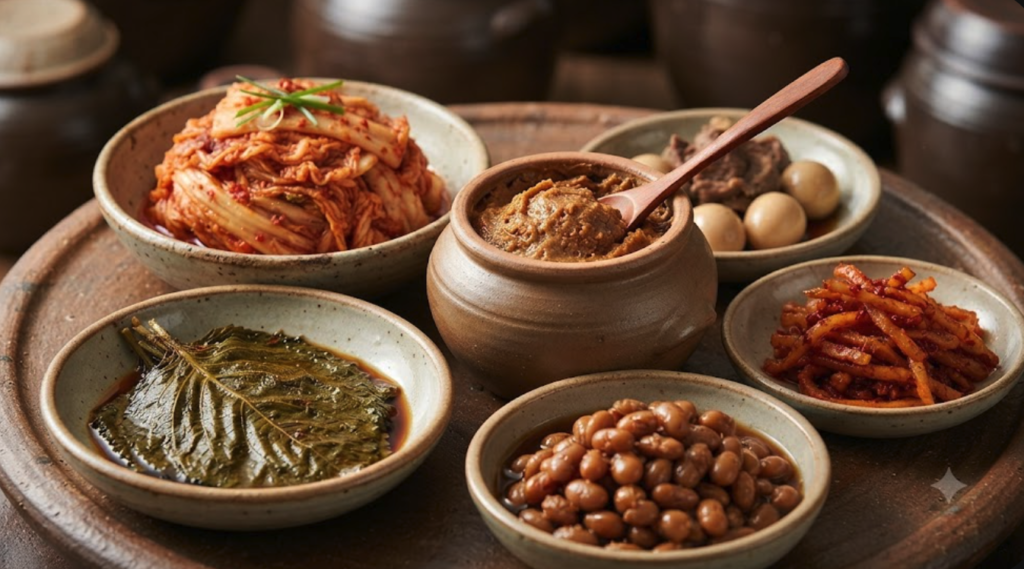
Kimchi, doenjang (soybean paste), gochujang (red pepper paste), ganjang (soy sauce), jeotgal (salted seafood)—these are not just condiments.
They are the foundation of banchan.
✔ Fermentation allowed food to last through harsh winters
✔ Fermented foods added deep flavor to simple meals
✔ Fermentation created variety without needing fresh ingredients
This is why many banchan dishes taste:
- salty
- tangy
- savory
- umami-rich
Foreigners often say:
“Korean side dishes taste complex even though they look simple.”
Fermentation is the reason.
🍚 3. Korean Meals Are Built Around Rice—Banchan Completes the Meal
Korean food is rice-centered.
Rice is the main dish.
Everything else supports it.
✔ Banchan adds flavor to plain rice
✔ Banchan provides nutrition
✔ Banchan prevents meals from feeling repetitive
✔ Banchan balances the meal with vegetables and proteins
This is why Koreans say:
“밥 먹자”
(Let’s eat rice)
Not “let’s eat food.”
Rice is the core.
Banchan is the variety.
🧑🍳 4. Korean Moms Cook Fast—And Banchan Makes It Possible
Korean home cooking is incredibly efficient.
Many banchan dishes:
- can be prepared in advance
- last several days
- are easy to store
- can be served instantly
This allows Korean moms to prepare meals quickly.
✔ Morning: heat soup + serve rice + add banchan
✔ Evening: same banchan + new main dish
Foreigners often say:
“Korean moms cook full meals in 10 minutes.”
Banchan is the secret.
🧑🤝🧑 5. Sharing Food Is a Core Korean Value
Korean meals are communal.
People share:
- dishes
- flavors
- experiences
Banchan encourages:
- conversation
- connection
- harmony
- equality at the table
Everyone eats the same dishes.
Everyone reaches for the same plates.
Foreigners often say:
“Korean meals feel social.”
That’s because banchan is designed for sharing.
🧂 6. Balance Is Everything: Korean Food Philosophy
Korean food follows the principle of 음양오행 (yin-yang and five elements).
Meals must balance:
- colors
- flavors
- temperatures
- textures
- nutrients
Banchan helps achieve this balance.
✔ Sweet
✔ Salty
✔ Sour
✔ Spicy
✔ Bitter
A Korean meal includes all of these.
Foreigners often say:
“Every bite tastes different.”
That’s intentional.
🥬 7. Health Culture: Banchan Makes Korean Meals Nutritious
Korean meals are naturally healthy because of banchan.
Most side dishes are:
- vegetable-based
- low in fat
- high in fiber
- rich in probiotics
- full of vitamins
Examples:
- spinach
- bean sprouts
- radish
- seaweed
- mushrooms
- tofu
Foreigners often say:
“Korean food feels healthy even when I eat a lot.”
Banchan is the reason.
🍽️ 8. Restaurants Use Banchan to Show Hospitality
In Korea, banchan is not just food—it’s service.
Restaurants give:
- free banchan
- unlimited refills
- seasonal dishes
- homemade specialties
This shows:
- generosity
- care
- pride
- hospitality
Foreigners often say:
“I can’t believe all this is free.”
It’s part of Korean dining culture.
🗺️ 9. Every Region Has Its Own Banchan Style
Korea’s regional diversity creates unique banchan traditions.
✔ Jeolla Province
Rich, flavorful, many dishes
✔ Gyeongsang Province
Bold, salty, spicy
✔ Gangwon Province
Simple, vegetable-heavy
✔ Jeju Island
Seafood-based banchan
Foreigners often say:
“Korean food changes completely depending on the region.”
Banchan reflects local identity.
🧓 10. Banchan Is a Symbol of Korean Family Culture
Banchan represents:
- care
- effort
- love
- tradition
Korean moms often say:
“I made many side dishes so you can eat well.”
Banchan is not just food.
It’s affection.
Koreans have many side dishes because:
- history shaped it
- agriculture supported it
- fermentation preserved it
- rice-centered meals needed it
- sharing culture encouraged it
- health philosophy reinforced it
- family values celebrated it
Banchan is not an extra.
It’s the essence of Korean food.
For foreigners living in Korea, understanding banchan means understanding Korean life itself.
🔗 Recommended Links



Leave a Reply
You must be logged in to post a comment.
[…] Why Korean Side Dish Culture Exists: The Real Reason There Are So Many Banchan […]
[…] Why Korean Side Dish Culture Exists: The Real Reason There Are So Many Banchan Author […]