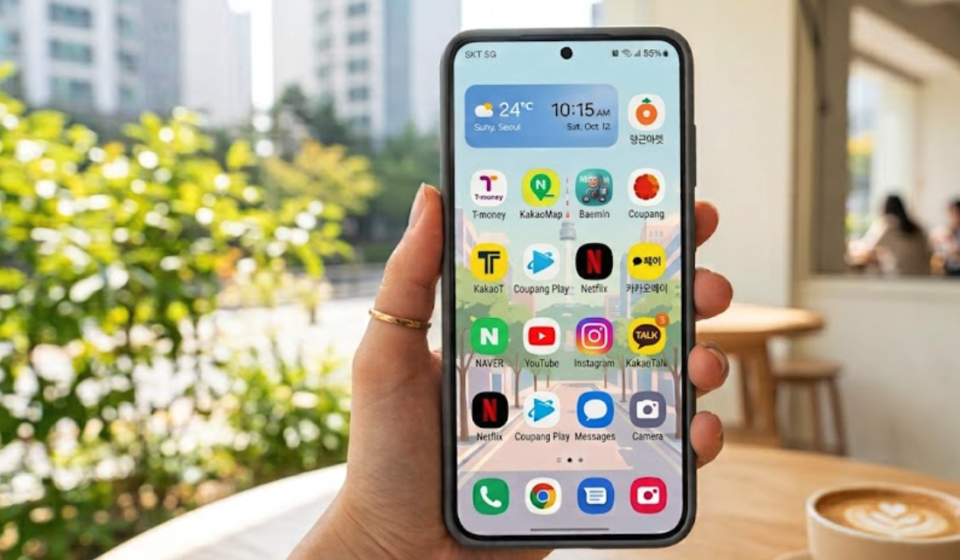

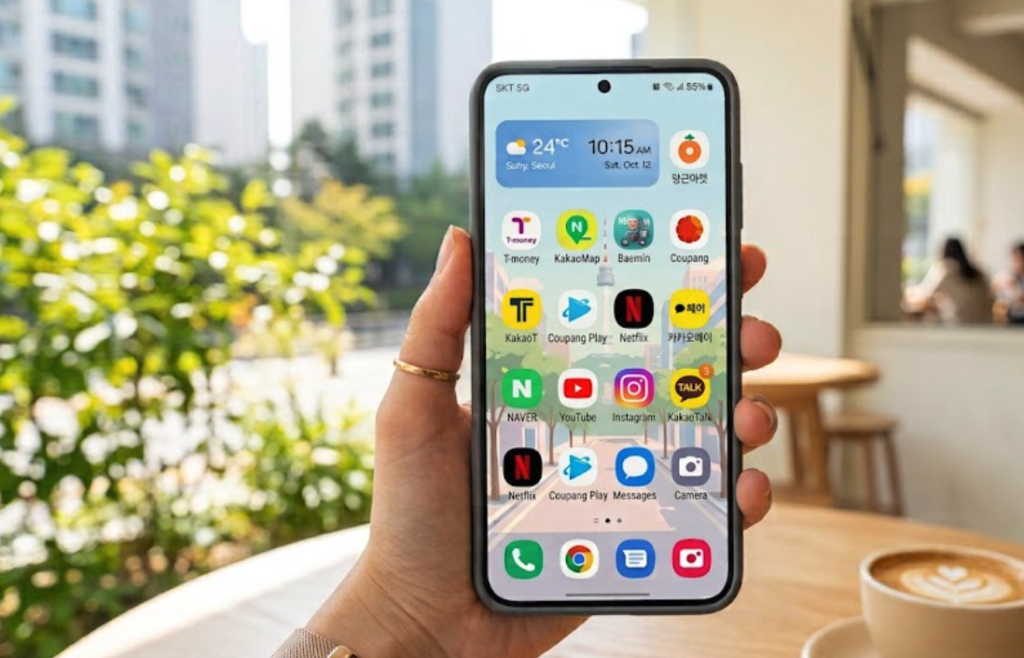
Living in Korea, you quickly realize that daily life is deeply connected to mobile apps. Everything—from transportation and food delivery to banking and shopping—runs through your phone. For foreigners, installing the right apps early makes life dramatically easier. These apps aren’t just convenient tools; they’re part of how people navigate the city, communicate, pay, and organize their routines.
Here are the apps that almost everyone in Korea uses, and why they matter when you actually live here.
📍 1. KakaoMap — The Most Accurate Map in Korea
Google Maps doesn’t work well for navigation in Korea. Buildings are dense, addresses can be tricky, and many small alleys don’t appear correctly. KakaoMap is the app locals rely on because it reflects the real structure of Korean cities.
Why it’s essential:
- Extremely accurate walking and driving routes
- Real‑time bus and subway information
- Detailed building info (floors, entrances, shops)
- English support
- Street-level photos and 3D maps
When you’re trying to find a café inside a multi-floor building or locate the exact entrance of a subway station, KakaoMap is far more reliable than anything else. It’s the app you’ll open multiple times a day without even thinking about it.
🗺️ 2. Naver Map — The Best Alternative to KakaoMap
Some people prefer Naver Map because of its clean interface and strong English support. It also integrates well with Naver’s ecosystem, which is widely used in Korea.
Useful features:
- Real‑time public transportation routes
- Easy-to-read walking navigation
- Restaurant reviews and photos
- Indoor maps for malls and stations
- Accurate travel time estimates
Locals often switch between KakaoMap and Naver Map depending on the situation. If KakaoMap feels too detailed, Naver Map’s simpler layout can be refreshing.
🚕 3. Kakao T — Korea’s Main Taxi App
In Korea, you rarely hail taxis on the street. Kakao T is how almost everyone calls a taxi, and it’s one of the apps foreigners appreciate the most.
Why you need it:
- Shows driver location in real time
- Displays car number and arrival time
- Predicts fare before the ride
- Supports card and mobile payments
- Offers premium, deluxe, and van options
If you’re carrying heavy luggage, traveling late at night, or going somewhere unfamiliar, Kakao T makes the entire process stress-free. You can even see the route the driver is taking, which adds a sense of safety and transparency.
🍜 4. Baemin (배달의민족) — The #1 Food Delivery App
Korea’s food delivery culture is famous, and Baemin is the most widely used app. Whether you want Korean food, pizza, fried chicken, or even convenience store snacks, Baemin has it.
What makes it great:
- Huge variety of restaurants
- Real‑time delivery tracking
- Easy payment with cards or mobile wallets
- English mode available
- Reliable customer service
Delivery riders are fast, and the app shows exactly where your food is. Many foreigners say Baemin is one of the apps that makes living in Korea feel incredibly convenient.
📦 5. Coupang — Korea’s Amazon (But Faster)
Coupang’s “Rocket Delivery” is one of the biggest conveniences in Korean life. You can order something at night and receive it the next morning.
Why it’s essential:
- Next‑day or same‑day delivery
- Massive product selection
- Easy returns
- Reliable customer service
- Grocery delivery through Coupang Fresh
Coupang becomes your go-to for everything: kitchen supplies, electronics, clothes, cleaning products, and even fresh food. It’s hard to imagine living in Korea without it.
💳 6. Kakao Pay — Everyday Mobile Payments
Kakao Pay is integrated into KakaoTalk, making payments incredibly simple. Many stores accept Kakao Pay QR codes, and online payments are fast.
Useful for:
- Paying at stores
- Online shopping
- Sending money to friends
- Transportation card top-ups
- Utility bill payments
Because KakaoTalk is used by almost everyone in Korea, Kakao Pay naturally becomes part of daily life.
💳 7. Naver Pay — The Other Major Payment System
Naver Pay is widely used for online shopping and subscriptions. Many Korean websites and apps support Naver Pay as their primary payment method.
Why it’s helpful:
- Fast checkout on most Korean websites
- Easy refund and payment tracking
- Works with major stores and services
- Integrates with Naver’s shopping platform
If you buy anything online in Korea, you’ll see the Naver Pay button everywhere.
🚇 8. Subway Korea — Real‑Time Subway Information
This app shows detailed subway arrival times and transfer routes. It’s especially useful in Seoul, where the subway network is huge and complex.
Key features:
- Real‑time train arrival
- Transfer guidance
- Platform information
- Delay notifications
- Exit recommendations for specific destinations
If you’re trying to find the closest exit to a café, museum, or store, this app saves a lot of time.
🏦 9. Your Bank’s Mobile App — Absolutely Necessary
Banking in Korea is almost entirely mobile. Whether you use KB, Shinhan, Hana, Woori, or NH, the mobile app is essential.
Why:
- Money transfers
- Bill payments
- Account management
- ATM location search
- Foreign currency services
Without your bank’s app, daily financial tasks become difficult. Most people use it multiple times a week.
📱 10. Telecom Apps (KT, SKT, LG U+) — For Phone Plans and Data
Your mobile carrier’s app helps you manage your phone plan.
Useful for:
- Checking data usage
- Paying phone bills
- Managing roaming
- Customer service
- Viewing plan details
It’s not an app you’ll use daily, but when you need it, it’s essential.
⭐ Why These Apps Matter
Korea’s lifestyle is fast, digital, and highly connected. With these apps installed, you can:
- Navigate anywhere
- Order food easily
- Shop online quickly
- Pay without cash
- Call taxis safely
- Use public transportation smoothly
- Manage your finances
- Handle daily tasks without stress
These apps aren’t just tools—they’re part of everyday life.
Once you start using them, you’ll understand why people say Korea is one of the most convenient countries to live in.