
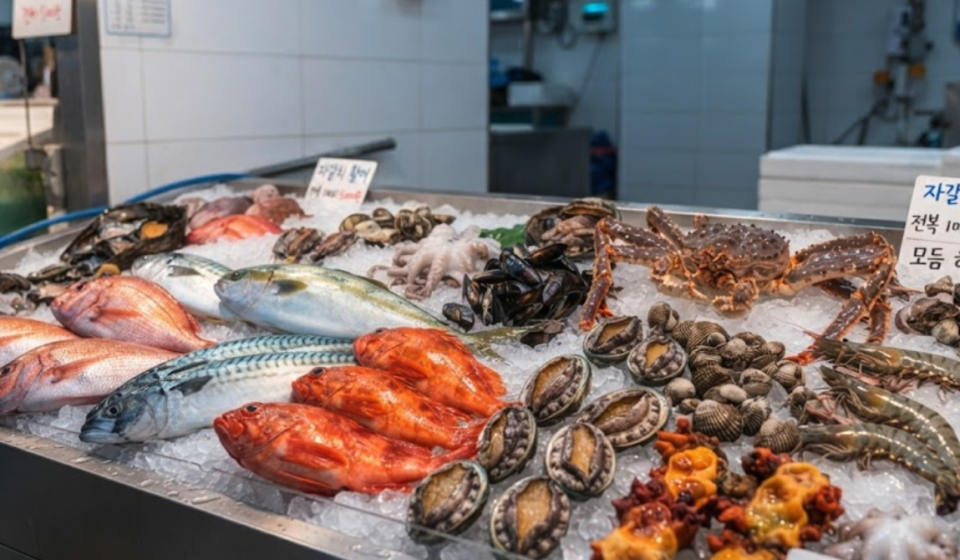

Why Korea’s largest port city has a completely different food identity
When foreigners visit Busan, they immediately notice something:
the food tastes different.
It’s fresher, stronger, saltier, and deeply connected to the ocean.
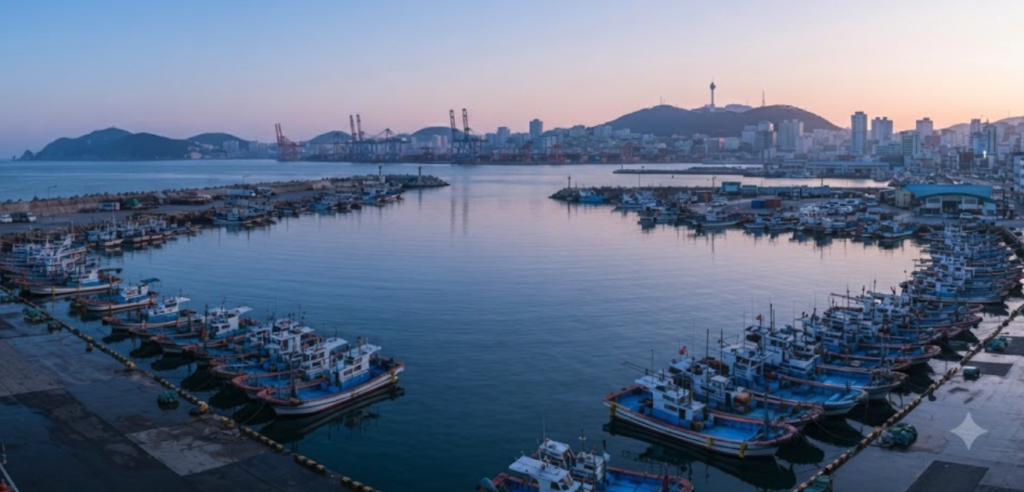
Busan is not just a city near the sea — it is Korea’s largest port, a fishing hub, and a place where seafood is part of daily life.
To understand Busan’s food, you must understand Busan’s identity.
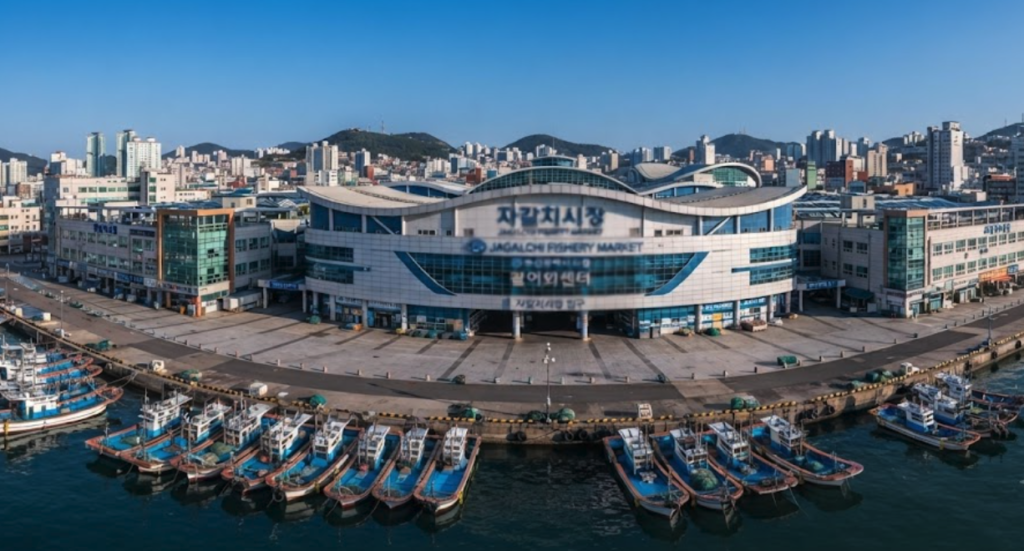
✦ 1. Busan Is Korea’s Largest Port — And That Changes Everything
Busan is home to:
- Korea’s biggest international port
- the largest fish markets
- the busiest seafood distribution centers
- thousands of fishing boats
- a coastline that shapes daily life
This means seafood is not a “special occasion” food.
It is everyday food.
In Seoul, seafood travels hundreds of kilometers.
In Busan, seafood travels minutes.
This difference creates a completely different food culture.
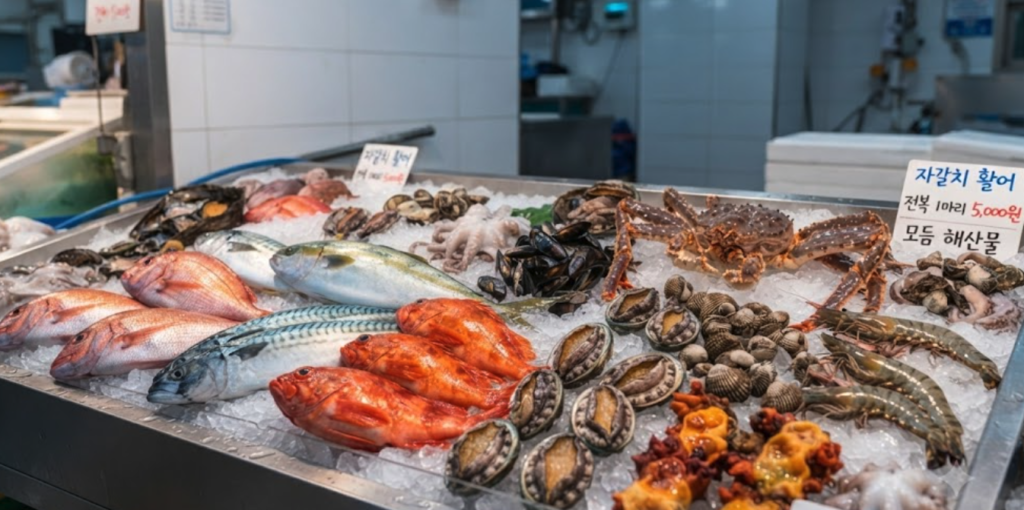
✦ 2. The Heart of Busan Seafood Culture: Jagalchi Market
Foreigners who visit Busan often go to Jagalchi Market, the most famous seafood market in Korea.
Why is Jagalchi so special?
✔ 1) Freshness
Fish caught at dawn arrive at the market within hours.
✔ 2) Variety
You can find everything:
- live fish
- shellfish
- squid
- octopus
- sea squirts
- sea cucumbers
- crabs
- clams
- eels
- seaweed
✔ 3) “You buy it, they cook it” system
You choose seafood → restaurants upstairs cook it immediately.
This system is unique to Busan.
✔ 4) Women divers and market culture
Historically, Jagalchi was run by strong women vendors (“Jagalchi ajumma”),
who shaped Busan’s seafood identity.
Jagalchi is not just a market — it is Busan’s soul.
✦ 3. Why Busan Has the Strongest “Hwe (Raw Fish)” Culture in Korea
Foreigners often ask:
“Why do Busan people eat so much raw fish?”
The reasons are simple:
✔ 1) Fresh fish is always available
Busan’s coastline provides endless supply.
✔ 2) Fishing culture is part of daily life
Many families have fishermen relatives.
✔ 3) Eating raw fish is cheaper in Busan
In Seoul, raw fish is expensive.
In Busan, it’s normal.
✔ 4) Busan’s climate suits raw seafood
Hot summers → cold raw fish is refreshing.
✔ 5) Busan’s taste preference is bold
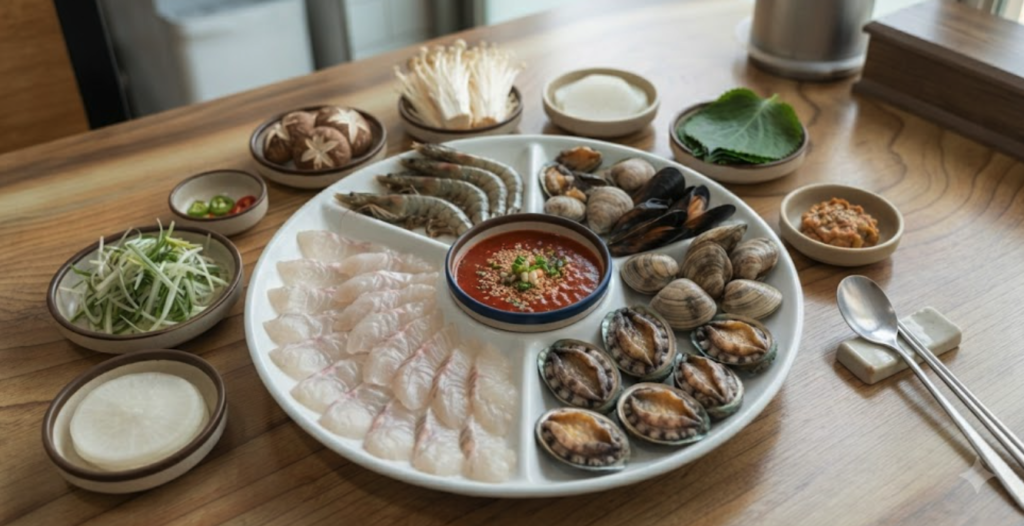
Busan-style raw fish is:
- thicker cuts
- chewier texture
- stronger dipping sauces
Foreigners often say Busan hwe tastes more “alive.”
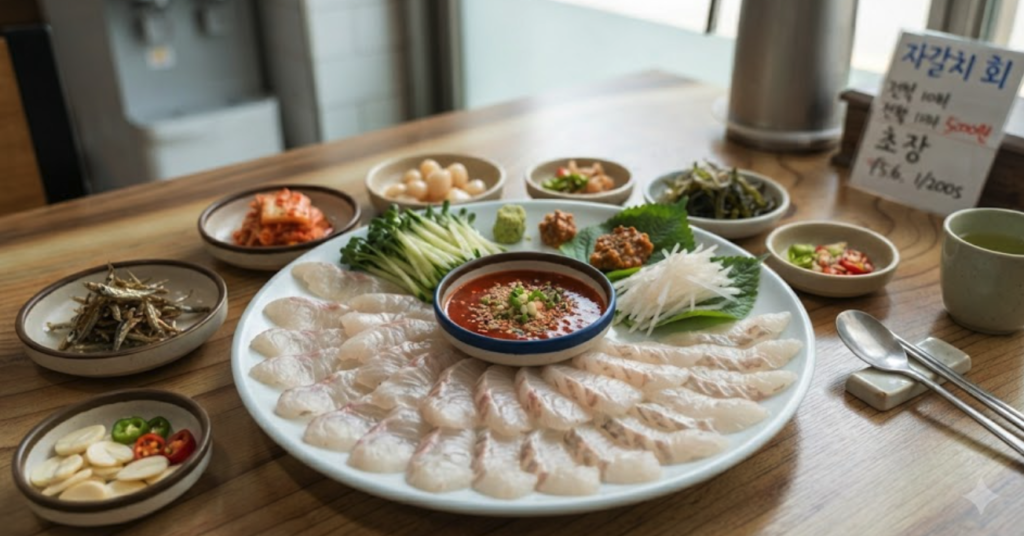
✦ 4. The Secret Weapon: Busan’s “Cho-jang” Culture
If you eat raw fish in Busan, you will see cho-jang everywhere.
Cho-jang is a spicy-sweet red pepper vinegar sauce.
Foreigners often ask:
“Why do Busan people dip everything in cho-jang?”
Because cho-jang matches Busan’s taste identity:
- spicy
- sweet
- tangy
- bold
- refreshing
Busan’s cho-jang is stronger than Seoul’s.
It reflects the city’s preference for powerful flavors.
✦ 5. Busan’s Seafood Is Not Just Raw Fish — It’s a Whole System
Busan has a huge variety of seafood dishes that foreigners rarely know.
✔ 1) Gomjangeo (Grilled Sea Eel)
Busan’s signature dish.
Chewy, smoky, and full of energy.
Historically eaten by fishermen for stamina.
✔ 2) Daege (Snow Crab)
Busan ports receive crabs from the East Sea.
Fresh, sweet, and often cheaper than Seoul.
✔ 3) Myeongran-jeot (Salted Pollack Roe)
Busan-style is saltier and spicier.
✔ 4) Mulhoe (Cold Raw Fish Soup)
A Busan invention.
Raw fish + icy broth + spicy sauce.
Perfect for summer.
✔ 5) Nakji (Octopus)
Busan-style octopus is chewier and more intense.
✔ 6) Seafood Kalguksu
Busan’s version uses anchovy broth and fresh clams.
✔ 7) Seafood Hotpot
Busan’s hotpot is loaded with fresh ingredients from the port.
Busan seafood is not one dish — it is a complete ecosystem.
✦ 6. Why Busan Food Tastes Stronger Than Seoul Food
Foreigners often notice that Busan food is:
- saltier
- spicier
- more intense
- more flavorful
Why?
✔ 1) Fishermen needed strong flavors
Long working hours → strong seasoning.
✔ 2) Seafood requires bold sauces
Fresh seafood pairs well with spicy-sweet sauces.
✔ 3) Coastal climate affects taste
Sea breeze reduces subtle flavors → stronger seasoning used.
✔ 4) Japanese influence
Busan’s history includes Japanese-style broths and seafood techniques.
✔ 5) Market culture
Food made for fast eating → strong flavors.
Busan’s taste is a reflection of its lifestyle.
✦ 7. Why Foreigners Love Busan Seafood
Foreigners consistently say:
- “It’s fresher than anywhere else.”
- “The markets feel alive.”
- “The food tastes stronger and more exciting.”
- “It’s cheaper than Seoul.”
- “The dipping sauces are addictive.”
- “The seafood variety is unbelievable.”
Busan seafood is not just food — it is an experience.
✦ Busan’s Seafood Culture Is the City’s Identity
Busan seafood exists because:
- the city is Korea’s largest port
- fishing is part of daily life
- markets like Jagalchi shaped local culture
- raw fish became a symbol of freshness
- cho-jang represents Busan’s bold taste
- seafood dishes evolved from fishermen’s meals
- the city’s climate and history shaped its flavors
Busan seafood is not just something you eat.
It is something you feel — a living part of Busan’s identity.
🌟🌟🌟🌟🌟🌟🌟🌟🌟
If you want to dive deeper into Busan’s coastal food heritage — from fresh seafood markets to traditional raw fish culture — the official Visit Busan website offers detailed guides:


Leave a Reply
You must be logged in to post a comment.
[…] Busan Seafood Culture Explained for Foreigners Author […]