
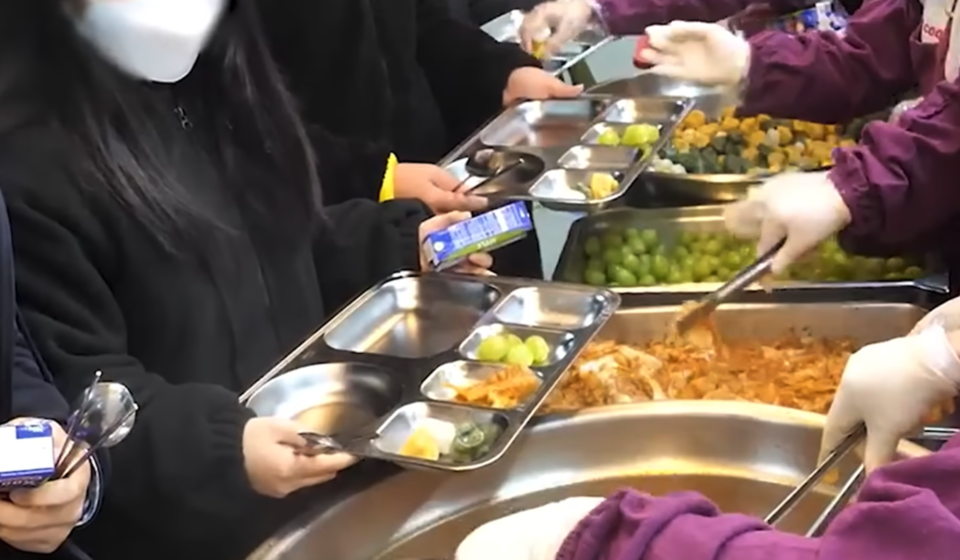
K-School Lunches Are Turning Heads in British Schools! The Korean Meals That Are Helping Kids Eat Better

For years, Korean school lunches have been famous online.
Photos of Korean cafeteria meals regularly went viral on social media, drawing comments from people around the world who could hardly believe what they were seeing.
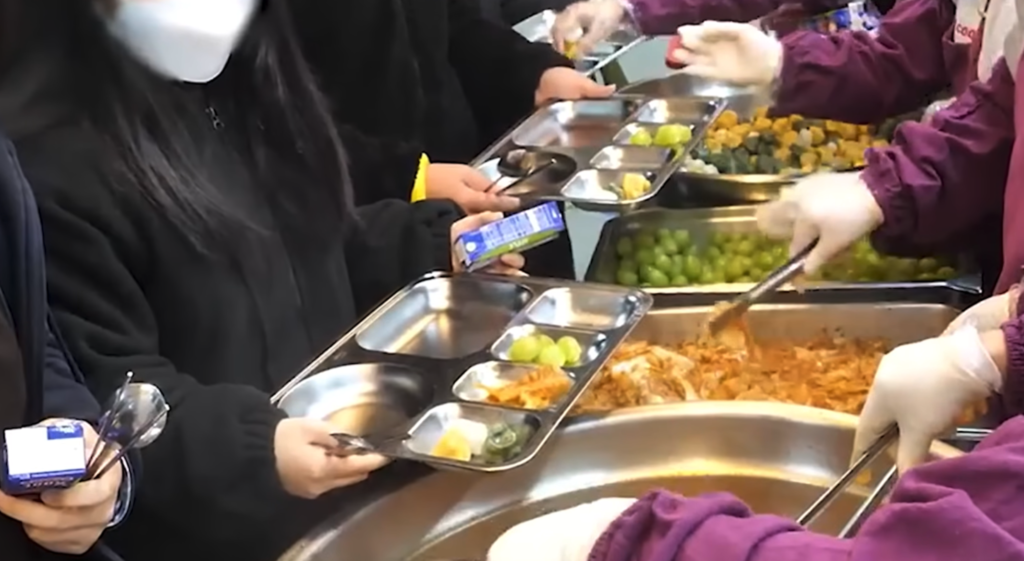
Most reactions were simple:
“That’s a school lunch?”
“That looks better than restaurant food.”
“I wish I could have gone to school in Korea.”
At first, people were simply impressed.
But something has changed.
Now, educators, parents, nutrition experts, and even media outlets in countries like the United Kingdom and the United States are asking a different question:
“Why can’t we do this too?”
Korean school lunches are no longer just something foreigners admire online.
They are increasingly being viewed as a model worth studying.
⭐ Key Takeaways
- Korean school lunches are receiving growing international attention.
- British and American media have highlighted Korea’s school meal system as an example of balanced nutrition.
- Many foreigners are surprised by the variety of dishes served in Korean schools.
- Korean school lunches emphasize nutrition, fresh ingredients, and food education.
- The culture surrounding Korean school meals is attracting just as much attention as the food itself.

How Korean School Lunches Became a Global Topic
For many Koreans, school lunch is simply a normal part of everyday life.
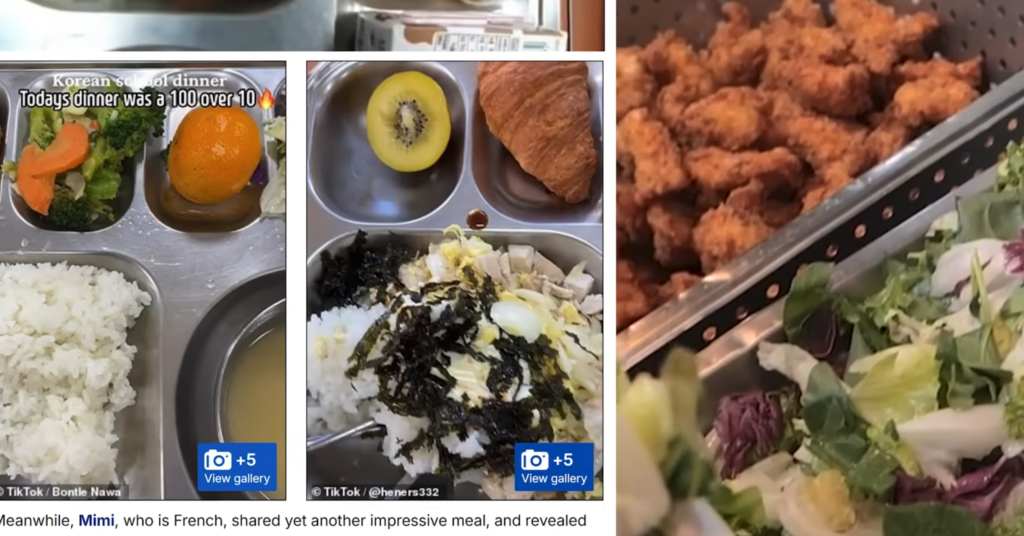
A tray with rice, soup, vegetables, protein, kimchi, and fruit is something millions of students have grown up eating.
Outside Korea, however, the reaction is often very different.
Over the past several years, videos and photographs of Korean school lunches have repeatedly gone viral.
Whenever images appeared online, comment sections quickly filled with reactions such as:
“This looks incredible.”
“Our school never served food like this.”
“How is this considered a school lunch?”
Many international viewers assumed the photos were carefully selected examples or special event meals.
They were surprised to learn that this was often just an ordinary lunch at a Korean school.
Why Britain Started Looking at Korean School Meals
Recently, the debate around school lunches has become especially intense in the United Kingdom.
British policymakers have been focusing on childhood obesity and long-term health issues.
As a result, schools are being encouraged to move away from menus dominated by highly processed foods.
Traditionally, many British students have been familiar with cafeteria meals such as:
- French fries
- Chicken nuggets
- Frozen pizza
- Fried foods
- Processed snacks
While these foods remain popular, health experts have increasingly called for change.
As discussions about school meal reform gained momentum, British media began examining examples from other countries.
One country quickly stood out.
South Korea.
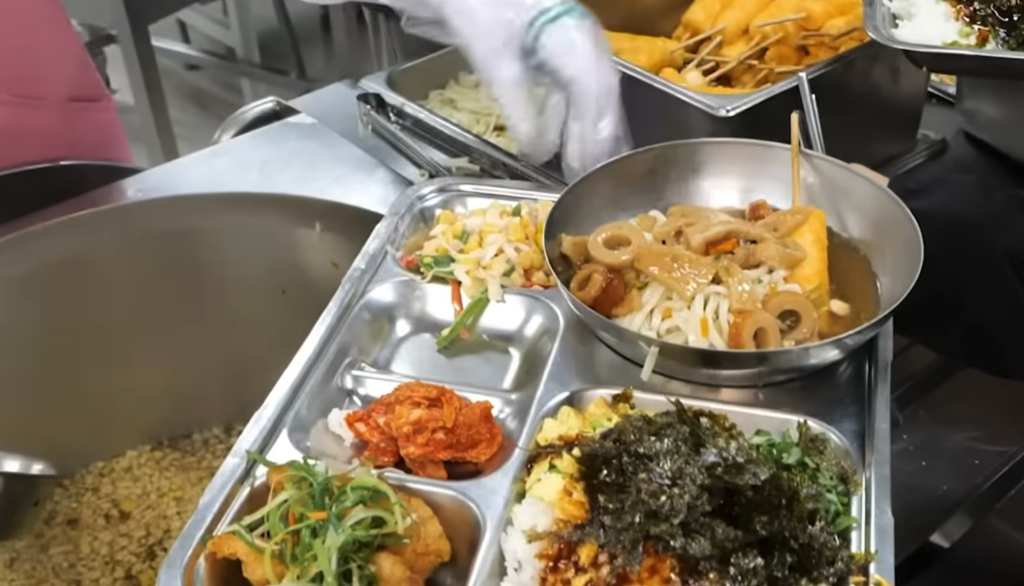
“Is This Really School Food?”
That was one of the most common reactions from British readers who saw Korean lunch trays for the first time.
A typical Korean school lunch may include:
- Rice
- Soup
- Meat or fish
- Several vegetable side dishes
- Kimchi
- Fruit
- Milk or yogurt
To many foreigners, the meal appears remarkably balanced.
British newspapers described Korean lunches as being closer to a carefully planned meal than a simple cafeteria offering.
Some readers even joked that they had seen restaurant meals that looked less impressive.
More Than Just Food
What impressed international observers most was not simply the quantity of food.
It was the way the meals are designed.
School nutritionists carefully plan menus to provide growing students with a balanced mix of nutrients.
A single meal often includes:
- Carbohydrates
- Protein
- Fiber
- Vitamins
- Minerals
Instead of focusing on one main dish, the meal encourages students to experience different flavors, textures, and ingredients.
Many nutrition experts believe this approach helps children develop healthier eating habits from an early age.
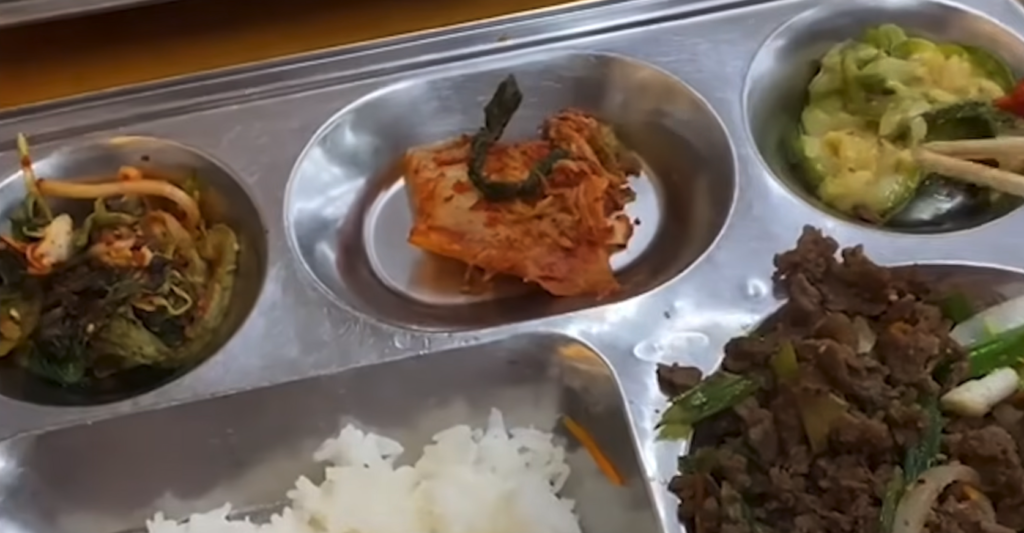
The Side Dish Culture That Fascinated Foreigners
One of the most unique aspects of Korean school lunches is the wide variety of side dishes.
In Korea, it is common to see several side dishes served at the same meal.
These may include:
- Seasoned vegetables
- Stir-fried dishes
- Kimchi
- Egg dishes
- Fish or meat dishes
Many foreign media outlets have even started using the Korean word “banchan” rather than translating it.
The reason is simple.
There is no exact equivalent in many Western dining cultures.
For many international viewers, Korean school lunches looked less like cafeteria food and more like a complete cultural experience.
Why American Parents Were Shocked
The fascination is not limited to Britain.
In the United States, Korean school lunches have also become a topic of discussion among parents.
Many American parents first encountered Korean lunches through social media.
What began as curiosity quickly turned into comparison.
They saw Korean students eating:
- Freshly prepared meals
- Hot soup
- Multiple side dishes
- Seasonal vegetables
Then many began comparing those meals with what students often receive in American cafeterias.
The contrast surprised a lot of people.
“Shouldn’t School Lunches Look Like This?”
That question appeared repeatedly in online discussions.
Many parents commented that Korean school lunches seemed more focused on health, variety, and long-term nutrition.
Some expressed concern that highly processed foods had become too common in their own school systems.
Others wondered whether schools should place greater emphasis on teaching healthy eating habits through lunch itself.
For many American parents, Korean school lunches did something unexpected:
They changed the conversation about what school meals should be.
The Moment That Touched Foreign Audiences Most
Interestingly, many foreign viewers were most impressed by something that had nothing to do with the food itself.
It was the behavior of the students.
Videos showed students:
- Waiting patiently in line
- Receiving meals respectfully
- Cleaning up after eating
- Thanking cafeteria staff
To many international viewers, these scenes were surprisingly moving.
Several commentators noted that Korean schools seemed to teach not only nutrition, but also appreciation and respect.
School Lunch as Education
In Korea, lunch is often viewed as more than a meal.
It is also considered an opportunity for education.
Students learn about:
- Healthy eating habits
- Respect for food
- Gratitude toward cooks and staff
- Community dining culture
Many international observers saw this as one of the most valuable aspects of the Korean system.
The food itself may be impressive, but the culture surrounding it is equally important.

K-School Lunches Are Now Exporting Ideas
Just as K-pop, K-dramas, and Korean cuisine have gained global popularity, Korean school lunches are beginning to attract international interest.
Schools and educational organizations in various countries are looking at:
- Korean menu planning
- Nutrition standards
- Cooking practices
- Meal service systems
The discussion is no longer about whether Korean lunches look appealing.
It is about whether parts of the Korean model could be adapted elsewhere.
Why the World Is Paying Attention to Korean School Lunches
The true strength of Korean school lunches is not simply the food.
It is the system behind the food.
Korean school lunches combine:
✔ Nutrition
✔ Health
✔ Food education
✔ Courtesy
✔ Community values
✔ Cultural appreciation
Rather than treating lunch as a break between classes, many Korean schools treat it as part of the educational experience.
That idea has resonated strongly with people around the world.

🌎 Final Thoughts
A few years ago, foreigners looked at Korean school lunches and said:
“That looks delicious.”
Today, many are saying something different:
“Maybe our schools should learn from this.”
That shift is significant.
Korean school lunches are no longer attracting attention simply because they look good in photos.
They are being recognized as part of a broader philosophy that combines health, education, culture, and community.
The world is discovering that school lunch does not have to be just a meal.
It can be an opportunity to teach healthier habits, gratitude, and respect while helping children enjoy a more balanced diet.
Perhaps that is why Korean school lunches continue to attract global attention.
They are not simply feeding students.
They are helping shape the next generation.