
The untold story behind Busan’s most iconic dish
When foreigners visit Busan, they often try milmyeon — a cold noodle dish that looks similar to naengmyeon but tastes completely different.
Many wonder:
“Why is milmyeon only famous in Busan?”
“Why does it taste so unique?”
“Why don’t other Korean cities have this dish?”
The answer is not simply “because it’s delicious.”
Milmyeon is a historical food, born from war, refugees, and survival.
It is a dish that could only have been created in Busan.
To understand milmyeon, you must understand Busan’s past.
✦ 1. Busan During the Korean War: The Last Safe City
In 1950, when the Korean War broke out, millions of people fled south.
Most cities fell under conflict — except Busan.
Busan became:
- the last safe city
- the temporary capital of Korea
- the largest refugee center in the country
- a place where hundreds of thousands struggled to survive
The population exploded overnight.
Food shortages were severe.
Traditional ingredients became impossible to find.
This is where the story of milmyeon begins.
✦ 2. The Arrival of U.S. Wheat Flour — A Turning Point
During the war, the United States sent massive amounts of wheat flour as emergency aid.
It was cheap, available, and distributed widely to refugees.
But there was a problem:
Koreans traditionally ate buckwheat (메밀) or sweet potato starch noodles for naengmyeon.
Buckwheat was scarce.
Potatoes were scarce.
Meat was scarce.
Everything was scarce.
Refugees needed a way to make noodles with what they had.
So they used wheat flour.
This was the birth of milmyeon — literally “wheat noodles.”
✦ 2. The Arrival of U.S. Wheat Flour — A Turning Point
During the war, the United States sent massive amounts of wheat flour as emergency aid.
It was cheap, available, and distributed widely to refugees.
But there was a problem:
Koreans traditionally ate buckwheat (메밀) or sweet potato starch noodles for naengmyeon.
Buckwheat was scarce.
Potatoes were scarce.
Meat was scarce.
Everything was scarce.
Refugees needed a way to make noodles with what they had.
So they used wheat flour.
This was the birth of milmyeon — literally “wheat noodles.”
✦ 3. Why Milmyeon Could Only Develop in Busan
Other cities also received wheat flour, but milmyeon didn’t appear there.
Why?
✔ 1) Busan had the largest refugee population
More people → more creativity → more need for cheap food.
✔ 2) Busan had access to seafood
Even during war, Busan could make broth using:
- anchovies
- kelp
- seafood scraps
- bones from port markets
This created the unique deep, savory broth of milmyeon.
✔ 3) Busan’s hot and humid climate
Cold noodles were perfect for Busan’s weather.
✔ 4) Busan’s food culture prefers strong flavors
Milmyeon sauce is:
- spicy
- sweet
- tangy
- bold
This matches Busan’s regional taste.
✔ 5) Refugees stayed in Busan even after the war
They kept making milmyeon.
It became a local tradition.

✦ 4. The Flavor Profile: Why Milmyeon Tastes Different from Naengmyeon
Foreigners often confuse milmyeon with naengmyeon, but they are completely different.
✔ Noodles
- Naengmyeon: buckwheat or starch → chewy, thin
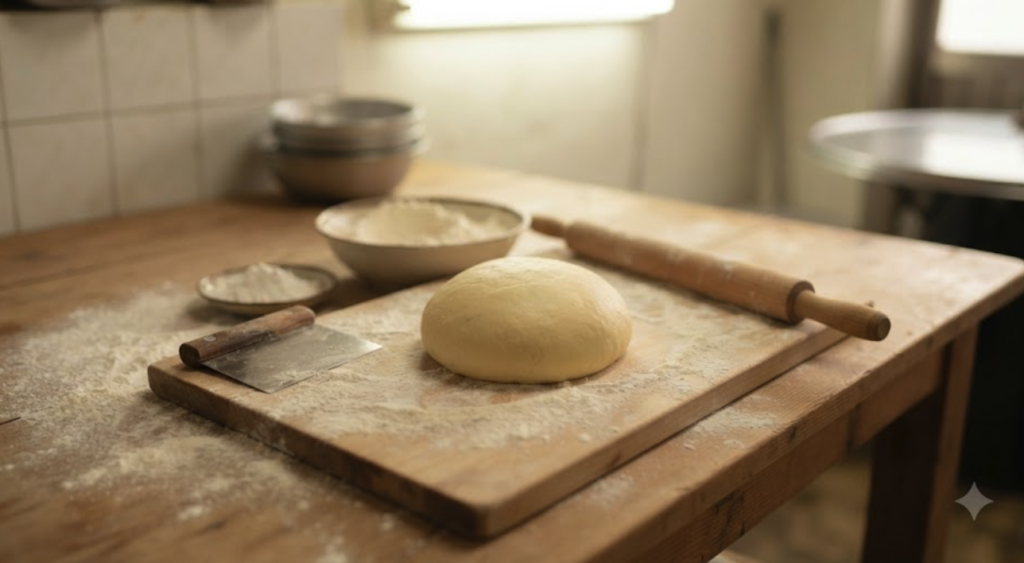
- Milmyeon: wheat flour → softer, thicker, more elastic
✔ Broth
- Naengmyeon: clean, cold beef broth
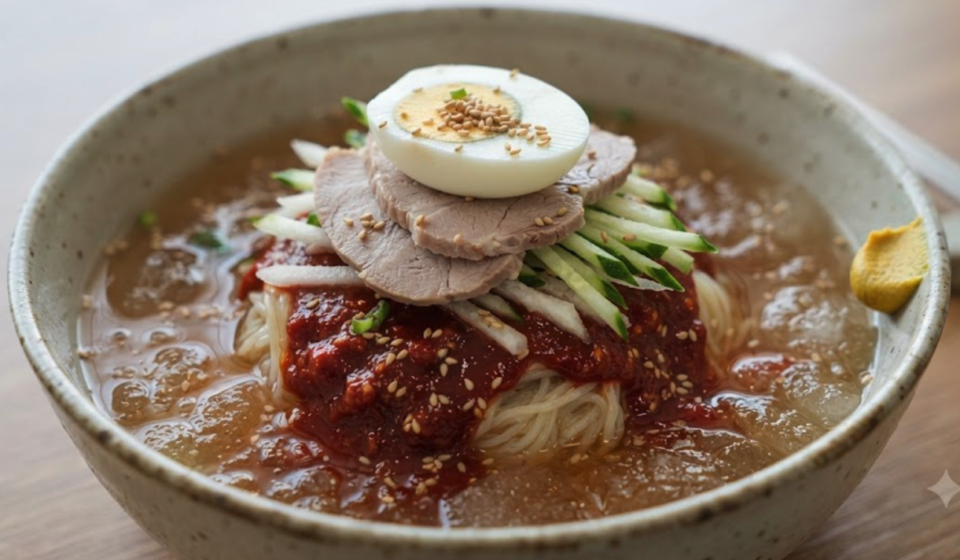
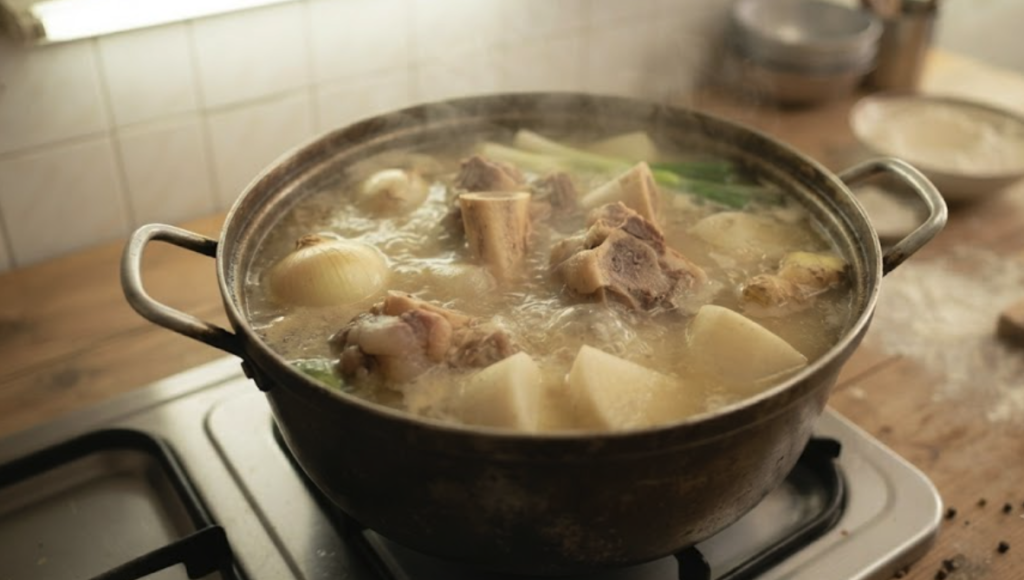
- Milmyeon: rich, savory broth with seafood + beef + vegetables
✔ Sauce
- Naengmyeon: mild, vinegary
- Milmyeon: spicy, sweet, bold, Busan-style
✔ Toppings
- Naengmyeon: pear, egg, beef
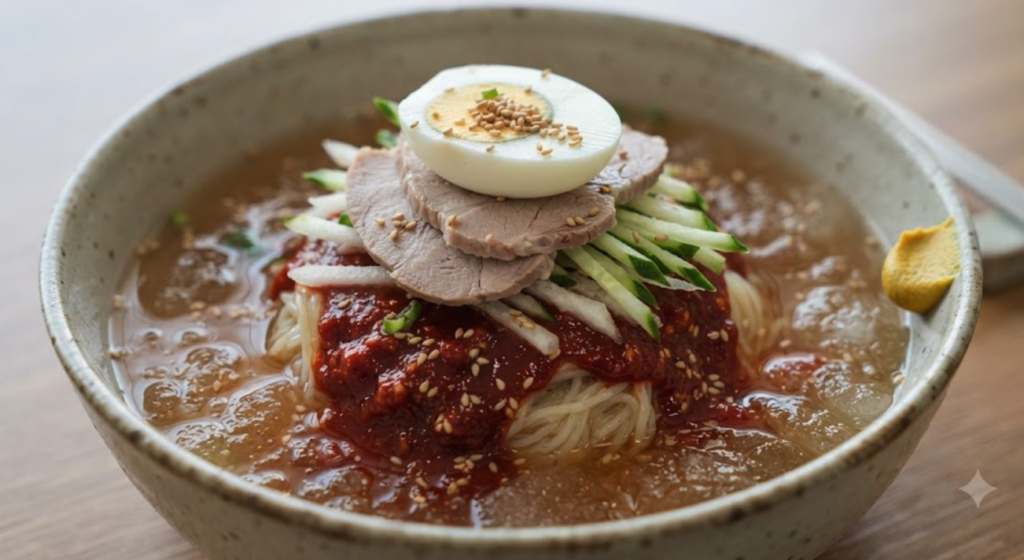
- Milmyeon: pork slices, egg, cucumber, ice, spicy sauce
Milmyeon is comfort food, not a luxury dish.
It was made to feed many people cheaply and quickly.
✦ 5. Milmyeon as a Symbol of Busan’s Identity
Milmyeon is more than food.
It represents:
- survival
- adaptation
- creativity
- refugee culture
- Busan’s resilience
- Busan’s strong flavor identity
It is a dish created by people who lost everything and rebuilt their lives in a new city.
This is why Busan locals feel proud of milmyeon.
It is their history in a bowl.
✦ 6. Why Foreigners Love Milmyeon
Foreigners often say:
- “It’s refreshing but rich.”
- “It tastes like comfort food.”
- “It’s spicy but not overwhelming.”
- “It’s cheaper than naengmyeon.”
- “It feels like a complete meal.”
Milmyeon is easy to enjoy even if you’re new to Korean food.
✦ 7. Where to Eat the Best Milmyeon in Busan
(You can add this section to your site later if you want.)
- 초량밀면 (Choryang Milmyeon)
- 할매가야밀면 (Halmae Gaya Milmyeon)
- 개금밀면 (Gaegeum Milmyeon)
- 부산진시장 밀면집들
These places preserve the original refugee-style flavor.
✦ Milmyeon Is Busan’s Story in Food Form
Milmyeon exists because:
- war forced people to flee
- Busan became the last safe city
- wheat flour arrived as emergency aid
- refugees adapted traditional recipes
- Busan’s climate and taste shaped the dish
- the city kept the tradition alive
It is a food born from hardship, but today it represents comfort, identity, and pride.
Milmyeon is not just a dish.
It is Busan’s history.
🌟 If you want to dive deeper into Busan’s culinary heritage — from milmyeon’s wartime origins to modern local favorites — the official Visit Busan website offers detailed guides: