
When foreigners experience their first summer in Korea, one of the biggest surprises isn’t the heat, the humidity, or the monsoon season.
It’s the fruit.
Korean summer fruits are unbelievably sweet, incredibly fragrant, beautifully packaged, and surprisingly expensive.
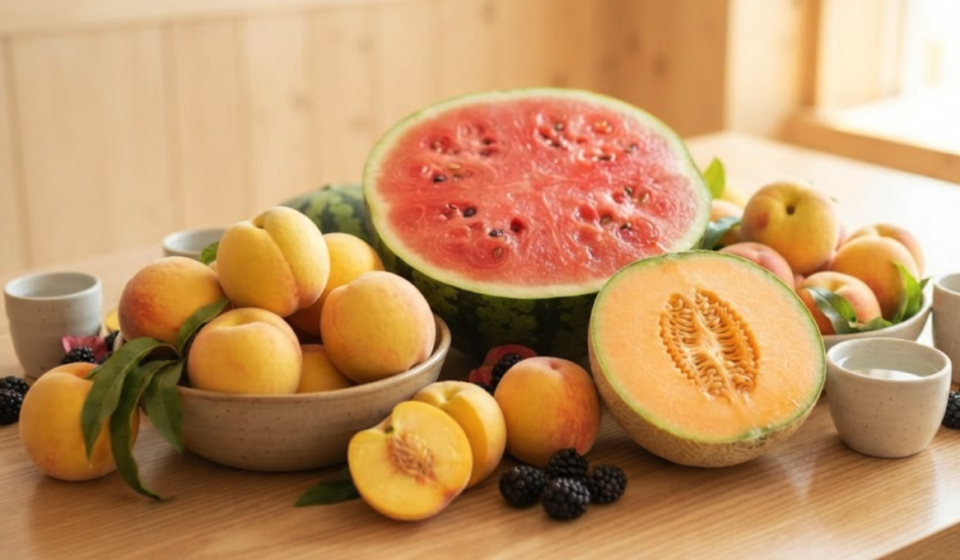
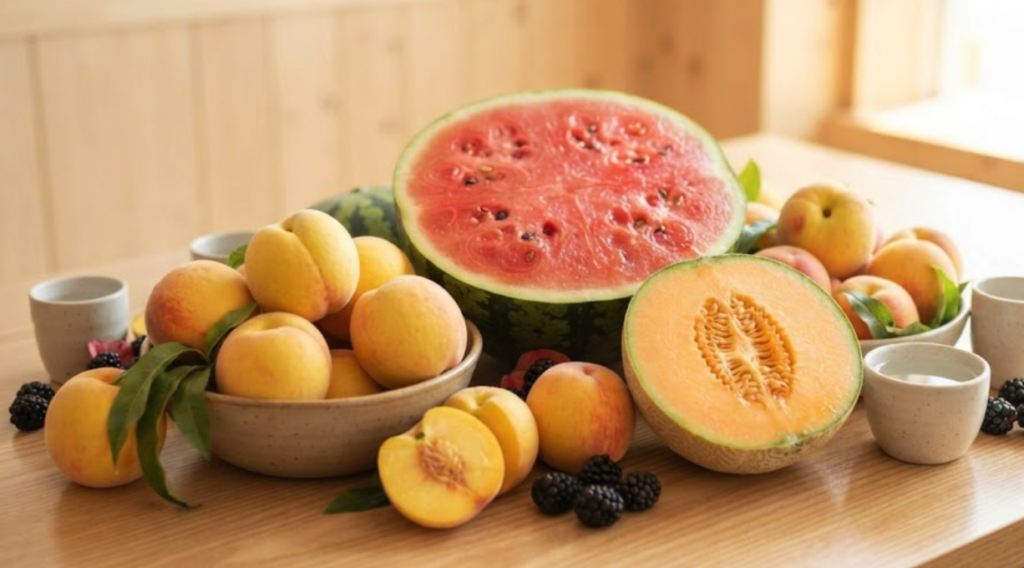
Watermelon tastes like candy.
Melon tastes like dessert.
Peaches taste like perfume.
Foreigners often say:
“Why are Korean summer fruits so good?”
“Why do Koreans buy so much fruit in summer?”
“Why is fruit so expensive?”
“Why does fruit feel like a seasonal ritual?”
To understand Korean food culture, you must understand Korean summer fruit culture.
It’s not just about taste—it’s about tradition, climate, family, and Korea’s deep obsession with seasonality.
🌞 1. Korea’s Summer Climate Creates Exceptionally Sweet Fruits
Korean summer fruits are famous for their sweetness.
This isn’t luck—it’s science.
Korea’s summer climate is:
- hot
- humid
- sunny
- long
These conditions create fruits with:
- high sugar content
- strong aroma
- juicy texture
- deep flavor
Why Korean fruits become so sweet:
- Hot days and cool nights increase natural sugar
- Strong sunlight intensifies sweetness
- Humidity creates juicy flesh
- Seasonal rainfall boosts growth
Foreigners often say:
“Korean watermelon tastes sweeter than any watermelon I’ve had.”
That’s because Korean farmers grow fruits specifically for maximum sweetness, not maximum size.
🍉 2. Watermelon: Korea’s Ultimate Summer Icon
Watermelon is the king of Korean summer fruits.
Koreans eat watermelon:
- at home
- at picnics
- at beaches
- at camping sites
- after meals
- during heatwaves
It’s not just food—it’s a symbol of summer.
Why Korean watermelon tastes so good:
- grown for sweetness, not size
- strict sugar-level testing
- premium varieties
- careful harvesting
- sold at perfect ripeness
Cultural habits:
Koreans often:
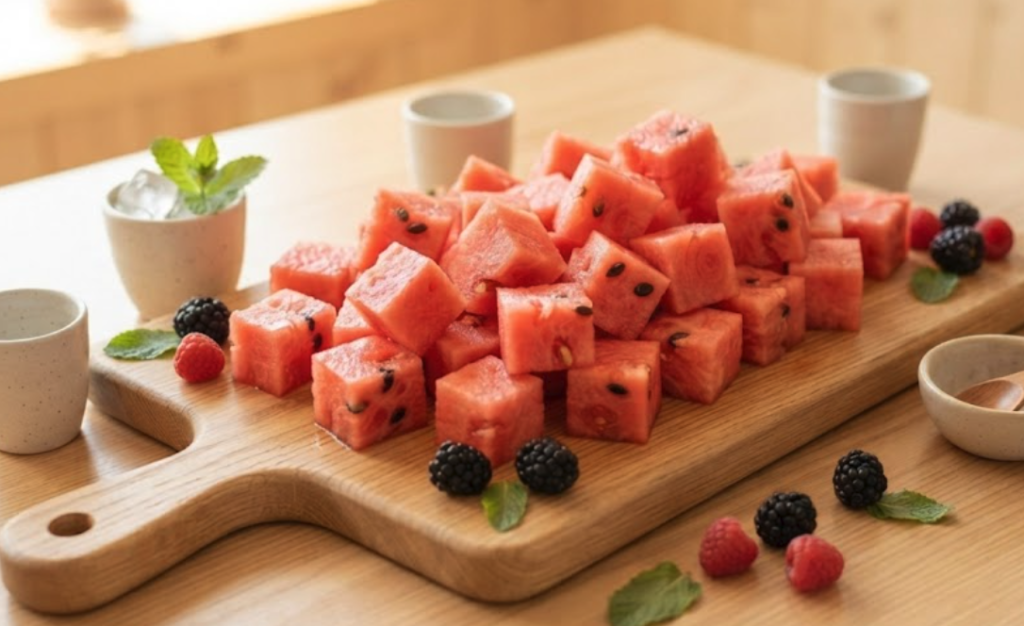
- chill whole watermelons in ice water
- cut them into perfect cubes
- share them with family
- eat them after dinner
- bring them to gatherings
Foreigners often say:
“Korean watermelon tastes like dessert.”
And Koreans agree.
🍈 3. Melon: Korea’s Sweetest Summer Luxury
Korean melons—especially yellow melons and premium musk melons—are incredibly popular.
They are known for:
- crisp texture
- floral aroma
- high sugar content
- refreshing flavor
Korean melons are often eaten:
- chilled
- sliced thin
- served as dessert
- given as summer gifts
Foreigners often say:
“Korean melons taste like perfume and honey combined.”
Koreans treat melons as a summer delicacy.
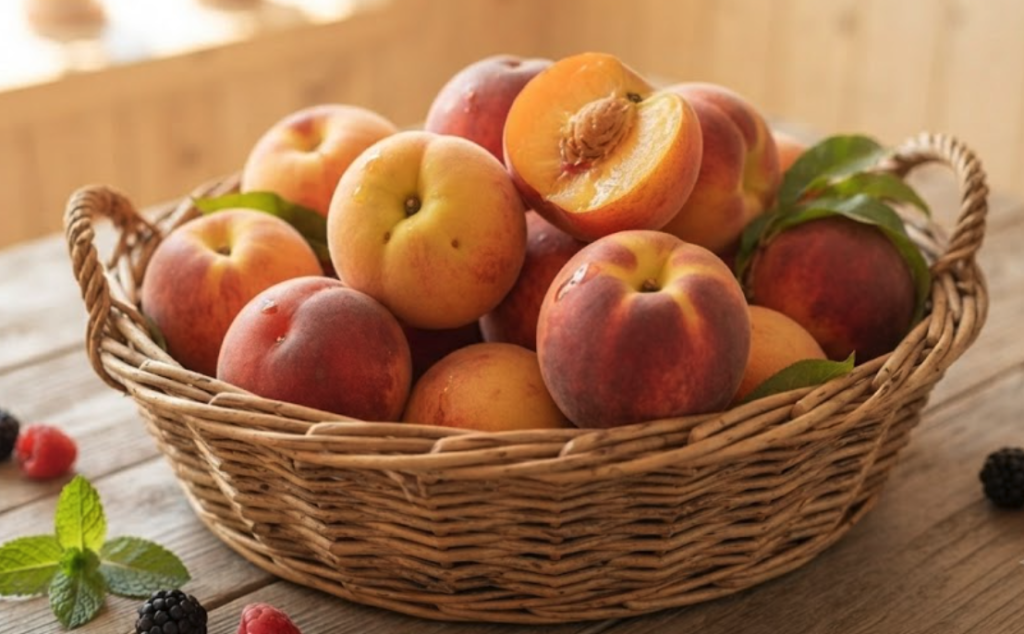
🍑 4. Peaches: Korea’s Soft, Juicy, Fragrant Summer Treasure
Korean peaches are legendary.
They are:
- extremely soft
- incredibly juicy
- intensely fragrant
- sweet like syrup
Korean peaches come in two main types:
- white peaches (soft, juicy, aromatic)
- yellow peaches (firmer, sweeter, deeper flavor)
Why Korean peaches are special:
- grown in small farms
- hand-picked
- carefully packaged
- sold at peak ripeness
- eaten immediately
Foreigners often say:
“Korean peaches are the best peaches I’ve ever tasted.”
Many Koreans wait all year for peach season.
🍒 5. Other Korean Summer Fruits Worth Knowing
Korea’s summer fruit variety is surprisingly wide.
Popular seasonal fruits:
- plums
- cherries
- blueberries
- shine muscat grapes (late summer)
- imported tropical fruits like mango and pineapple
Korean fruit culture blends local tradition with global trends.
🧊 6. Koreans Eat Summer Fruits in Unique Ways
Korean fruit-eating habits are different from many countries.
Common Korean fruit habits:
- chilling watermelon in ice water
- preparing beautifully arranged fruit platters
- freezing grapes or watermelon cubes
- enjoying fruit-based shaved ice
- eating fruit instead of dessert after meals
Foreigners often say:
“Korean fruit presentation looks like art.”
It’s part of Korean hospitality.
🎁 7. Fruit Is a Gift in Korea—Not Just Food
Korean fruit is often:
- beautifully packaged
- wrapped in protective foam
- placed in gift boxes
- sold as premium sets
Fruit symbolizes:
- health
- care
- respect
- summer celebration
Premium fruit gift sets can cost:
- $30
- $50
- $100+
Foreigners often say:
“I’ve never seen fruit sold like luxury items.”
Korea treats fruit with cultural importance.
💸 8. Why Korean Summer Fruits Are So Expensive
Foreigners are often shocked by Korean fruit prices.
Reasons:
- small-scale farming
- high quality standards
- seasonal production
- premium packaging
- strong domestic demand
Foreigners often say:
“Korean fruit is expensive but worth it.”
Most Koreans agree.
🛒 9. Korean Markets Become Fruit Festivals in Summer
During summer, Korean markets transform.
What you’ll see:
- watermelon towers
- peach fragrance filling the store
- perfectly arranged melons
- generous fruit tasting samples
- “seasonal fruit” banners everywhere
Foreigners often say:
“Korean supermarkets feel like fruit museums.”
It’s part of the seasonal excitement.
Koreans go crazy for summer fruits because:
- they’re incredibly sweet
- they’re deeply seasonal
- they’re culturally meaningful
- they’re refreshing in hot weather
- they’re part of family traditions
- they symbolize care and hospitality
Korean summer fruits aren’t just food.
They’re a seasonal ritual—something Koreans wait for all year.
For foreigners living in Korea, experiencing Korean summer fruit culture is one of the most delicious ways to understand Korean life.