
When foreigners first eat at a Korean restaurant, they almost always ask the same question:
“Why is everything free?”
“How can they give so many side dishes?”
“Why don’t they charge for water?”
“Why do they refill everything without asking?”
To outsiders, Korean restaurants feel incredibly generous.
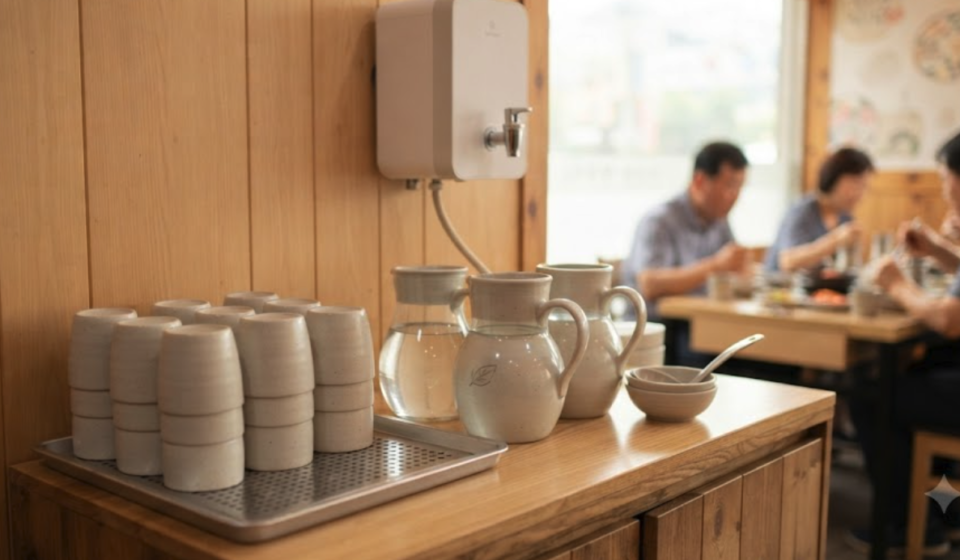
Free water.
Free tea.
Free side dishes.
Free refills.
Sometimes even free dessert.
But to Koreans, this isn’t special—it’s normal.
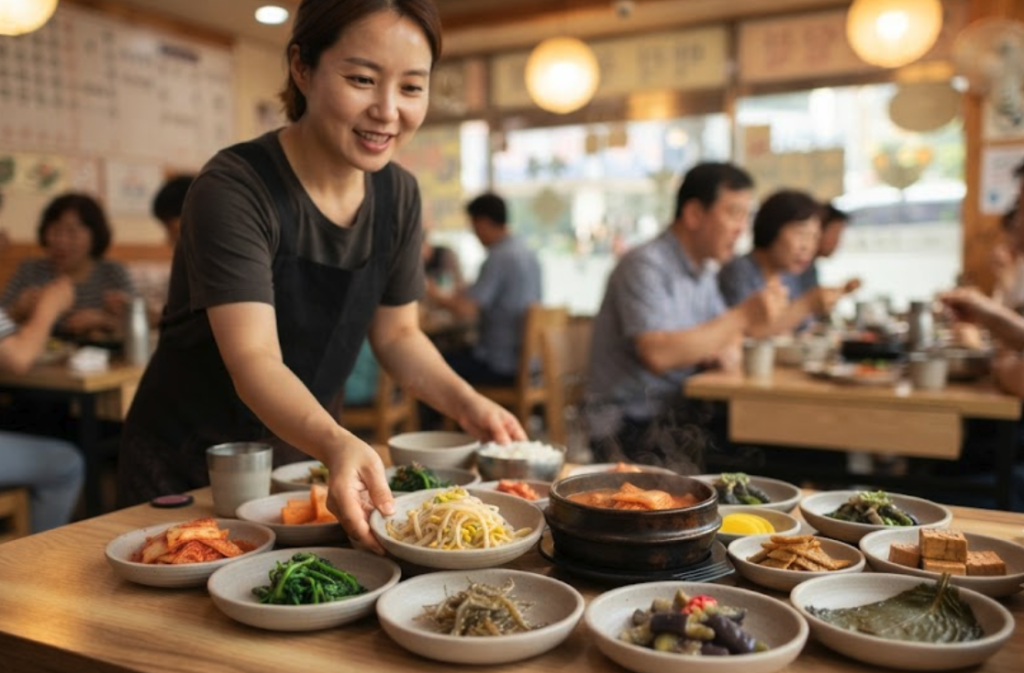
It’s part of Korean dining culture, shaped by history, hospitality, competition, and social values.
This article explores why Korean restaurants give so much for free, and why this tradition is one of the most beloved parts of Korean food culture.
🌾 1. Korean Food Culture Is Built on Generosity
Korean dining culture is deeply rooted in 정 (jeong)—a uniquely Korean concept meaning warmth, affection, and generosity.
In Korean homes:
- guests are served more food than they can eat
- mothers prepare multiple dishes “just in case”
- sharing food is a sign of care
- giving extra is a sign of respect
Restaurants inherited this tradition.
✔ Free side dishes = hospitality
✔ Free refills = care
✔ Free water = basic respect
✔ Free dessert = goodwill
Foreigners often say:
“It feels like Korean restaurants treat customers like family.”
That’s exactly the cultural foundation.
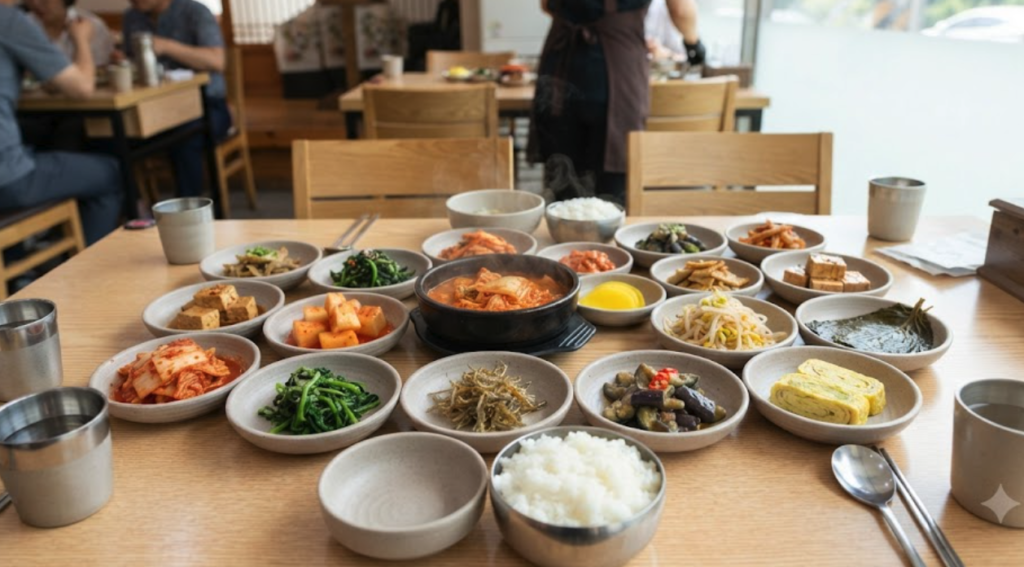
🍱 2. Banchan (Side Dishes) Are Part of the Meal, Not Extras
In many countries, side dishes cost extra.
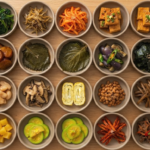
But in Korea, banchan is part of the meal itself.
A Korean meal is structured like this:
- main dish
- rice
- soup
- multiple side dishes
These side dishes:
- balance flavors
- add nutrition
- complete the meal
- support communal eating
So restaurants don’t see banchan as “extras.”
They see them as essential components of Korean cuisine.
Foreigners often say:
“I ordered one dish but got ten.”
That’s because Korean food is designed to be shared and varied.
🧂 3. Historical Roots: Korean Food Was Always Served in Variety
Korea’s agricultural and communal history shaped banchan culture.
✔ Families preserved vegetables for winter
✔ Fermented foods lasted long
✔ Meals were shared from one table
✔ Variety prevented boredom
✔ Seasonal ingredients created diversity
Even poor families prepared multiple small dishes because:
- vegetables were cheap
- fermentation made food last
- small portions were easy to share
Restaurants simply continued this tradition.
🥢 4. Competition Among Restaurants Is Extremely High
Korea has one of the most competitive restaurant markets in the world.
In many neighborhoods:
- every building has multiple restaurants
- every street has dozens of options
- every district has hundreds of choices
To stand out, restaurants offer:
- more banchan
- better quality
- free refills
- free dessert
- free tea
- free water
It’s a way to attract customers and build loyalty.
Foreigners often say:
“Korean restaurants compete by giving more, not charging more.”
Exactly.
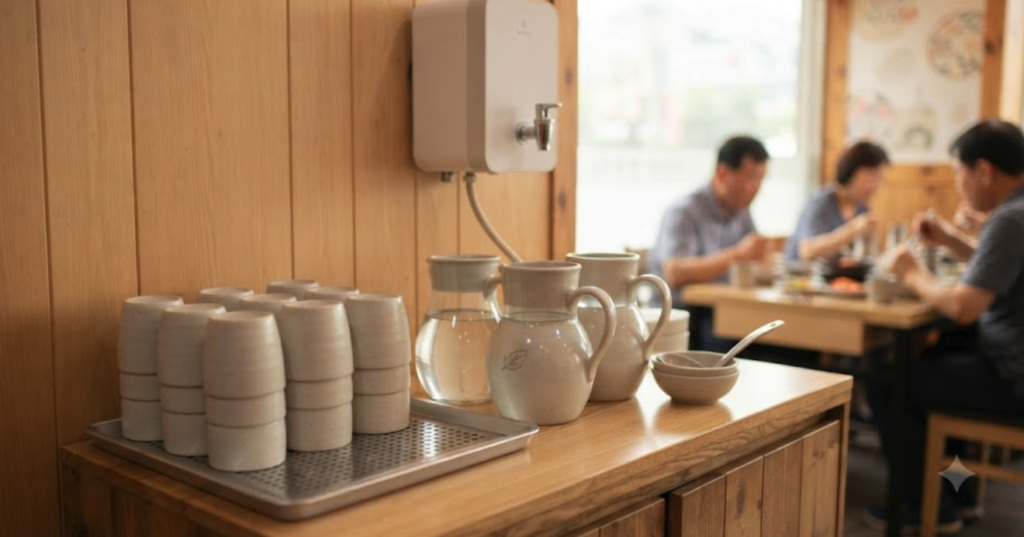
💧 5. Free Water Is a Cultural Standard
In Korea, water is considered a basic necessity, not a product.
✔ Water should always be free
✔ Water should always be unlimited
✔ Water should always be self-serve or served immediately
Charging for water feels rude in Korean culture.
This is why:
- cafés give free water
- restaurants give free water
- even bars give free water
Foreigners often say:
“I love that I never have to buy water at restaurants.”
It’s one of the most appreciated aspects of Korean dining.
🔁 6. Free Refills Show Respect and Hospitality
Korean restaurants often refill:
- kimchi
- radish
- bean sprouts
- seaweed
- soup
- rice
Sometimes without even asking.
Why?
✔ It shows care
✔ It makes customers feel welcome
✔ It encourages repeat visits
✔ It reflects Korean generosity
In Korean culture, empty dishes look sad.
Refilling them shows warmth.
Foreigners often say:
“I didn’t even ask, but they refilled everything.”
That’s Korean service culture.
🍲 7. Korean Food Is Designed for Sharing—Refills Support That
Korean meals are communal.
People share:
- side dishes
- soups
- stews
- meats
- noodles
Free refills ensure:
- everyone gets enough
- no one feels left out
- the table stays balanced
- the meal feels complete
Sharing is a core Korean value.
Refills support that value.
🧑🍳 8. Korean Restaurants Want You to Feel Full and Satisfied
In Korea, a good restaurant is judged by:
- taste
- quantity
- generosity
- service
- atmosphere
If customers leave hungry, it’s considered a failure.
This is why:
- portions are large
- banchan is plentiful
- refills are unlimited
- soup is often included
- rice is often included
Foreigners often say:
“Korean meals feel complete even when I order something simple.”
That’s intentional.
🧘 9. Korean Dining Culture Values Comfort Over Formality
In many Western countries:
- water costs money
- bread costs money
- refills cost money
- side dishes cost money
But Korean dining culture is informal and comfortable.
✔ No tipping
✔ No service charge
✔ No extra fees
✔ No hidden costs
Instead, restaurants show service through:
- free items
- fast delivery
- warm hospitality
- generous portions
Foreigners often say:
“Korean restaurants feel honest.”
That’s part of the charm.
🧓 10. Older Koreans Expect Generosity—Restaurants Follow That Standard
Middle-aged and older Koreans grew up with:
- homemade meals
- many side dishes
- shared food
- warm hospitality
Restaurants maintain this tradition because:
- older customers expect it
- younger customers appreciate it
- tourists love it
- it preserves Korean identity
Banchan is cultural heritage.
Korean restaurants give free water, free side dishes, and free refills because:
- generosity is cultural
- banchan is essential
- competition is high
- hospitality is valued
- sharing is important
- customers expect it
- tradition demands it
It’s not a marketing trick.
It’s not a business strategy.
It’s Korean culture.
For foreigners living in Korea, this “free service” tradition becomes one of the most beloved parts of Korean food—something that makes every meal feel warm, welcoming, and uniquely Korean.
🔗 Recommended Links