
Seeing More Black Dots in Your Vision? It Could Be a Serious Warning Sign That Threatens Your Sight

Suddenly seeing more black dots, floaters, or flashes of light in your vision? These symptoms could be warning signs of a retinal tear or retinal detachment, a serious condition that can lead to permanent vision loss if left untreated.
Seeing More Black Dots in Your Vision? It Could Be a Serious Warning Sign That Threatens Your Sight
One day, you suddenly notice a small black dot floating in front of your eyes.
At first, you assume it’s dust.
You rub your eyes.
The dot is still there.
You look to the side.
It follows your gaze.
When you stare at a bright wall or the sky, it becomes even more noticeable.
Most people simply ignore it.
They assume they’re tired or stressed.
In many cases, they are right.
But not always.
If black dots suddenly multiply, if strange floating shapes appear out of nowhere, or if flashes of light begin appearing in your vision, the problem may be far more serious than simple eye fatigue.
These symptoms could signal a retinal tear or retinal detachment, conditions that require immediate medical attention.
Left untreated, they can lead to permanent vision loss.
What Are Eye Floaters?
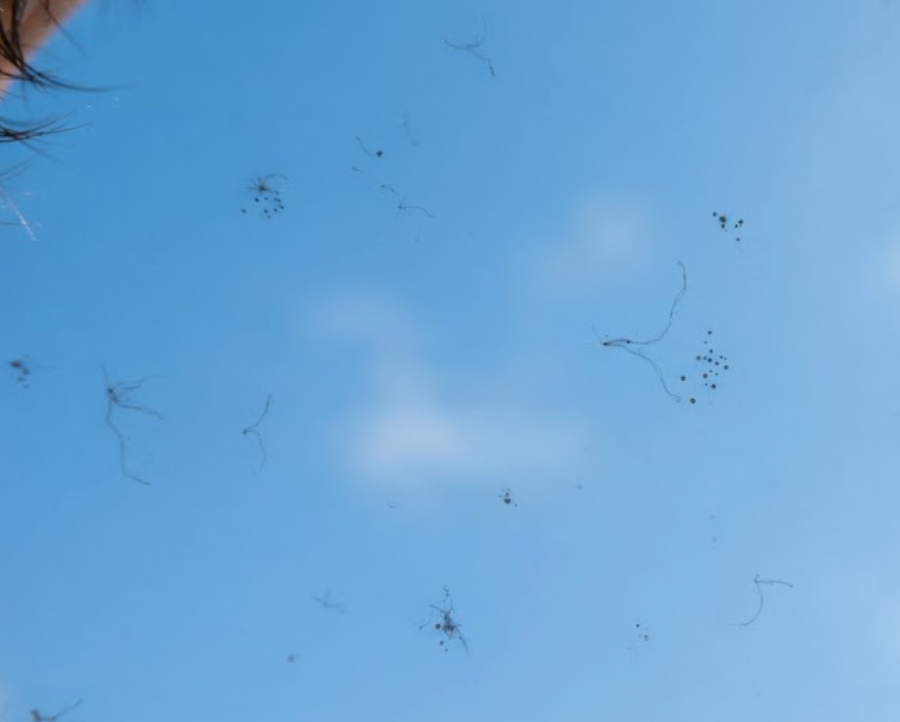
The medical term for these floating spots is eye floaters.
People describe them in many different ways.
Some see:
- Black dots
- Strings
- Cobwebs
- Dust particles
- Tiny insects
- Thread-like shadows
A typical floater moves when the eye moves.
When you stop looking around, it often drifts out of your field of vision.
Most floaters develop because of changes in the vitreous gel inside the eye.
As people age, the gel gradually becomes less uniform.
Small clumps form, casting shadows onto the retina.
In many cases, this is a normal part of aging.
However, not every floater should be ignored.
When Floaters Suddenly Increase
The greatest concern is not the presence of a floater itself.
The concern is a sudden change.
If you have always had a few floaters, that is often less alarming.
But if you suddenly notice:
- Many new floaters
- Larger floaters
- A shower of black spots
- Floaters appearing within hours or days
it may indicate that something is happening inside the eye.
Sudden changes deserve attention because they can be associated with retinal damage.
Seeing Flashes of Light Is an Especially Important Warning Sign
Another symptom people often describe is seeing sudden flashes of light.
This symptom is called photopsia.
Patients commonly explain it as:
- Lightning flashes
- Camera flashes
- Sparks in the corner of the eye
- Brief bursts of light
Interestingly, these flashes appear even when no external light source exists.
They occur because the retina is being pulled or irritated.
Photopsia can be one of the earliest warning signs of a retinal tear.
This is why ophthalmologists take it very seriously.
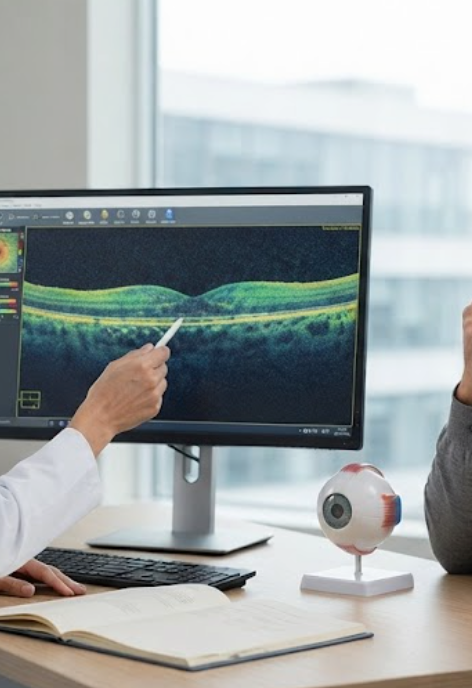
What Is Retinal Detachment?
The retina is a thin layer of nerve tissue located at the back of the eye.
It functions much like the sensor inside a digital camera.
Without a healthy retina, vision cannot function properly.
Retinal detachment occurs when the retina separates from the tissue underneath it.
Once this happens, the retina no longer receives the support and nourishment it needs.
As a result, vision can rapidly deteriorate.
Retinal detachment is considered a medical emergency because permanent vision loss may occur if treatment is delayed.
More People Are Developing Retinal Disorders
Retinal diseases are becoming increasingly common.
Many people assume retinal detachment mainly affects older adults.
While age is certainly a factor, the reality is changing.
A growing number of cases are being diagnosed among younger adults.
People in their 20s, 30s, 40s, and 50s are increasingly experiencing retinal problems.
One important reason may be the rising prevalence of myopia.

Why Severe Nearsightedness Increases Risk
One of the strongest risk factors for retinal detachment is high myopia, also known as severe nearsightedness.
As nearsightedness becomes more severe, the eyeball tends to elongate.
When the eye stretches, the retina becomes thinner.
A thinner retina is more vulnerable to:
- Tears
- Holes
- Weak spots
Once a retinal tear develops, fluid can pass through the opening and begin separating the retina from the underlying tissue.
This process can eventually lead to retinal detachment.
LASIK Does Not Eliminate the Risk
Many people believe that once they have undergone LASIK or another vision correction procedure, their nearsightedness is gone.
Technically, their vision may be corrected.
However, the structure of the eye remains largely unchanged.
LASIK improves how light focuses onto the retina.
It does not shorten an elongated eyeball.
This means the retinal risks associated with high myopia may still exist even after vision correction surgery.
So while your eyesight may be clearer, the retina itself can remain vulnerable.

The Most Dangerous Symptoms to Watch For
Several symptoms should never be ignored.
1. Sudden Onset of Floaters
A rapid increase in black spots or floating shapes within your vision.
2. Flashes of Light
Brief flashes, sparks, or lightning-like sensations, especially in dark environments.
3. A Curtain Over Part of Your Vision
Many patients describe retinal detachment as feeling like a curtain or shadow is gradually moving across their visual field.
4. Sudden Vision Loss or Blurred Vision
Any unexplained decrease in vision requires prompt medical evaluation.
If any of these symptoms occur, an eye examination should be arranged as soon as possible.
Early Detection Can Make a Huge Difference
The good news is that retinal tears can sometimes be treated before retinal detachment occurs.
In many cases, laser treatment can be used to seal weak retinal areas or small tears.
When caught early, this may prevent further progression.
However, once the retina detaches, treatment becomes far more complex.
Most retinal detachments require surgery.
Even with successful treatment, vision may not fully return to its previous level.
This is why timing is so important.

Don’t Ignore the Signals Your Eyes Are Sending
The body often provides warning signs before serious problems develop.
The eyes are no exception.
Suddenly seeing more floaters.
Experiencing flashes of light.
Noticing shadows or dark curtains in your vision.
These are symptoms that should never be dismissed as simple fatigue.
They may be the retina’s way of signaling that something is wrong.
Vision Is Far More Difficult to Restore Than to Protect
Many health conditions can be treated successfully even when discovered relatively late.
Retinal diseases are different.
Once retinal tissue is damaged, recovery may be limited.
This is why eye specialists repeat the same advice over and over:
Do not wait when it comes to retinal symptoms.
If you recently noticed a sudden increase in floaters, flashes of light, or unusual changes in your visual field, scheduling an eye examination could be one of the most important decisions you make.
Because sometimes a tiny black dot is not just a harmless annoyance.
It may be the first warning sign that your eyesight needs urgent attention.