
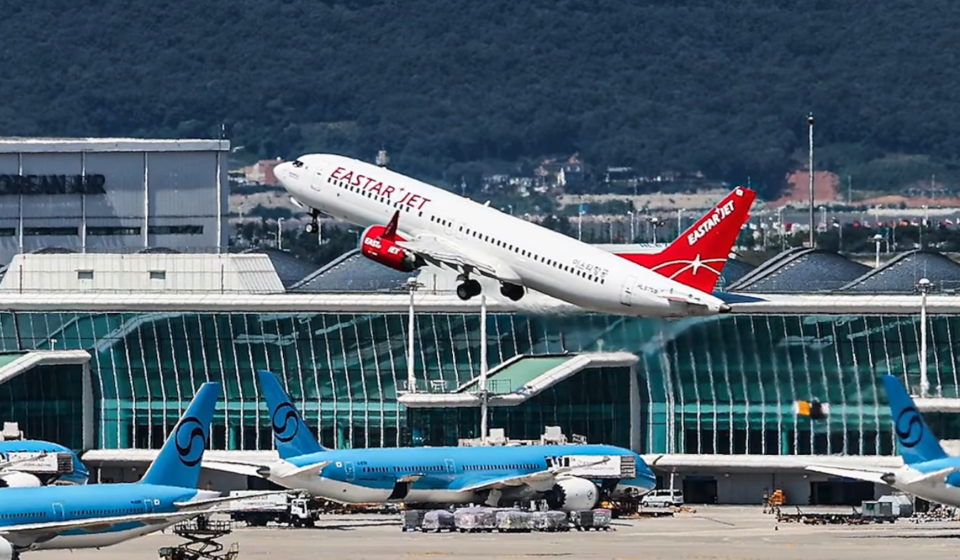
Incheon Airport Ranked No.1 in the World, But the Real Story Is Bigger Than the Airport Itself

When news broke that Incheon International Airport had once again been ranked among the world’s best airports, most people focused on the obvious reasons.
The airport is clean.
The facilities are modern.
The immigration process is efficient.
The transportation connections are excellent.
For many travelers, the experience feels smooth from the moment they land until they leave the airport.
But according to many foreigners who live in Korea, the airport itself is only part of the story.
What truly surprises them is that Incheon Airport reflects something much larger about South Korea.
The airport isn’t impressive simply because it is an airport.
It is impressive because it represents the same philosophy that can be found throughout Korean infrastructure, public transportation, public facilities, and urban planning.
In other words, Incheon Airport became a global success because it grew inside a country that has spent decades building systems designed around convenience, efficiency, and long-term planning.
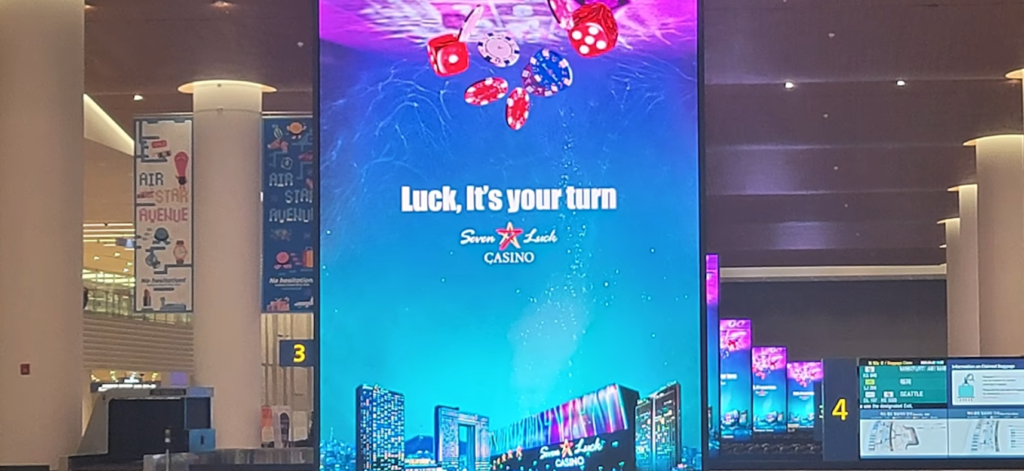
Why Incheon Airport’s No.1 Ranking Matters
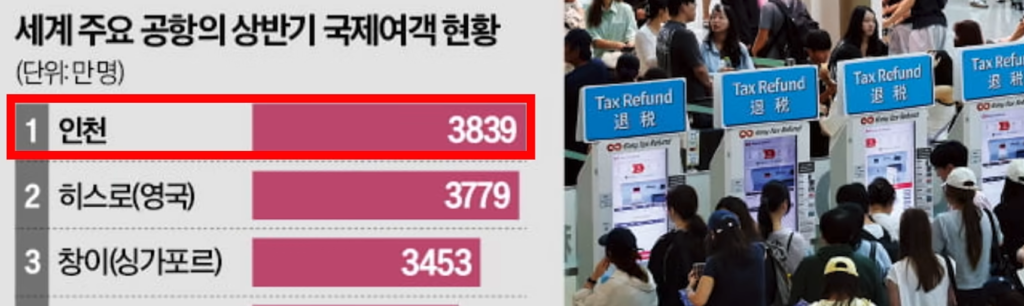
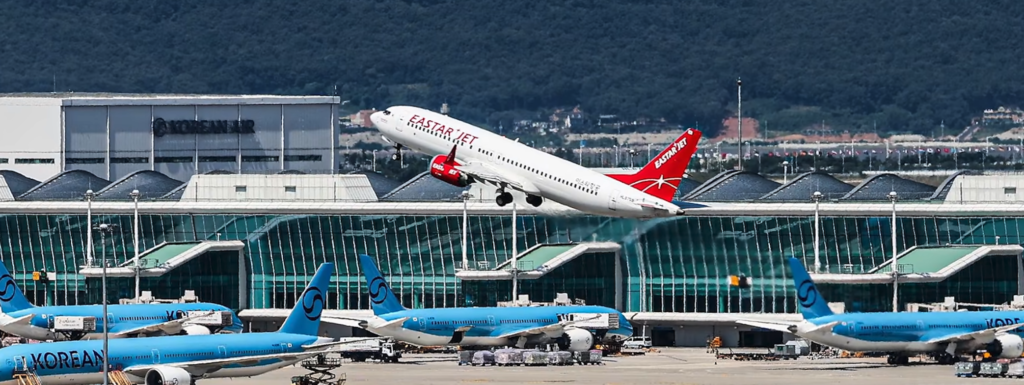
Recently, Incheon Airport handled tens of millions of passengers and continued to receive international recognition for its quality, operations, and customer satisfaction.
For many travelers, however, the surprising part is not the ranking itself.
It is the experience.
People often arrive expecting a busy international airport.
Instead, they encounter an environment that feels unusually organized.
Even during peak hours, travelers frequently comment that the airport feels less chaotic than many other major hubs around the world.
One foreign traveler who had recently returned from the United Kingdom described the experience in a simple way:
“There are a lot of people, but it doesn’t feel crowded.”
That distinction may sound minor, but it is one of the reasons the airport consistently receives praise.
Passenger volume alone does not determine whether an airport feels comfortable.
The way that space, movement, and services are organized matters just as much.
Foreign Travelers Notice the Difference Immediately
Many visitors compare Incheon Airport with airports in their home countries.
Americans often mention airports such as Los Angeles International Airport.
While LAX is one of the world’s busiest airports, travelers frequently complain about congestion, long security lines, and outdated layouts in certain terminals.
Visitors arriving in Korea are often surprised by how spacious and orderly Incheon feels by comparison.
A traveler from the United States explained that one of the biggest differences was predictability.
In America, the airport experience can vary dramatically depending on where you fly.
Some airports are modern and efficient.
Others feel outdated and overcrowded.
Incheon, however, tends to deliver a consistently smooth experience.
For many international travelers, that consistency becomes one of the airport’s biggest strengths.
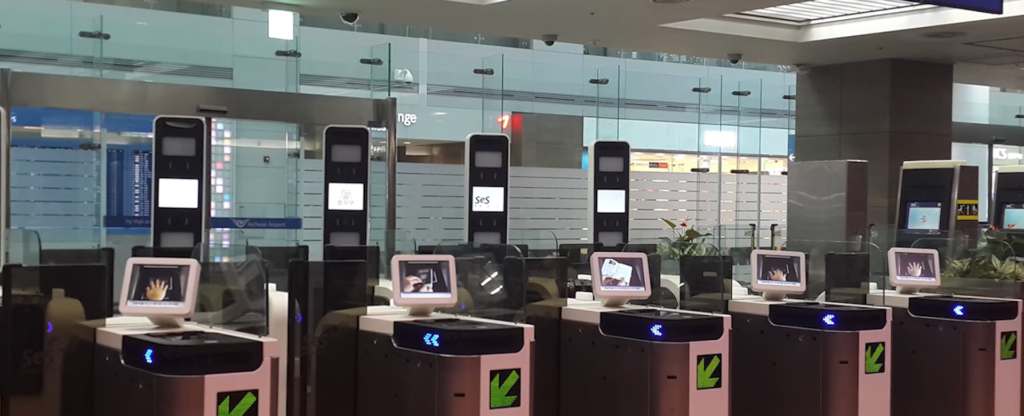
The Rise of Incheon as a Global Hub
The airport’s growing success did not happen overnight.
A combination of factors contributed to its rise.
One major factor is the increase in international transit passengers.
More travelers now use Korea as a connecting point between regions.
Another factor is tourism.
Over the past decade, global interest in Korean culture has expanded dramatically.
K-pop, Korean dramas, Korean food, Korean beauty products, and Korean entertainment have encouraged millions of people to visit the country.
As tourism increases, so does airport traffic.
There is also a broader shift occurring in global aviation.
Changes in international travel routes, geopolitical developments, and airline strategies have altered traditional transit patterns.
As a result, airports capable of offering efficient passenger experiences have become increasingly important.
Incheon has benefited from those changes.
The Secret Most Travelers Never Notice
Many people assume successful airports simply grow larger over time.
But according to architects and urban planners, the real difference lies in planning.
Incheon Airport was not designed only for the present.
It was designed with future expansion in mind.
This may sound obvious today, but historically many major airports around the world were built differently.
Older airports often expanded gradually as demand increased.
A terminal would be added.
Another section would be renovated.
A new gate would be built.
Over decades, the airport would evolve into a patchwork of additions.
Eventually, the layout became increasingly difficult to navigate.
This happened in many famous airports around the world.
Incheon took a different approach.
A Master Plan Measured in Decades
One of the most important characteristics of Incheon Airport is that long-term expansion was built into the project from the very beginning.
The airport was developed with multiple growth phases already envisioned.
Rather than focusing only on immediate demand, planners considered what passenger traffic might look like decades later.
This allowed infrastructure to be developed in stages while still following a coherent vision.
Today, travelers benefit from decisions that were made many years ago.
Many of the airport’s current advantages exist because planners anticipated future growth rather than reacting to it after the fact.
Built on Reclaimed Land
One of the most fascinating aspects of Incheon Airport is its location.
The airport was constructed on reclaimed land between islands near Yeongjongdo.
Because of this, people occasionally hear concerns about land subsidence.
Stories periodically appear suggesting that the airport is slowly sinking.
While this sounds alarming, engineers were aware of these conditions from the beginning.
The possibility of gradual settlement was incorporated into the project’s design and planning process.
In fact, comparisons are often made with Japan’s Kansai International Airport, which was also built on reclaimed land.
However, the geological conditions and engineering approaches used in the two projects were different.
For this reason, many experts note that direct comparisons can be misleading.
The important point is that Incheon was designed with those environmental factors already taken into account.
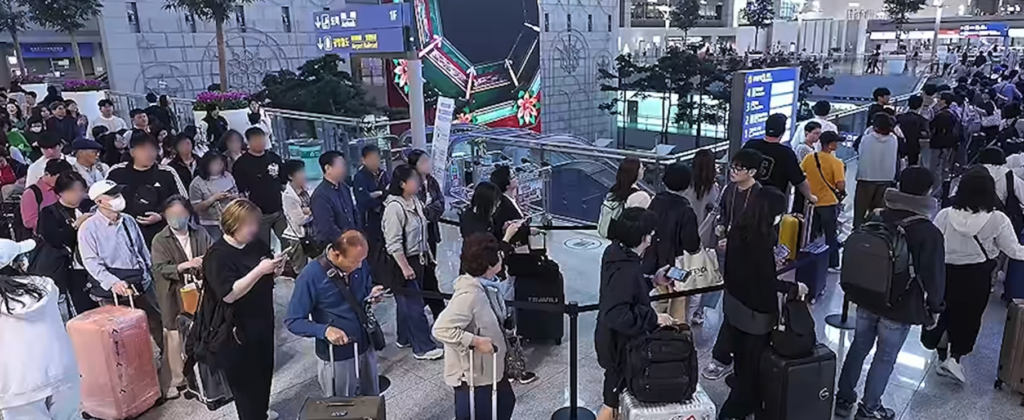
An Airport Is Really a Small City
One architect described airports in a very interesting way.
According to him, an airport is not simply a transportation facility.
It is a city.
And when you think about it, that description makes perfect sense.
Consider everything an international airport must contain:
- Transportation networks
- Security systems
- Commercial facilities
- Hotels
- Medical services
- Logistics operations
- Passenger terminals
- Air traffic control functions
Millions of people move through this environment every year.
Entire businesses operate inside it.
Complex infrastructure supports it.
In many ways, building an airport requires solving the same challenges involved in creating a city.
The difference is that everything must function at an extremely high level of efficiency.
Why Older Airports Face Challenges
This perspective also helps explain why some famous airports face ongoing difficulties.
Many large European airports were built much closer to city centers.
At the time, this made sense.
As cities expanded, however, airports found themselves surrounded by development.
Eventually, there was little room left for expansion.
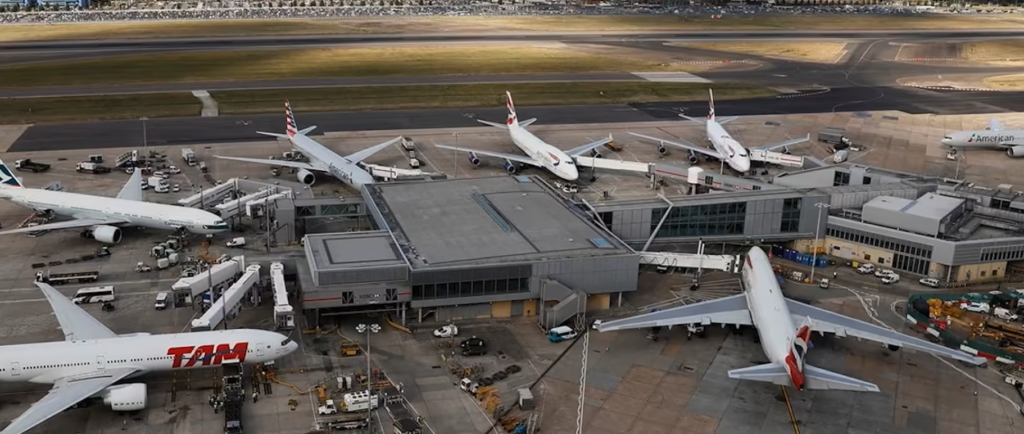
Heathrow Airport in London is a widely discussed example.
Its location provides advantages, but growth has become increasingly difficult.
Residents, environmental concerns, and limited available space create significant constraints.
Similar challenges can be found in airports across Europe.
The issue is not poor design.
It is the reality of infrastructure that must adapt to conditions very different from those imagined decades earlier.
Why Transportation Matters Just as Much as the Airport
Interestingly, many experts argue that the airport itself is not the most important factor in airport rankings.
The transportation system connecting travelers to the airport may matter just as much.
After all, the passenger journey does not begin inside the terminal.
It begins when someone leaves home, a hotel, or an office.
This is one area where many visitors praise Korea.
The Airport Railroad Express and other transportation links provide fast connections between Incheon and Seoul.
Passengers can move between the airport and the city relatively efficiently.
For travelers who have experienced complicated airport transfers elsewhere, that convenience leaves a strong impression.
More Than Just Efficiency
What truly stands out to many foreigners is that Korea rarely treats infrastructure as a single project.
Instead, projects are often viewed as parts of larger systems.
The airport connects to rail.
Rail connects to urban transportation.
Transportation connects to residential areas.
Residential areas connect to public facilities.
Because of this, visitors often describe Korea as a country where daily life feels unusually convenient.
And that may be the most important reason Incheon Airport performs so well internationally.
Its success is not isolated.
It is supported by the broader systems surrounding it.
Why Korea’s Public Libraries No Longer Look Like Libraries
If Incheon Airport demonstrates Korea’s long-term planning philosophy, public libraries may be one of the best examples of how that philosophy extends into everyday life.
For many foreigners, the word “library” immediately brings a certain image to mind.
A quiet building.
Rows of bookshelves.
Strict rules about noise.
People sitting silently and reading.
For decades, that was exactly how libraries were designed in many countries.
But in South Korea, the concept has changed dramatically.
Today, many newly built Korean libraries are designed less like traditional libraries and more like community hubs.
Architects and planners increasingly focus on openness, flexibility, and public participation.
Instead of creating isolated rooms separated by walls, many facilities now embrace open layouts that encourage interaction.
Visitors can read books, attend lectures, join workshops, study in groups, work remotely, or simply spend time indoors.
The goal is no longer just to store books.
The goal is to create a space where communities can gather.
Libraries as Community Centers
Architects involved in recent Korean library projects often describe them as “living spaces” rather than book repositories.
That difference may seem small, but it fundamentally changes how the buildings are designed.
Rather than separating every activity into enclosed rooms, many newer libraries use open concepts.
Group discussions happen in one area.
Children read in another.
Community programs take place nearby.
Cafés and rest areas blend naturally into the overall environment.
In some locations, residents bring their own meals and spend hours inside the building.
The focus is on encouraging people to use the space however they wish.
As one architect explained, the modern Korean library is no longer simply about books.
It is about creating opportunities for connection.
Small Cities Are Building Remarkable Public Facilities
One surprising observation from foreign residents involves Korean cities that are not internationally famous.
Many visitors expect Seoul to have impressive public facilities.
What they do not expect is finding similar quality in smaller cities.
Several foreigners have described visiting regional cities and discovering libraries that would be considered major attractions in other countries.
Modern architecture.
Open lecture spaces.
Technology-equipped study rooms.
Community events.
Comfortable seating areas.
Many facilities remain busy late into the evening.
What surprises people is not just the physical infrastructure.
It is the level of investment being made in spaces designed primarily for public use.
Even Returning Books Has Been Reinvented
Korea’s approach to convenience extends even to something as simple as returning a library book.
Some libraries now offer drive-through return systems.
Rather than parking, entering the building, and locating a return desk, visitors can simply drive up and deposit their books.
The process resembles a drive-through service more commonly associated with fast food restaurants.
It is a small innovation, but it reflects a larger trend that appears throughout Korean infrastructure:
Find points of inconvenience and eliminate them.
That mindset can be observed in transportation, public services, healthcare, libraries, and even waste management.
Community Centers Have Also Changed
Foreign residents are often surprised when they learn that Korean community centers serve a far broader role than many people expect.
Historically, these offices primarily handled administrative tasks.
Residents visited to obtain official documents, complete paperwork, or access government services.
Today, many community centers include:
- Libraries
- Study spaces
- Educational programs
- Cafeterias
- Children’s activity areas
- Senior community facilities
Some function almost like neighborhood cultural centers.
As populations age and lifestyles change, these facilities increasingly serve as gathering places rather than purely administrative offices.
Many locals are not even fully aware of how much these spaces have evolved.
Why Foreigners Keep Mentioning Korean Subways
After discussing airports and public buildings, most conversations with foreigners eventually arrive at another topic:
The Seoul subway system.
Visitors from Europe, North America, and even Japan frequently mention the same thing.
The system feels surprisingly modern.
Part of that reaction comes from comparison.
London’s Underground is one of the world’s oldest subway systems.
Several sections date back more than 150 years.
While historically significant, older systems often face challenges involving maintenance, modernization, and passenger comfort.
Many visitors notice the contrast immediately after arriving in Seoul.
The Feature That Foreigners Notice First
Among all the technological features found in Korean subways, one stands out more than almost anything else:
Platform screen doors.
For Koreans, they are so common that many people barely notice them.
For visitors, they are impossible to ignore.
Japanese visitors often mention that even where screen doors exist in Japan, they are sometimes partial barriers rather than full enclosures.
In many places around the world, there are still no barriers at all between passengers and train tracks.
As a result, visitors frequently describe Korean subway platforms as feeling safer.
The benefits go beyond safety.
Screen doors help improve:
- Climate control
- Air quality
- Energy efficiency
- Passenger comfort
The system has become one of the most visible symbols of Korea’s emphasis on practical infrastructure improvements.
Infrastructure Built Around Real Problems
One reason Korea adopted screen doors on such a large scale was to address real challenges.
Heat accumulation in underground stations.
Platform accidents.
Operational efficiency.
Over time, the barriers proved so successful that many people can no longer imagine stations without them.
Interestingly, the same pattern appears repeatedly throughout Korean infrastructure.
Many improvements were initially debated.
Critics questioned costs.
People argued about necessity.
Yet once implemented, the improvements quickly became part of daily life.
Today, few people would voluntarily return to the old system.
The Hidden City Beneath Seoul
Another often-overlooked aspect of Seoul is the scale of its underground infrastructure.
For many visitors, taking the subway is only the beginning.
Beneath the city lies an extensive network of:
- Shopping areas
- Restaurants
- Convenience stores
- Underground passageways
- Transit connections
In some areas, people can accomplish almost everything they need without returning to street level.
Foreigners often describe this as a second city beneath the city.
Combined with climate control, digital connectivity, and reliable transportation, it creates a uniquely convenient urban experience.
The Bicycle Paths That Changed Perspectives
One architect involved in the discussion described discovering Korea’s bicycle infrastructure during the pandemic.
Despite living in Seoul for decades, he had never truly explored the Han River cycling network.
What surprised him was not only the scale of the system but how seamlessly it connected different areas.
Long dedicated paths.
Scenic river views.
Safe cycling routes.
Multiple access points.
Infrastructure like this often goes unnoticed by people who use it regularly.
Yet foreigners frequently highlight it as one of the strongest aspects of urban life in Korea.
The Infrastructure People Stop Seeing
One theme appeared repeatedly throughout the discussion.
Many Koreans no longer notice how much infrastructure surrounds them.
Because it works.
The subway arrives.
The screen doors open.
The library functions.
The airport operates smoothly.
The cycling paths remain available.
The waste is collected.
The systems become invisible.
For visitors, however, these same things stand out immediately.
What feels ordinary to residents often feels extraordinary to newcomers.
South Korea’s Most Underrated Strength
When people talk about Korea internationally, they often focus on:
- K-pop
- K-dramas
- Technology
- Beauty products
- Food
Yet many foreigners who actually live in Korea point to something else entirely.
Convenience.
Not convenience in a superficial sense.
But convenience created through decades of investment in public infrastructure.
Airports.
Public transportation.
Libraries.
Community centers.
Cycling networks.
Digital services.
Healthcare systems.
Each individual improvement may appear small.
Together, they create a society that many visitors find remarkably easy to navigate.
Final Thoughts
When Incheon International Airport was ranked as one of the best airports in the world, many people assumed the recognition was about the airport itself.
But the deeper story may be something much larger.
Incheon Airport is not an isolated success.
It is a reflection of the systems surrounding it.
The airport works because transportation works.
Transportation works because planning works.
Planning works because infrastructure has been developed with long-term goals in mind.
Foreigners from the United Kingdom, Germany, the United States, Japan, and many other countries often arrive expecting impressive technology.
What surprises them most is something different.
The simple fact that daily life feels easy.
Whether they are taking the subway, visiting a library, using a community center, cycling along the Han River, or passing through Incheon Airport, they encounter systems designed to reduce friction and improve everyday experiences.
Perhaps that is the real reason Incheon Airport continues to receive international recognition.
It is not just one excellent airport.
It is the front door to an infrastructure ecosystem that many visitors believe is among the most efficient and thoughtfully designed in the world.