
When foreigners move to Korea, they quickly discover that everyday life feels different — more efficient, more organized, and more convenient. But among all the surprising aspects of Korean lifestyle, one stands out more than expected: Korean hypermarkets.
These massive retail spaces — E-Mart, Homeplus, Lotte Mart, and Costco Korea — are not just places to buy groceries.
They are a cultural experience, a weekend ritual, a family outing, and a reflection of Korea’s obsession with convenience, freshness, and quality.
Living in Korea means you eventually become part of this culture.
You don’t “go grocery shopping.”
You “go to the mart.”
And that difference says everything.
✦ 1. Korean Hypermarkets Are Designed Like Lifestyle Centers
In many countries, supermarkets are functional spaces.
You go in, grab what you need, and leave.
In Korea, hypermarkets are built like mini lifestyle complexes.
Inside a typical Korean hypermarket, you’ll find:
• a full grocery section
• a bakery
• a deli
• a food court
• a café
• a pharmacy
• a clothing section
• a home goods section
• electronics
• toys
• seasonal goods
• a bookstore
• a kids’ play area
• even a pet store in some locations
Foreigners often say:
“This feels like a department store mixed with a supermarket.”
And they’re right — Korean hypermarkets are designed to be one-stop lifestyle hubs.
✦ 2. Freshness Is a National Obsession
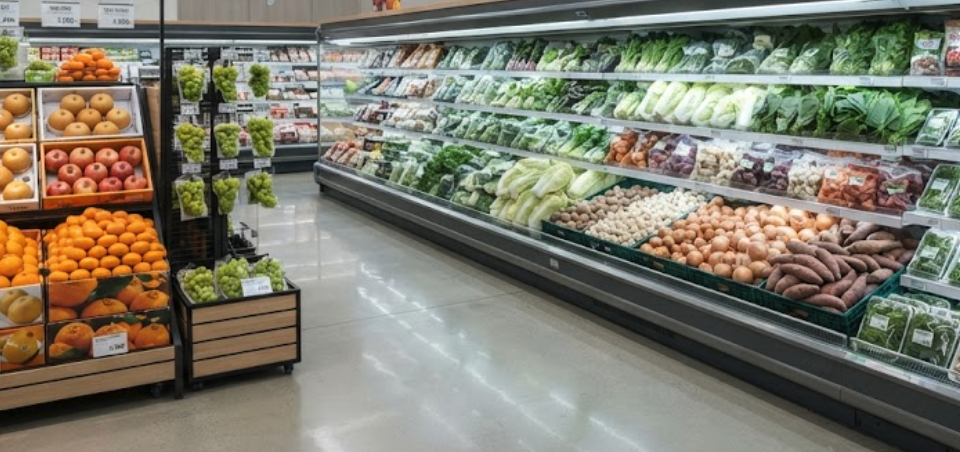
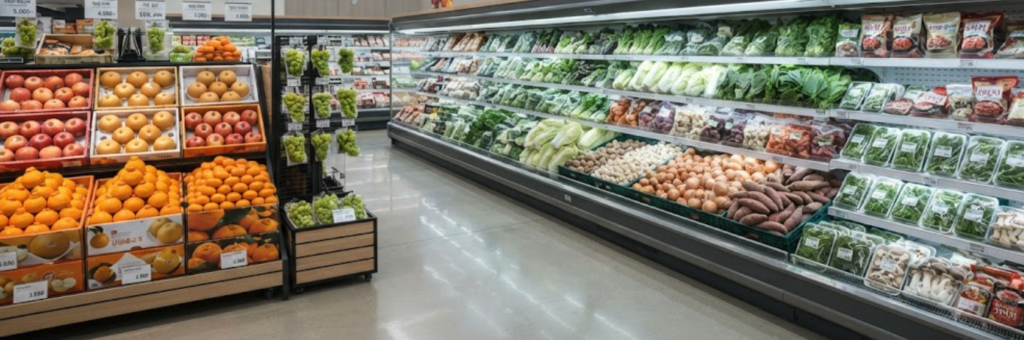
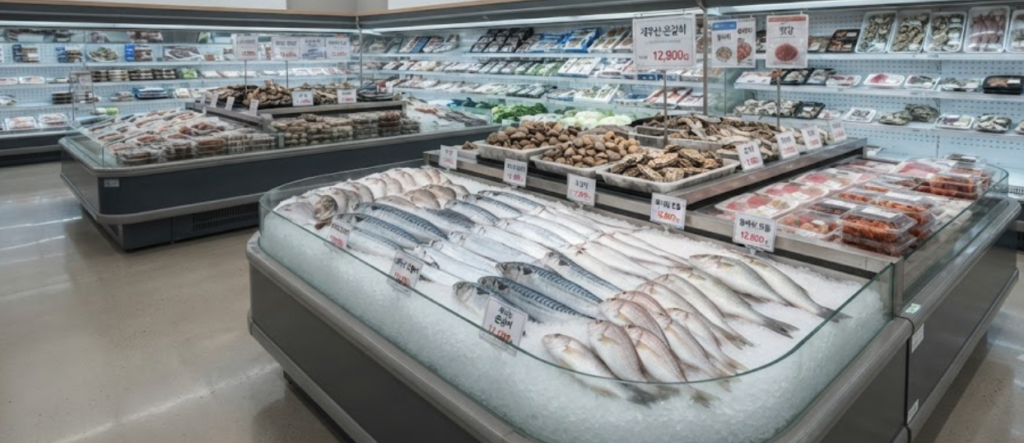
Korea’s food culture is deeply tied to freshness.
This is why Korean hypermarkets invest heavily in:
• fresh produce
• daily seafood deliveries
• premium meat sections
• live fish tanks
• freshly made side dishes
• in-house prepared meals
• seasonal fruits and vegetables
• local farm partnerships
Foreigners are often shocked by the quality.
Comments like:
“The produce looks like it was picked this morning.”
“The seafood section is bigger than my entire supermarket back home.”
are extremely common.
Korea’s obsession with freshness is not just preference — it’s cultural.
✦ 3. Korean Hypermarkets Offer Restaurant-Level Ready Meals
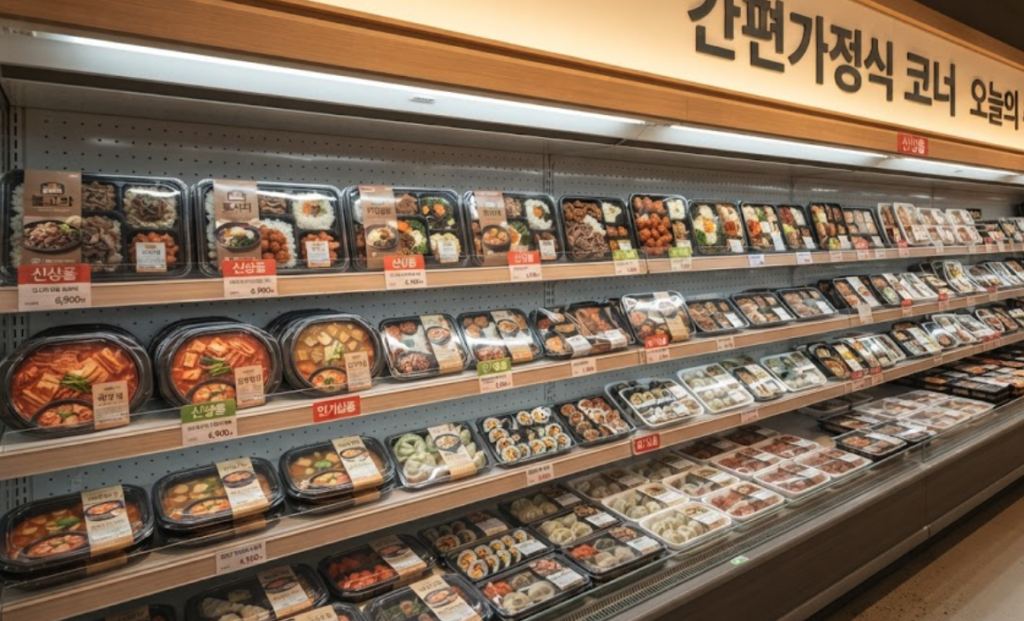
One of the biggest surprises for foreigners is the quality of ready-made food.
Korean hypermarkets sell:
• freshly cooked fried chicken
• sushi trays
• kimbap
• bibimbap bowls
• grilled fish
• marinated meats
• hot soups
• premium salads
• bakery items made on-site
These meals are not “supermarket food.”
They taste like restaurant dishes.
Many Koreans buy dinner from the mart instead of cooking — not because they’re lazy, but because the quality is genuinely high.
✦ 4. Korean Hypermarkets Are Extremely Organized
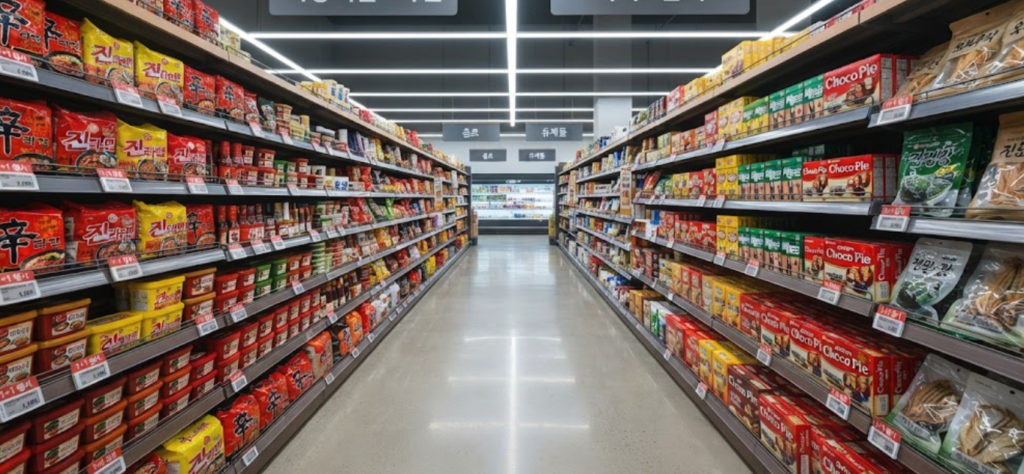
Korean retail culture values:
• cleanliness
• organization
• clarity
• efficiency
• visual appeal
This is why Korean hypermarkets feel almost like showrooms.
You’ll see:
• perfectly stacked produce
• color-coordinated displays
• clear price tags
• detailed product descriptions
• allergy and nutrition labels
• sample stations
• staff constantly reorganizing shelves
Foreigners often say:
“This is the cleanest supermarket I’ve ever seen.”
✦ 5. Sampling Culture Is a Big Part of the Experience
Korean hypermarkets are famous for their sampling stations.
You can try:
• dumplings
• noodles
• drinks
• snacks
• meats
• sauces
• desserts
• seasonal items
Sampling is not awkward — it’s encouraged.
Staff actively invite customers to taste.
For many foreigners, this feels like a cultural shock:
“You can basically eat lunch while shopping.”
✦ 6. Korean Hypermarkets Are Family-Friendly Spaces
Weekends at the mart feel like a community event.
Families go together because:
• kids have play areas
• parents can shop comfortably
• food courts offer affordable meals
• seasonal events attract visitors
• holiday displays are elaborate
• sampling stations entertain children
Hypermarkets are not just for shopping — they’re for family time.
✦ 7. Korean Hypermarkets Have Unique Seasonal Sections
Korea has strong seasonal culture, and hypermarkets reflect it.
Seasonal sections include:
• kimchi-making season (kimjang)
• Chuseok gift sets
• Lunar New Year gift sets
• summer camping gear
• winter heated blankets
• school supplies season
• cherry blossom-themed goods
• holiday snacks and decorations
Foreigners often say:
“I didn’t know supermarkets could be this festive.”
✦ 8. Korean Hypermarkets Offer High-Tech Shopping Convenience
Korea’s tech culture is everywhere — even in supermarkets.
You’ll find:
• self-checkout kiosks
• mobile payment everywhere
• digital price tags
• smart shopping carts in some locations
• app-based coupons
• membership points
• delivery services directly from the mart
• online ordering with same-day pickup
The entire shopping experience is built for speed and convenience.
✦ 9. Korean Hypermarket Prices: Surprisingly Affordable
Many foreigners assume Korean hypermarkets are expensive because they look premium.
But prices are often lower than expected, especially for:
• produce
• seafood
• ready meals
• Korean snacks
• household goods
• seasonal items
Why?
Because Korean hypermarkets compete aggressively with:
• convenience stores
• online markets
• local markets
• discount chains
• warehouse stores like Costco
This competition keeps prices reasonable.
✦ 10. Korean Hypermarkets Reflect Korean Life
Living in Korea means you eventually understand that hypermarkets are not just retail spaces — they are reflections of Korean values:
• freshness
• convenience
• efficiency
• family
• technology
• organization
• seasonal culture
• community
Foreigners who live in Korea long-term often say:
“I didn’t expect the supermarket to be one of my favorite places.”
But it becomes exactly that.
🔗 Recommended Links