Why Korean Pharmacy Cosmetics Are So Powerful: The Science, Culture, and System Behind K‑Derma

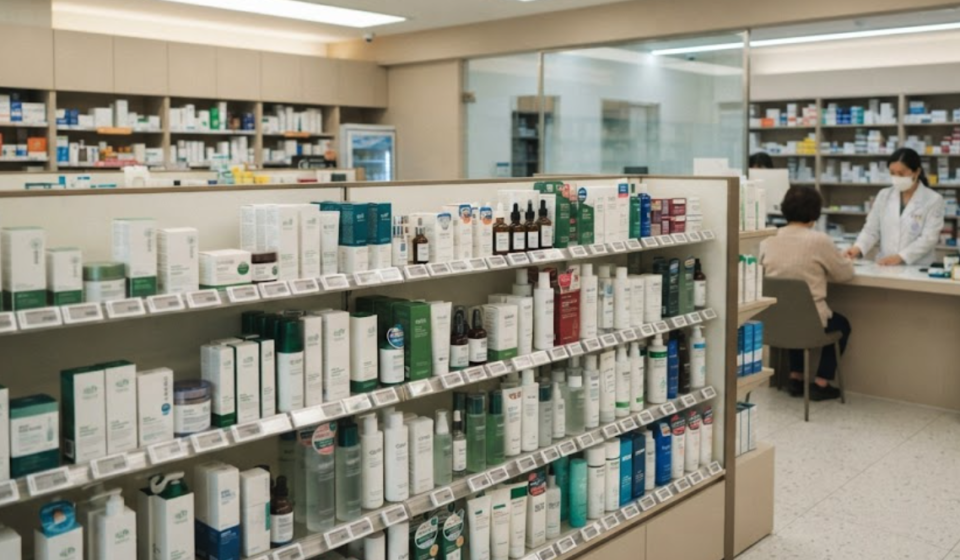
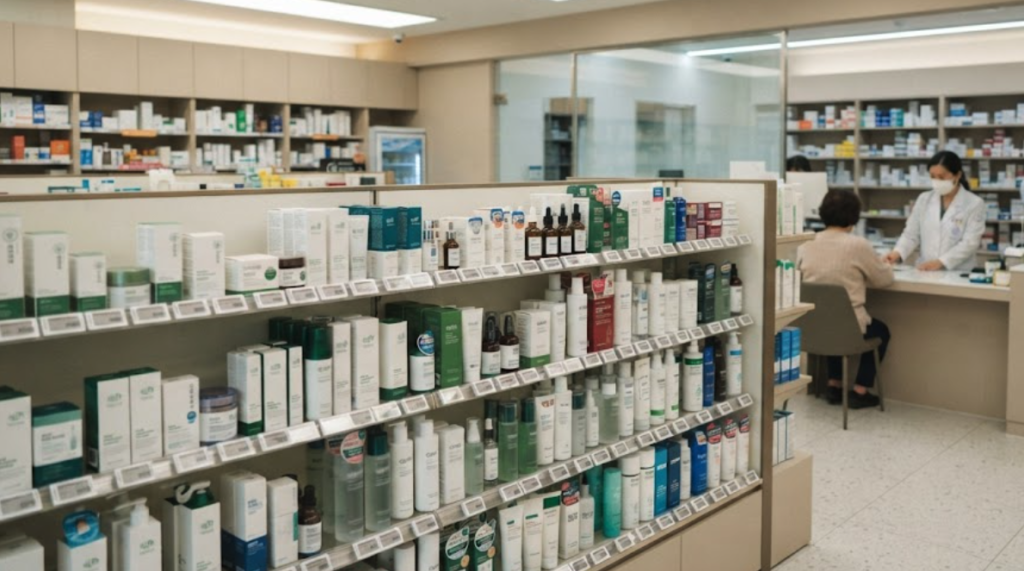
When foreigners visit Korea for the first time, they often walk into a pharmacy expecting medicine, bandages, and maybe vitamins.
But instead, they find shelves filled with sleek white bottles, clinical-looking creams, ampoules, toners, and moisturizers that look more like medical products than cosmetics.
And then something interesting happens.
They start picking them up.
Reading the labels.
Testing the textures.
And eventually… buying them in bulk.
Foreigners often say:
“I came here for medicine, but I’m leaving with skincare.”
“What is this brand? Why is it so good?”
“Why don’t we have this in my country?”
Korean pharmacy cosmetics — often called K‑Derma — are not just skincare.
They are a unique blend of medical science, dermatology culture, and Korea’s obsession with skin health.
They are powerful because Korea built an entire ecosystem that connects pharmacies, dermatologists, and cosmetic science into one seamless system.
This is the story of how Korean pharmacy cosmetics became one of the strongest beauty categories in the world.
✦ Korea Treats Skin as Healthcare, Not Just Beauty
In many countries, skincare is considered part of the beauty industry.
But in Korea, skincare is treated as healthcare.
Koreans visit dermatologists regularly — not only for acne or serious issues, but for:
• pigmentation
• redness
• sensitivity
• dryness
• anti-aging
• pore care
• texture improvement
Skin is seen as a reflection of health.
So products sold in pharmacies are formulated with medical-grade ingredients, clinical testing, and dermatologist input.
Foreigners often say:
“These products feel like medicine, not cosmetics.”
That’s exactly the point.

✦ The Rise of Derma Brands: Science First, Marketing Later
Korean derma brands didn’t start in beauty stores.
They started in clinics and pharmacies.
Brands like:
• Avene (Korea’s derma boom starter)
• La Roche-Posay
• Dr.G
• CNP
• Atopalm
• Illiyoon
• Physiogel
• Round Lab
• Torriden
• Dr.Jart (originally a dermatology brand)
These brands focus on:
• barrier repair
• sensitive skin
• eczema care
• acne-prone skin
• moisture retention
• inflammation reduction
They use ingredients like:
• ceramides
• panthenol
• centella asiatica
• hyaluronic acid
• madecassoside
• niacinamide
• peptides
But the key difference is this:
Korean derma brands prioritize clinical results over marketing slogans.
Foreigners often say:
“I tried one cream and my skin changed in two days.”
That’s the power of derma formulation.
✦ Pharmacies Are Connected to Dermatologists — Literally
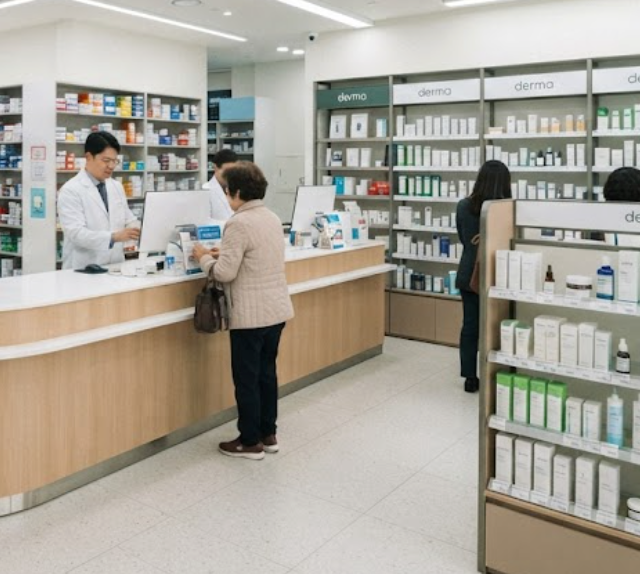
In Korea, pharmacies often sit right next to dermatology clinics.
Sometimes in the same building.
Sometimes on the same floor.
Sometimes directly across the hallway.
This creates a unique ecosystem:
• dermatologists recommend certain products
• pharmacies stock those exact products
• patients buy them immediately
• brands design products based on dermatologist feedback
It’s a loop of science → clinic → pharmacy → consumer.
Foreigners often say:
“This feels like a medical system, not a beauty store.”
They’re right.
✦ Korea’s Skin Problems Are Different — And So Are the Solutions
Korea has four distinct seasons:
hot humid summer, cold dry winter, windy spring, and polluted fall.
This creates skin issues like:
• dehydration
• sensitivity
• redness
• barrier damage
• seasonal acne
• irritation from fine dust
Korean derma brands were built to solve these problems.
So their formulas are designed for:
• fast absorption
• deep hydration
• barrier strengthening
• anti-inflammatory effects
• gentle exfoliation
• long-term repair
Foreigners often say:
“My skin has never felt this calm before.”
That’s because Korean products are built for harsh climates.
✦ Korea’s Ingredient Transparency Is Next-Level
Korean consumers are extremely picky.
They read ingredient lists.
They avoid irritants.
They demand clean formulas.
They compare pH levels.
They check EWG ratings.
They follow dermatologists on YouTube.
Because of this, Korean derma brands must be:
• transparent
• safe
• clinically tested
• fragrance-free (often)
• low-irritant
• hypoallergenic
Foreigners often say:
“I trust Korean products more because I know what’s inside.”
✦ Pharmacies Sell Products That Actually Work — Not Just Trendy Items
In many countries, pharmacies sell beauty products that are safe but not necessarily effective.
In Korea, pharmacies sell products that are proven.
These products are often used:
• after laser treatments
• after chemical peels
• after acne extraction
• after microneedling
• after dermatology procedures
So they must be:
• calming
• repairing
• hydrating
• protective
Foreigners often say:
“These creams feel like they’re healing my skin.”
✦ Korea’s Dermatology Culture Influences Everything
Korea has one of the highest numbers of dermatology clinics per capita in the world.
People visit dermatologists like they visit cafés.
This culture creates:
• educated consumers
• high demand for effective products
• fast innovation cycles
• strong competition among brands
• clinical-grade formulations
Pharmacy cosmetics become powerful because they are designed for people who understand skin deeply.
✦ The Packaging Looks Medical — And That’s Intentional
Korean derma brands use:
• white bottles
• clean fonts
• minimal designs
• clinical aesthetics
This isn’t just branding.
It signals:
• trust
• safety
• science
• reliability
Foreigners often say:
“These products look like they belong in a hospital.”
✦ Foreigners Buy Korean Pharmacy Cosmetics in Bulk
Walk into a Korean pharmacy near Myeongdong or Hongdae and you’ll see foreigners filling baskets with:
• moisturizers
• toners
• ampoules
• barrier creams
• soothing gels
• ceramide lotions
They buy them because:
• results are fast
• prices are reasonable
• formulas are gentle
• packaging is trustworthy
• reviews are strong
• dermatologists recommend them
Korean pharmacy cosmetics became a global phenomenon because they deliver real results — quickly.
✦ Korean Pharmacy Cosmetics Are Powerful Because Korea Built a System That Makes Them Powerful
Korean pharmacy cosmetics are not just skincare.
They are the result of:
• medical-grade formulation
• dermatologist collaboration
• ingredient transparency
• clinical testing
• harsh climate adaptation
• consumer education
• fast innovation
• cultural obsession with skin health
Korea didn’t try to make pharmacy cosmetics powerful.
They became powerful because Korea treats skin as healthcare — not beauty.
And that’s why foreigners come to Korea and leave with suitcases full of derma products.