
– A Deep Dive into Mini Facelift Techniques by Kidarri Plastic Surgery**
Hello, this is Kidarri Plastic Surgery in korea.
In one of our YouTube videos, I explained what people often call the “ponytail lift,” using the example of pulling the face upward from the back of the head—similar to how a tight ponytail lifts the facial contour.
The term “ponytail lift” generally refers to a combination of procedures such as brow lifting, temporal mini facelift, and midface lifting. When these are performed together, the face is elevated in a direction similar to a ponytail, giving a refreshed and youthful appearance.
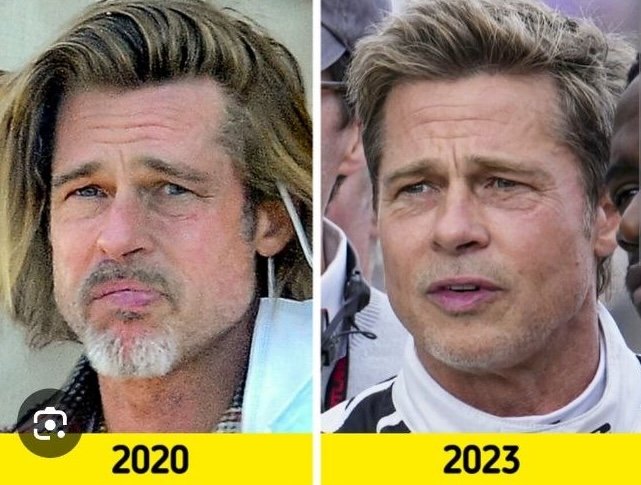
In that video, I used a photo of Brad Pitt to explain this concept. I mentioned that Brad Pitt appeared to have undergone a ponytail‑type facelift, but likely a very subtle version—something done lightly to avoid noticeable changes.
However, looking at his recent photos, only about two years after that procedure, it seems that the lifted areas have already descended again. This raises an important question: Why did the results fade so quickly?
From a surgical perspective, I suspect that the procedure may not have included subperiosteal dissection—the deep‑layer release beneath the periosteum that is essential for long‑lasting midface elevation. Without this deep release, the surgeon may have only tightened the superficial skin layer, which provides minimal and short‑lived improvement.

Mini Facelift Results Are Determined by Depth, Not Width
Many people misunderstand mini facelifts.
They assume that because the incision is small, the effect must be small as well.
Or they believe that wider dissection automatically means better results.
But the truth is very different.
✔ The longevity of a mini facelift is determined by how deeply the surgeon dissects—not how widely.
The periosteum is a deep, fibrous layer that anchors the facial soft tissues.
To truly lift the midface—areas like the nasolabial fold, the malar region, and the lower orbital area—the surgeon must release and elevate the tissues beneath the periosteum.
If the surgeon only lifts:
- Skin: the result is weak and quickly relapses
- SMAS: partial improvement, but midface remains unchanged
- Subperiosteal layer: strong, structural, long‑lasting elevation
Brad Pitt’s case appears to be an example of a superficial lift—something done lightly to avoid visible signs of surgery. But without deep release, the result naturally fades within a short period.

Are There Many Surgeons Worldwide Who Perform Subperiosteal Mini Facelifts?
This is a question I receive frequently.
Globally, many surgeons perform mini facelifts.
Many perform midface lifts using devices like Endotine.
But when it comes to true subperiosteal dissection combined with mini facelift techniques, the number of surgeons who do this is extremely small.
As I’ve said before:
“Worldwide, surgeons who perform only small mini facelifts and rely on Endotine for midface lifting are common.
But surgeons who perform deep subperiosteal dissection to elevate the midface—like I do—are extremely rare.”
This is not because the technique is ineffective.
It is because the technique is difficult, anatomically demanding, and requires years of experience with deep facial structures.
Most clinics prefer:
- small incisions
- shallow dissection
- quick recovery
But shallow dissection cannot produce long‑lasting results.

In Korea, Who Performs Subperiosteal Mini Facelifts?
In Korea, the number of clinics performing mini facelifts with true subperiosteal dissection is almost zero.
✔ Kidarri Plastic Surgery is the only clinic in Korea that performs mini facelifts with full subperiosteal release.
This technique requires:
- advanced anatomical knowledge
- precise handling of deep facial structures
- careful navigation around nerves and vessels
- longer operating time
- high surgical skill
Because of this, most surgeons avoid deep dissection and instead perform superficial lifts that look good initially but do not last.
Why We Insist on Subperiosteal Dissection at Kidarri Plastic Surgery
Even in mini facelifts, we perform deep release to elevate the midface structurally.
Our approach is:
✔ Mini incision + deep subperiosteal dissection + midface elevation
This method provides:
- improvement of nasolabial folds
- lifting of the malar and submalar areas
- long‑lasting results
- natural, non‑pulled appearance
- structural rejuvenation rather than surface tightening
This is why many international patients visit our clinic, and why surgeons abroad often inquire about our techniques.
**A Message to Surgeons Around the World
– If You Want to Learn Subperiosteal Ponytail Lift Techniques, Come to Korea**
This part is personal, but important.
After reviewing countless international surgical videos, papers, and conference materials, I’ve realized something:
✔ Outside of Korea, almost no surgeons perform ponytail‑style mini facelifts with true subperiosteal dissection.
Many perform superficial lifts.
Many rely on Endotine.
But very few elevate the midface from the deep structural layer.
This is unfortunate, because subperiosteal ponytail lifting is not just a cosmetic technique—it is a structural rejuvenation method based on deep anatomy.
And so I want to say this clearly:
✔ **If any surgeon abroad genuinely wants to learn this technique,
I would gladly teach it for free if they come to Korea.**
I do not want this method to remain a “secret technique.”
If more surgeons understand deep anatomy and perform safer, more effective lifts, patients worldwide will benefit.
If international surgeons visit Korea with sincere interest,
I would be happy to demonstrate the procedure, explain the principles, and share my experience openly.
I hope that one day, this philosophy—lifting the face from its true structural foundation—spreads beyond Korea and becomes a global standard.
📌 Recommended Articles (Together With This One)
🔗 Official Links
- Kidarri Plastic Surgery Website
- KidarriTV YouTube Channel