

Many visitors to Korea notice how much attention people here pay to their skin, even with harsh seasons, fine dust, humid summers and dry winters.
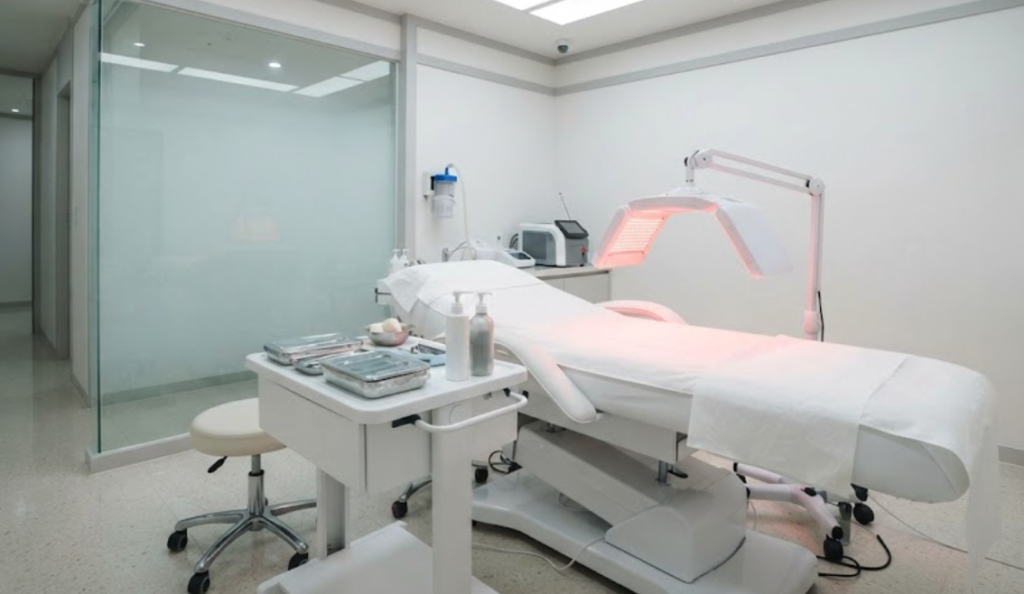
If you live here long enough and get a breakout, you also discover how acne care works in Korea. It’s quick to get an appointment, and clinics often combine several treatments in one visit.
That doesn’t mean Korea has a secret cure. It’s more that dermatology here is easy to reach, people see a doctor early, and clinics have built a routine around acne care.
Here is how acne treatment usually works in Korea, what to expect at a clinic, and what to check before you go.
✦ Many Koreans See a Dermatologist Early
In many countries, people try drugstore products for a long time before seeing a specialist, partly because appointments can take weeks.
In Korea, it’s common to go to a dermatology clinic as soon as breakouts start bothering you. Many clinics take walk-ins or same-day bookings, so it doesn’t feel like a big step.
That usually means:
• a diagnosis early on
• a treatment plan instead of guessing with products
• regular follow-up visits
✦ Dermatology Clinics Are Easy to Find
In Seoul and other big cities, you can usually find a dermatology clinic within walking distance, often in the same building as a pharmacy. Smaller towns have them too, just fewer.
A useful tip: a clinic whose name includes “피부과” (dermatology), as in “○○피부과의원”, is run by a board-certified dermatologist. If the sign only lists dermatology as one of its fields, the doctor may not be a dermatology specialist.
Many clinics are open late on weekdays and on Saturday mornings, which makes it easier to go after work.
✦ Acne Care Is Often a Combination of Treatments
Korean clinics often combine treatments in one visit. Depending on your skin, the doctor may suggest:
• prescription creams or oral medication
• acne extraction
• calming laser or LED light
• a mild peel
• a soothing mask afterward
The idea is to treat active spots, calm redness and help the skin recover at the same time. Which steps you need depends on your skin, so the plan can look different from person to person.
✦ Professional Extraction Is Common
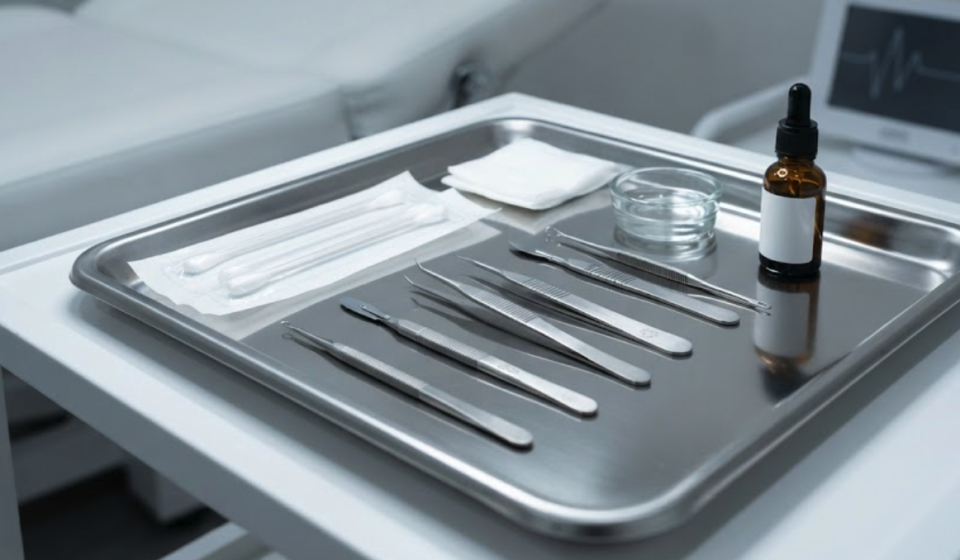
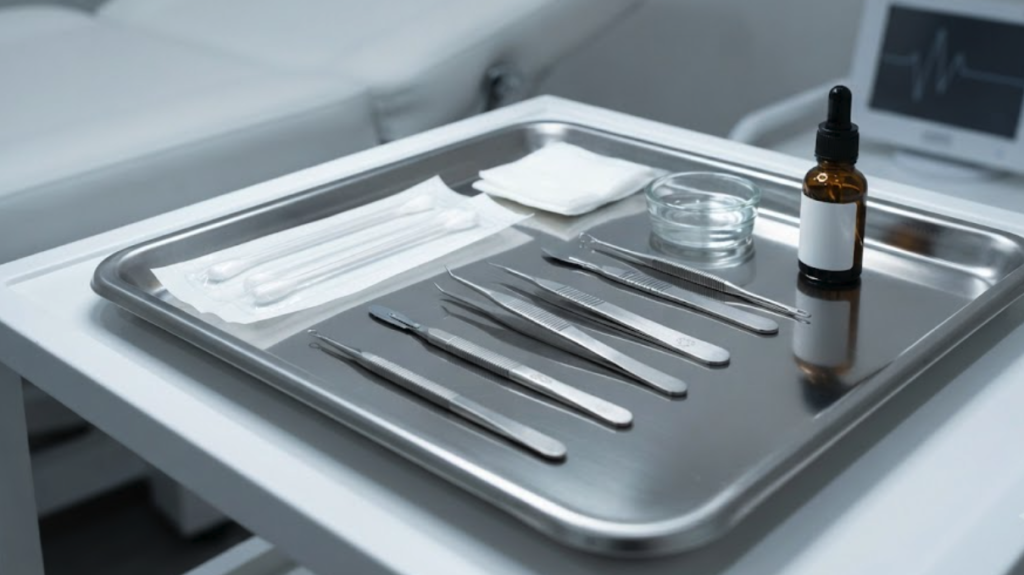
One thing that surprises many foreigners is how common professional extraction (압출) is. At a clinic, it’s done with sterilized tools by trained staff, usually after the skin has been prepared.
The point isn’t that squeezing is good. It’s that if a spot needs to be cleared, it’s safer to have it done in a clean clinic than at home with your fingers, which can make scarring or dark marks more likely.
If you have very inflamed or cystic acne, the doctor may choose medication or other treatments instead of extraction.
✦ Clinics Use Devices as Well as Creams
Many Korean dermatology clinics have devices for acne care, such as:
• lasers that target redness or inflammation
• LED light therapy
• water peeling or other cleansing devices
• cooling and calming devices
These are usually used together with medication and home care, not instead of them. Results vary from person to person, and several sessions are often needed.
✦ What It Costs and What Insurance Covers
If you’re enrolled in Korea’s National Health Insurance, a consultation for acne and some prescriptions can be covered, so you pay only part of the cost.
Extraction, lasers, peels and other skin-care treatments are usually not covered, and prices are set by each clinic. Ask for the price before the treatment starts, and check whether a multi-session package is really what you need.

✦ Home Care Is Part of the Plan
Treatment doesn’t stop at the clinic. Doctors usually also talk about home care:
• a gentle cleanser
• a simple moisturizer for damaged skin
• sunscreen every day, especially after lasers or peels
• not picking or squeezing at home
Korean drugstores and beauty shops sell many acne-care products with ingredients like centella asiatica, niacinamide, panthenol and salicylic acid. They can help, but if your acne is painful, leaves marks or doesn’t improve, a doctor is the better first step.
✦ Follow-Up Visits Are Normal
Korean clinics often ask you to come back after a week or two to see how your skin responds. Some people go regularly for a few months, then less often once their skin is stable.
If a clinic pushes you toward a long, expensive package on the first visit, it’s fine to say you want to try one session first.
✦ Before You Go: A Short Checklist
• Bring your passport or residence card, and your health insurance details if you have them.
• Tell the doctor about any medication you take, especially acne medication from your home country.
• Ask what each step costs and whether it is covered by insurance.
• If you’re worried about the language, many clinics in central Seoul have staff who speak some English, and translation apps help with the rest.
✦ Why It Feels So Organized
Acne care in Korea feels organized mainly because dermatology is easy to reach, appointments are quick, and clinics have turned acne treatment into a clear routine of medication, in-clinic care and follow-up.
It isn’t magic, and it isn’t right for everyone. But if you live in Korea or are staying for a while, seeing a dermatologist early is often the simplest way to get your skin back on track.
Discover more from aboutkorea8282.com
Subscribe to get the latest posts sent to your email.